
Influence
Robert B. Cialdini · 1984
Psychology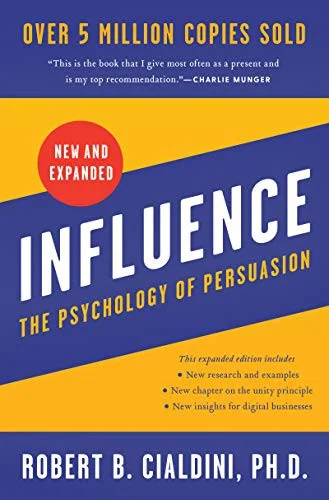
The Psychology of Persuasion
Robert Cialdini spent three years undercover — working at used car dealerships, telemarketing firms, and fundraising organizations — to study the psychology of persuasion. He distilled his findings into six universal principles of influence that explain why people say yes, and how to apply these principles ethically in business and life.
Context & Background
Cialdini, a social psychologist at Arizona State University, wanted to understand the techniques used by "compliance professionals" — salespeople, advertisers, and con artists. His research revealed that influence operates through six predictable psychological shortcuts that evolved to help humans navigate a complex social world.
The six principles of influence: Reciprocity (people feel obligated to return favors), Commitment and Consistency (people align with their past actions), Social Proof (people follow the crowd), Authority (people defer to experts), Liking (people say yes to those they like), and Scarcity (people value what's rare). Each principle exploits a different mental shortcut, and Cialdini shows how they're weaponized in marketing, sales, and politics.
The book has sold over 5 million copies and is considered the definitive work on the psychology of persuasion. It's required reading at business schools and has influenced the design of everything from e-commerce websites to political campaigns. Cialdini later added a seventh principle (Unity) in his follow-up Pre-Suasion.
Quotes from Influence
Related Books

Mindset
Carol S. Dweck
Same genre — complementary perspectives on Psychology
Thinking, Fast and Slow
Daniel Kahneman
Essential reading in Psychology
The 7 Habits of Highly Effective People
Stephen R. Covey
Complementary insights from Leadership
Think and Grow Rich
Napoleon Hill
Related perspective from Personal Development