The 7 Habits of Highly Effective People
Stephen R. Covey · 1989
Leadership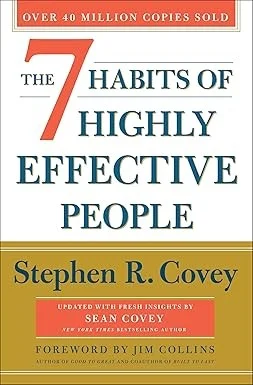
A Principle-Centered Approach to Effectiveness
Stephen Covey's masterwork on personal and interpersonal effectiveness has sold over 40 million copies because it addresses something more fundamental than technique — it addresses character. The seven habits move from dependence to independence to interdependence, offering a principle-centered approach to solving personal and professional problems.
Context & Background
The 7 Habits represented a return to what Covey called the "Character Ethic" — the idea that lasting effectiveness comes from integrity, humility, fidelity, temperance, courage, justice, and patience. He contrasted this with the "Personality Ethic" of quick-fix techniques that had dominated self-help literature.
"Begin with the end in mind" — Covey's second habit — taught millions to define their values before setting goals. "Think win-win" reframed negotiation from a zero-sum game to a search for mutual benefit. "Seek first to understand, then to be understood" became one of the most quoted principles in management training. The concept of "sharpening the saw" — continuous self-renewal — anticipated the modern focus on sustainability and well-being.
The book has been named the most influential business book of the 20th century by Forbes. Its principles have been adopted by governments, military organizations, and Fortune 500 companies alike. Covey's framework remains the most widely used personal effectiveness model in the world.