
Mindset
Carol S. Dweck · 2006
Psychology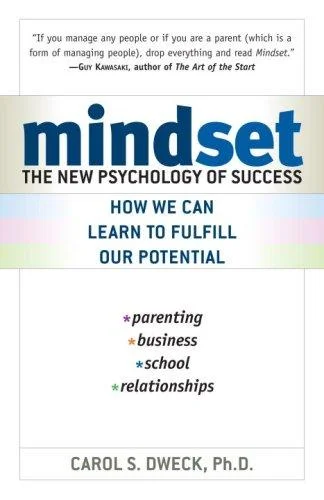
The New Psychology of Success
Stanford psychologist Carol Dweck discovered that people's beliefs about their own abilities shape everything — their motivation, their resilience, and their achievement. Those with a "growth mindset" (believing abilities can be developed) consistently outperform those with a "fixed mindset" (believing abilities are innate). This simple distinction has transformed education, sports, and business.
Context & Background
Dweck's research, spanning decades of work with children and adults, revealed that mindset is a better predictor of success than talent or IQ. She showed that praising effort over ability, embracing challenges over avoiding them, and treating failure as learning rather than evidence of inadequacy leads to dramatically better outcomes.
People with a fixed mindset believe their qualities are carved in stone, leading them to avoid challenges, give up easily, and feel threatened by others' success. People with a growth mindset believe their abilities can be developed through dedication and hard work, leading them to embrace challenges, persist through setbacks, and find inspiration in others' success. Crucially, Dweck showed that mindset can be changed.
The book has sold over 2 million copies and influenced education policy worldwide. Companies like Microsoft under Satya Nadella adopted growth mindset as a core cultural principle. While some of Dweck's specific findings have faced replication challenges, the core framework remains one of the most influential ideas in modern psychology.
Quotes from Mindset
Related Books
Thinking, Fast and Slow
Daniel Kahneman
Same genre — complementary perspectives on Psychology
Influence
Robert B. Cialdini
Essential reading in Psychology
The 7 Habits of Highly Effective People
Stephen R. Covey
Complementary insights from Leadership
Think and Grow Rich
Napoleon Hill
Related perspective from Personal Development