
Thinking, Fast and Slow
Daniel Kahneman · 2011
Psychology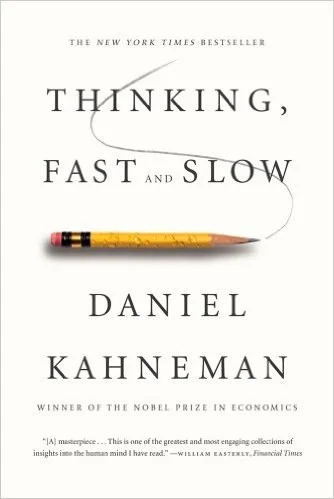
A Landmark Exploration of the Mind
Nobel laureate Daniel Kahneman summarizes decades of research on how people actually think — not how economists assume they think. His framework of two systems (fast, intuitive System 1 and slow, deliberate System 2) reveals the systematic errors in human judgment that affect everything from business decisions to personal happiness.
Context & Background
Kahneman and his late collaborator Amos Tversky revolutionized economics by proving that humans are not the rational actors classical theory assumed. Thinking, Fast and Slow made this research accessible to a general audience, revealing the cognitive biases that shape every decision we make — often without our awareness.
System 1 (fast, automatic, emotional) and System 2 (slow, deliberate, logical) provide the book's organizing framework. Kahneman catalogs dozens of cognitive biases: anchoring (being influenced by irrelevant numbers), loss aversion (losses hurt twice as much as gains feel good), availability heuristic (judging probability by how easily examples come to mind), and the planning fallacy (systematically underestimating how long things take).
The book sold over 2 million copies and was named one of the most important books of the decade by multiple publications. Its concepts are now standard in business schools, medical training, and policy design. Kahneman's work on prospect theory (with Tversky) earned him the Nobel Prize in Economics and founded the field of behavioral economics.
Quotes from Thinking, Fast and Slow
Related Books
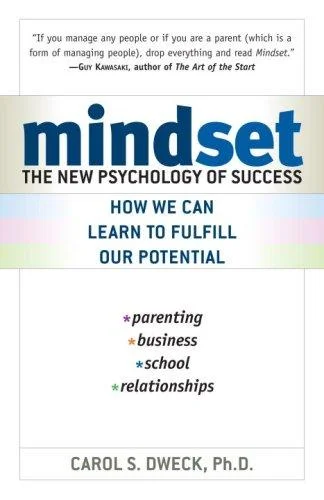
Mindset
Carol S. Dweck
Same genre — complementary perspectives on Psychology
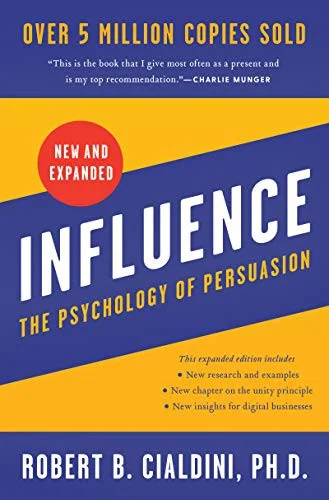
Influence
Robert B. Cialdini
Essential reading in Psychology
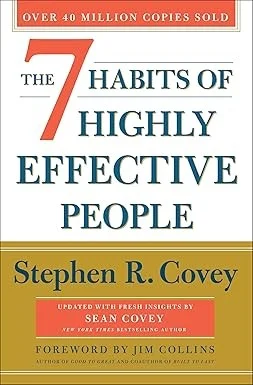
The 7 Habits of Highly Effective People
Stephen R. Covey
Complementary insights from Leadership
Think and Grow Rich
Napoleon Hill
Related perspective from Personal Development