Sun Tzu
Quotes & Wisdom
Sun Tzu: The Master Strategist
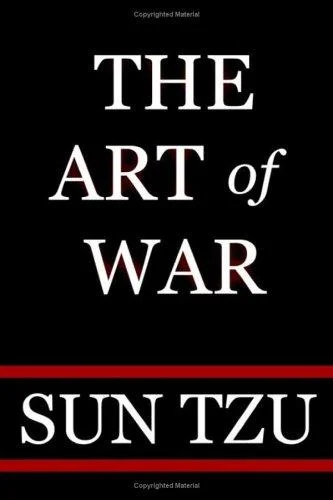
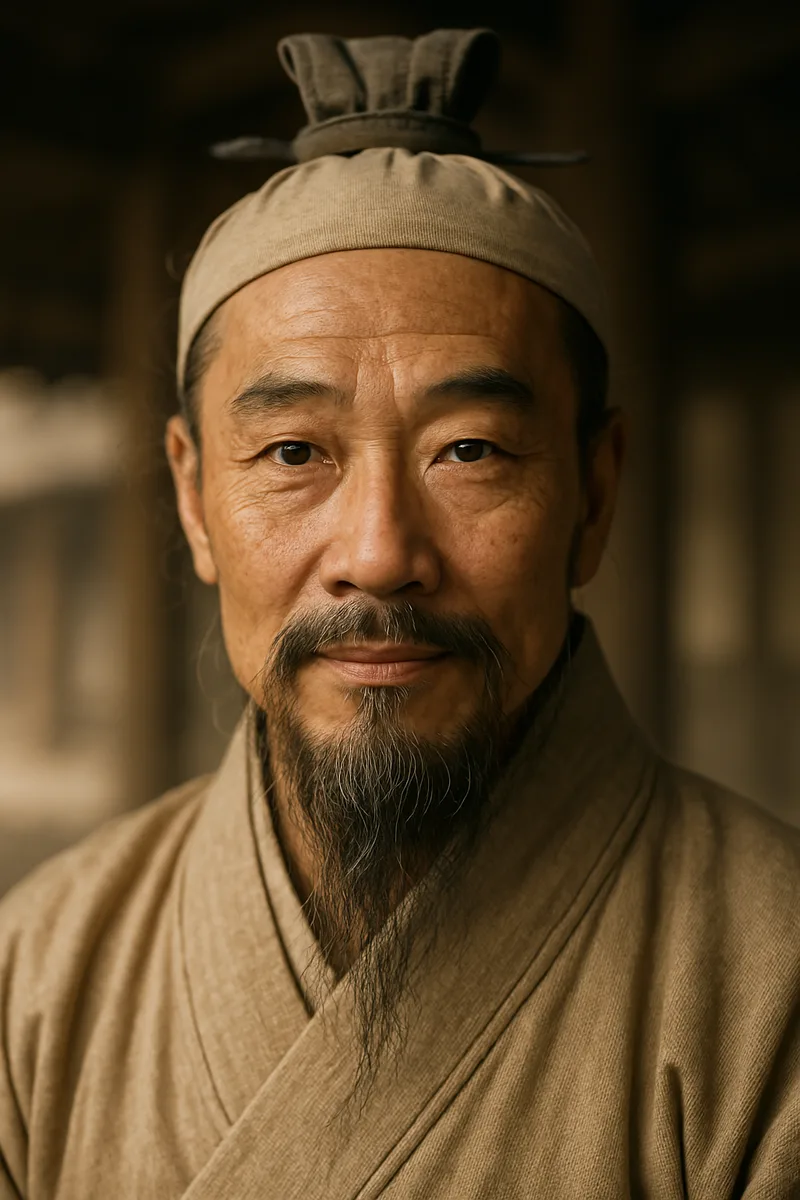
Sun Tzu is the legendary Chinese military strategist whose treatise The Art of War has influenced commanders, executives, coaches, and politicians for over two thousand years. Written during the tumultuous Warring States period of Chinese history, this slim volume of thirteen chapters distills the principles of warfare into aphorisms of such precision and universality that they have been applied to every domain of competitive endeavor - from business and diplomacy to sports and personal development. Sun Tzu's central insight - that the supreme art of war is to subdue the enemy without fighting - inverted the conventional understanding of military excellence and established strategy as a discipline of the mind rather than a contest of brute force. Whether Sun Tzu was a single historical figure or a composite, the ideas attributed to him remain among the most widely read and quoted in the world.
Context & Background
The historical Sun Tzu - if he was a single individual - is believed to have lived during the late Spring and Autumn period of Chinese history, roughly 544-496 BC. Traditional accounts identify him as Sun Wu, a military general who served the King of Wu in the southeastern region of China. The earliest biographical information comes from Sima Qian's Records of the Grand Historian, written some three centuries after Sun Tzu's supposed lifetime, which tells the famous story of Sun Tzu demonstrating his methods by training the king's concubines as soldiers - and executing two of them when they refused to follow orders.
The China of Sun Tzu's era was fragmented into dozens of competing states, each vying for survival and supremacy. The old Zhou dynasty had lost effective power, and the feudal order was breaking down. Warfare was constant, and the scale was increasing - armies that had once numbered in the thousands now fielded tens of thousands. This environment demanded a new kind of military thinking: systematic, analytical, and ruthlessly pragmatic.
It was in this crucible that The Art of War was forged. Whether composed by a single author or compiled over time from the accumulated wisdom of Chinese military tradition, the text reflects a worldview in which warfare is not an end in itself but an instrument of statecraft, to be employed with maximum efficiency and minimum waste.
The Art of War is organized into thirteen chapters, each addressing a different aspect of military strategy: planning, waging war, strategic attacks, dispositions, energy, weaknesses, maneuvering, variations, movement, terrain, the nine situations, fire attacks, and the use of spies. Despite its conciseness - the entire text is roughly 6,000 characters in Chinese - it covers an astonishing range of strategic principles.
The most famous of these is the supreme importance of winning without fighting. "The supreme art of war is to subdue the enemy without fighting," Sun Tzu writes. This is not pacifism but supreme efficiency: the ideal victory is one achieved through intelligence, deception, and strategic positioning that makes actual combat unnecessary. A general who wins every battle but at enormous cost is inferior to one who achieves his objectives without bloodshed.
Sun Tzu's emphasis on intelligence and deception is relentless. "All warfare is based on deception," he declares. Know your enemy, know yourself, know the terrain, know the weather. The general who possesses superior information and uses it to create advantageous conditions will win; the one who relies on courage alone will lose. This insight has made The Art of War required reading in intelligence agencies, corporate boardrooms, and sports coaching programs worldwide.
The Art of War has had an extraordinary cross-cultural impact. In East Asia, it has been studied continuously for over two millennia and has influenced military doctrine in China, Japan, Korea, and Vietnam. The Japanese samurai class adopted it as a foundational text. Mao Zedong credited Sun Tzu's principles as central to his guerrilla warfare strategy.
In the West, The Art of War became widely known only in the eighteenth century, when a French Jesuit missionary published the first European translation in 1772. Napoleon Bonaparte is said to have studied it (though this claim is debated), and it became standard reading at military academies in the nineteenth and twentieth centuries. In the modern era, its principles have been applied to business strategy, negotiation, litigation, sports psychology, and personal development - a testament to the universality of Sun Tzu's insights.
Scholars continue to debate whether Sun Tzu was a historical individual. Some argue that the text was composed by a single brilliant mind; others believe it is an anthology of strategic wisdom compiled over centuries. Archaeological discoveries - including a 1972 find of bamboo-strip manuscripts at Yinqueshan - have confirmed that the text existed in something close to its current form by the early Han dynasty (second century BC), making it one of the oldest surviving works on strategy.
The text's influence extends into unexpected areas. In the 1980s, the book became a sensation in the American business world, where its principles of competitive positioning, information warfare, and strategic flexibility were applied to corporate strategy. It has been quoted by figures ranging from General Douglas MacArthur to rapper Tupac Shakur, and it appears on the reading lists of organizations as diverse as the CIA, the New England Patriots, and Goldman Sachs.
Sun Tzu's most enduring contribution may be the idea that conflict is fundamentally a mental contest. The general who thinks most clearly, adapts most quickly, and understands the situation most deeply will prevail - regardless of the relative strength of forces. This insight, deceptively simple, has proven to be one of the most durable ideas in human history.