Seneca
Quotes & Wisdom
Seneca: The Stoic Who Lived in the Storm
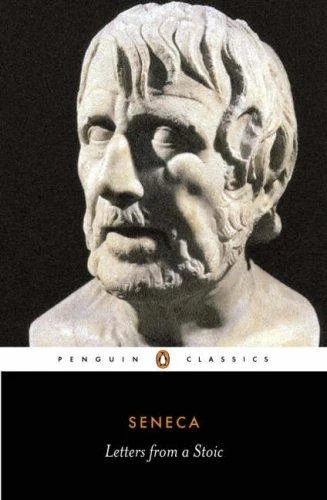
Lucius Annaeus Seneca was the most eloquent of the Stoic philosophers and one of the most fascinating figures of the ancient world - a man who preached simplicity while amassing enormous wealth, who counseled calm while serving as advisor to the most volatile emperor in Roman history. Born in Cordoba, Spain, and educated in Rome, Seneca became a senator, a celebrated playwright, and the tutor and chief minister to the Emperor Nero. His philosophical letters and essays - particularly the Letters to Lucilius and On the Shortness of Life - rank among the most practical and readable works of ancient philosophy, addressing questions about time, anger, grief, and the art of living that remain startlingly relevant two thousand years later. His influence extends through Marcus Aurelius, Epictetus, Montaigne, and into the modern revival of Stoic thought.
Context & Background
Lucius Annaeus Seneca was born around 4 BC in Corduba (modern Córdoba), Spain, into a wealthy and intellectually ambitious equestrian family. His father, Seneca the Elder, was a distinguished rhetorician whose works on oratory were widely studied. The family moved to Rome when Seneca was young, and he was educated in rhetoric and philosophy, studying under the Stoic Attalus and the Pythagorean Sotion, who taught him vegetarianism and ascetic discipline.
The Rome of Seneca's youth was the capital of an empire at its zenith - stretching from Britain to Mesopotamia, governing some sixty million people, and producing engineering, law, and literature of extraordinary sophistication. But it was also a political snake pit. The transition from Republic to Empire under Augustus had concentrated absolute power in the hands of a single ruler, and the character of that ruler determined the fate of millions. Seneca lived under five emperors - Augustus, Tiberius, Caligula, Claudius, and Nero - and the last four ranged from the competent to the deranged.
Seneca's early career in the Senate was brilliant but dangerous. His oratorical skill attracted the jealousy of the Emperor Caligula, who reportedly considered having him killed. Under Claudius, Seneca was accused of adultery with the emperor's niece - a charge that was almost certainly political - and was exiled to Corsica for eight years (41-49 AD). He used his exile productively, writing philosophical treatises, but he also wrote an embarrassingly fawning petition for recall that sits uneasily alongside his Stoic teachings about accepting fate.
In 49 AD, Agrippina - Claudius's new wife and the mother of the young Nero - recalled Seneca from exile to serve as tutor to her son. When Nero became emperor in 54 AD at the age of sixteen, Seneca and the Praetorian prefect Burrus became the effective rulers of the Roman Empire. The first five years of Nero's reign - the quinquennium Neronis - were widely regarded as a golden age of good governance, and Seneca deserves much of the credit.
But the contradictions of Seneca's position were immense. He preached the Stoic virtues of simplicity, self-sufficiency, and indifference to wealth while accumulating a fortune estimated at 300 million sesterces - one of the largest in the empire. He wrote eloquently about mercy and justice while serving a ruler who would murder his own mother. When Nero ordered the killing of Agrippina in 59 AD, Seneca reportedly helped compose the letter justifying the act to the Senate.
These contradictions have made Seneca a polarizing figure for two thousand years. His critics - both ancient and modern - accuse him of hypocrisy. His defenders argue that he was doing the best he could in impossible circumstances, using his influence to moderate a dangerous ruler and writing philosophy that he knew he himself fell short of. Seneca was honest about this tension: "I am not wise," he wrote to Lucilius, "and I shall not be wise. Do not require me to be equal to the best, but merely better than the worst."
Seneca's greatest literary achievement is the Epistulae Morales ad Lucilium - the Moral Letters to Lucilius - a collection of 124 letters written in the last years of his life, after he had withdrawn from Nero's court. They are addressed to a younger friend, but their real audience is universal. Each letter takes up a practical question - how to deal with anger, how to use time wisely, how to face death, how to choose friends, how to handle wealth - and addresses it with a directness, warmth, and psychological insight that makes the letters feel as if they were written yesterday.
His essay On the Shortness of Life (De Brevitate Vitae) is perhaps the single most powerful piece of ancient writing on time management. Seneca argues that life is not short - we make it short by wasting it on trivialities, anxieties, and pursuits that do not matter. "It is not that we have a short time to live, but that we waste a great deal of it," he writes. The essay's diagnosis of busy distraction reads as an almost uncanny description of modern life.
Seneca was also a prolific playwright. His tragedies - including Medea, Phaedra, and Thyestes - were enormously influential on Renaissance drama, particularly on William Shakespeare and his contemporaries. Their dark, violent, rhetorically intense style helped shape the Elizabethan and Jacobean stage.
Seneca suffered from severe asthma throughout his life and wrote movingly about the experience of gasping for breath, calling his attacks "a rehearsal for death." He was also a serious student of natural science; his Natural Questions examines earthquakes, lightning, comets, and weather, combining observation with Stoic philosophy.
In 65 AD, Seneca was implicated in the Pisonian conspiracy to assassinate Nero. Whether he was genuinely involved remains debated, but Nero ordered him to commit suicide. Seneca complied with remarkable composure, opening his veins in a scene described in detail by the historian Tacitus. The death was slow and painful - his aged body bled reluctantly, and he eventually had to be placed in a hot bath to hasten the process. His wife, Paulina, attempted to die with him but was saved on Nero's orders.
Seneca's final hours became one of the iconic death scenes of antiquity, rivaling Socrates' drinking of the hemlock. The painter Peter Paul Rubens immortalized the moment, and Seneca's calm acceptance of death became the ultimate proof - or the ultimate performance - of his Stoic philosophy.