Epictetus
Quotes & Wisdom
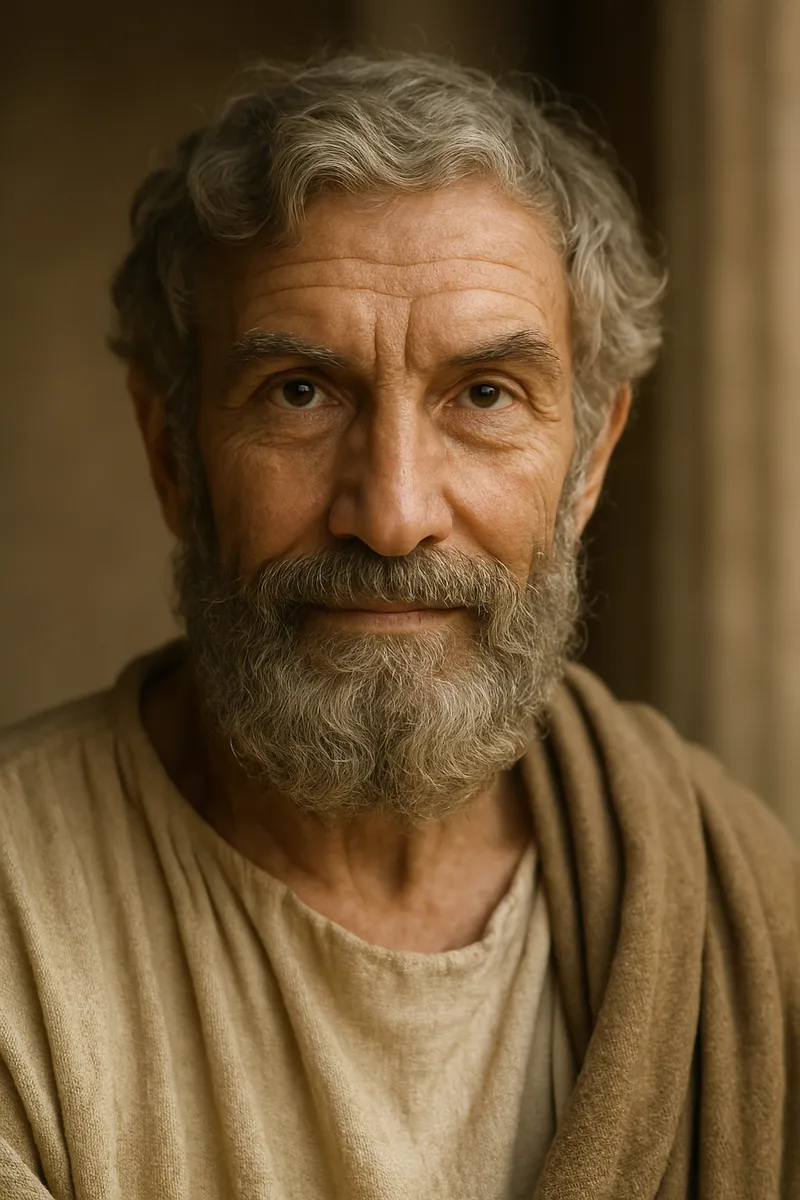
Epictetus: The Slave Who Became Stoicism's Greatest Teacher
Epictetus was born into slavery around 50 AD in Hierapolis, Phrygia, and became the most influential Stoic teacher of the Roman world. Owned by Epaphroditus, a wealthy freedman of Emperor Nero, he studied philosophy under Musonius Rufus and eventually gained his freedom. He established a school of philosophy in Nicopolis, Greece, where he taught that true freedom lies not in external circumstances but in the mastery of one's own judgments and reactions. His teachings, recorded by his student Arrian in the Discourses and the Enchiridion (Handbook), offer a practical guide to living with courage, equanimity, and moral clarity. His philosophy influenced Marcus Aurelius, early Christianity, and modern cognitive behavioral therapy.
Context & Background
Epictetus was born around 50 AD in Hierapolis, a city in the Roman province of Phrygia (modern-day Pamukkale, Turkey). His very name reflects his status - "Epictetus" means "acquired" in Greek, a name commonly given to slaves. He was owned by Epaphroditus, a powerful freedman who served as secretary to Emperor Nero. Ancient sources suggest that Epictetus was lame, possibly from a leg broken by a cruel master, though some accounts attribute his disability to rheumatism.
The Roman Empire in the first century AD was at the height of its power but also at a peak of political instability. The reigns of Nero, Domitian, and other emperors were marked by arbitrary violence, political purges, and the ever-present threat that the powerful could be destroyed overnight by imperial whim. For Stoic philosophers, this environment made the question of what lies within one's control urgently practical - not merely academic.
While still enslaved, Epictetus was permitted to study philosophy under Musonius Rufus, the most prominent Stoic teacher in Rome. After gaining his freedom - the circumstances are unclear - he began teaching philosophy himself, until Emperor Domitian banished all philosophers from Rome around 93 AD. Epictetus settled in Nicopolis, on the western coast of Greece, where he established a school that attracted students from across the empire, including members of the Roman senatorial class.
The opening lines of the Enchiridion state Epictetus's fundamental principle: "Some things are within our power, while others are not. Within our power are opinion, motivation, desire, aversion, and, in a word, whatever is our own doing. Not within our power are our body, our property, reputation, office, and, in a word, whatever is not our own doing."
This distinction - the dichotomy of control - is the foundation of Epictetus's entire philosophy. Freedom, happiness, and tranquility come from focusing entirely on what is within our control (our judgments, intentions, and responses) and accepting with equanimity what is not (external events, other people's actions, illness, death). Suffering arises not from events themselves but from our judgments about events. "It is not things that disturb us, but our judgments about things."
This is not passive resignation but active discipline. Epictetus demanded that his students examine every impression, challenge every automatic reaction, and choose their responses deliberately. The practice is rigorous and lifelong - a philosophical training analogous to athletic training.
The Discourses, recorded by Arrian in four books (of which we have four surviving), preserve Epictetus's classroom teachings in vivid, conversational detail. Unlike the abstract treatises of academic philosophy, the Discourses are practical, urgent, and often confrontational. Epictetus challenges his students, mocks their pretensions, and demands that they live their philosophy rather than merely talk about it.
He addresses a remarkable range of practical situations: how to handle insults, how to deal with difficult family members, how to face exile and imprisonment, how to approach death. His advice is consistent: focus on what you can control, act with virtue, and accept the rest. He uses the metaphor of a banquet - take what is offered when it comes to you, and do not reach for what has passed or what has not yet arrived.
Epictetus never wrote anything himself - all of his surviving teachings come through Arrian, who attended his lectures and recorded them in a colloquial Greek that preserves the master's voice with remarkable fidelity. He lived with extreme simplicity, reportedly owning only a cot, a mat, and an earthenware lamp. When his iron lamp was stolen, he replaced it with an earthenware one and remarked that the thief had lost more than he had - namely, the thief's own integrity. He never married until late in life, when he adopted a child who would otherwise have been abandoned and took a woman into his household to help raise the child. His influence on Marcus Aurelius is explicit - the emperor's Meditations frequently echo Epictetus's teachings. Modern psychologists have recognized the Enchiridion as a precursor to cognitive behavioral therapy, which similarly holds that changing one's thoughts changes one's emotional experience.