
John Adams
Quotes & Wisdom
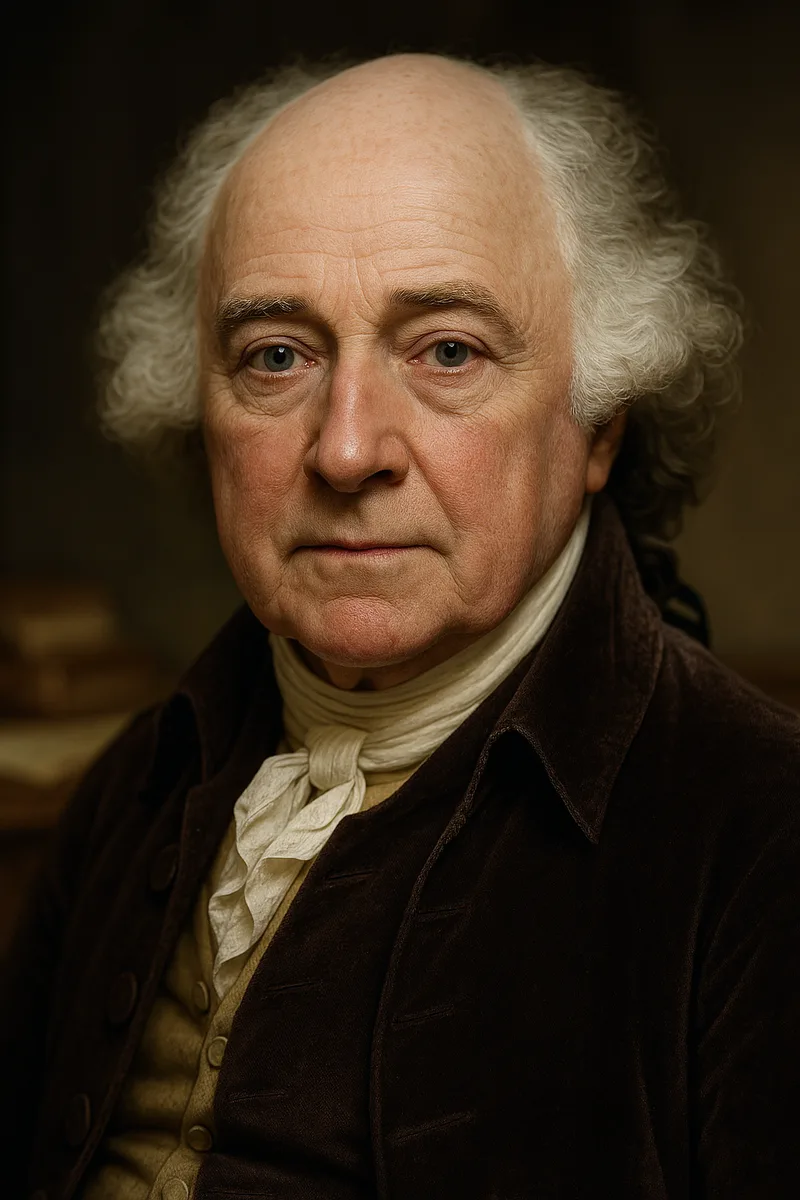
John Adams: The Passionate Intellect Behind American Independence
John Adams was the conscience of the American Revolution - the voice that pushed reluctant delegates toward independence when caution seemed safer. Brilliant, combative, and painfully honest, he served as the revolution's most effective advocate, the new nation's first vice president, and its second president. Unlike George Washington, Adams had no gift for stoic silence. He argued, debated, and sometimes alienated everyone around him. His correspondence with his wife Abigail forms one of the great literary and intellectual partnerships in American history. Adams lived long enough to see the republic he helped create survive and grow, dying on July 4, 1826 - the fiftieth anniversary of the Declaration of Independence - reportedly whispering, 'Thomas Jefferson survives.' Jefferson had died hours earlier.
Context & Background
Born on October 30, 1735, in Braintree (now Quincy), Massachusetts, John Adams grew up in a family of modest New England farmers and Congregationalist ministers. His father, a deacon and selectman, valued education above all else and sent young John to Harvard College, where he graduated in 1755. After a brief, unhappy stint as a schoolteacher, Adams turned to law - a profession that channeled his argumentative brilliance and love of close reasoning.
His marriage to Abigail Smith in 1764 was the defining relationship of his life. Abigail was his intellectual equal and his most trusted advisor, and their letters - spanning decades of separation during the revolution and his diplomatic missions - reveal a partnership of extraordinary depth. Her famous plea to 'remember the ladies' in the new legal code was addressed to John, who responded with affectionate dismissal he may later have regretted.
The Stamp Act of 1765 drew Adams into politics. His legal mind saw clearly that Parliament's taxation without colonial representation violated fundamental English rights. By 1774, he was a delegate to the Continental Congress, where his forceful advocacy for independence earned him the nickname 'the Atlas of Independence' from Richard Stockton.
Adams's commitment to principle was tested early and dramatically. In 1770, he agreed to defend the British soldiers accused in the Boston Massacre - an unpopular decision that demonstrated his belief that even enemies deserved fair legal representation. He won acquittals for most of the soldiers and considered the case one of the finest achievements of his career.
In the Continental Congress, Adams was the driving force behind the push for independence. While Thomas Jefferson wrote the Declaration, Adams was the one who argued it through the Congress, spending hours persuading skeptical delegates. Jefferson later acknowledged that Adams was 'the pillar of its support on the floor of Congress, its ablest advocate and defender.'
His diplomatic career in Europe during and after the war was marked by the same combination of brilliance and abrasiveness. He secured crucial loans from the Dutch Republic, negotiated the Treaty of Paris that ended the war, and served as the first American ambassador to Britain - enduring the cold hostility of the court with characteristic defiance.
Adams's single term as president (1797-1801) was consumed by crisis. The Quasi-War with France threatened to engulf the young republic. Pressure from his own Federalist Party, led by Alexander Hamilton, pushed for full-scale war. Adams resisted, choosing diplomacy over conflict in a decision that likely cost him reelection but preserved peace. He later called it 'the most disinterested and meritorious actions of my life.'
The Alien and Sedition Acts, signed by Adams in 1798, remain a stain on his record. These laws restricted immigration and criminalized criticism of the government - contradicting the principles of free speech Adams had championed. The tension between his fear of domestic chaos and his commitment to liberty was never fully resolved.
His defeat by Jefferson in 1800 led to the first peaceful transfer of power between opposing political parties - a precedent as important as any in American democracy. Adams left Washington before the inauguration, too proud and too hurt to attend.
Adams was the most prolific writer among the founders. His diaries, letters, and political essays fill dozens of volumes and provide an unmatched window into the revolutionary era. Unlike Benjamin Franklin, who cultivated a folksy public image, Adams wrote with raw honesty, recording his ambitions, insecurities, and jealousies without filter.
In retirement, he rekindled his friendship with Jefferson through a remarkable exchange of letters that lasted fourteen years. These letters - touching on philosophy, religion, politics, and mortality - are among the finest in the English language. Adams lived to ninety, sharp-minded to the end, proud and prickly but fundamentally decent. He was never beloved like Washington or admired like Jefferson, but no one worked harder or sacrificed more for the nation he helped bring into existence.