
George Washington
Quotes & Wisdom
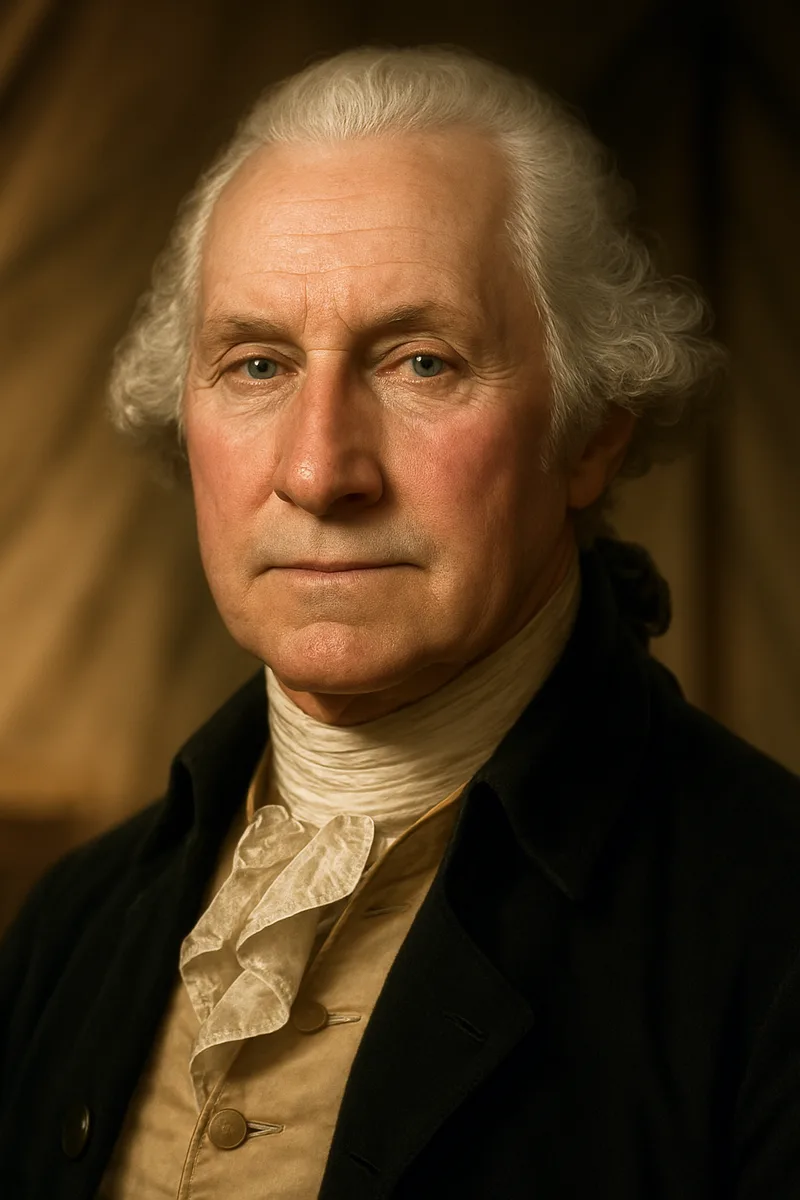
George Washington: The Reluctant Revolutionary Who Defined a Nation
George Washington did not seek power - he earned it through restraint. As commander of the Continental Army, he held together a ragged force against the mightiest empire on earth. As America's first president, he established precedents that would shape the republic for centuries. What distinguished Washington was not military genius or political brilliance, but something rarer: the willingness to surrender power voluntarily. When King George III heard that Washington planned to resign his commission and return to his farm, the monarch reportedly said, 'If he does that, he will be the greatest man in the world.' Washington did exactly that - twice. His words reveal a man who understood that true authority flows not from grasping but from letting go.
Context & Background
Born on February 22, 1732, in Westmoreland County, Virginia, George Washington grew up in the colonial gentry - comfortable but not aristocratic. His father Augustine died when George was eleven, leaving the boy's education unfinished and his social position uncertain. Unlike Thomas Jefferson or John Adams, Washington never attended college. Instead, he learned surveying, a practical skill that took him into the Virginia wilderness and taught him self-reliance.
His early military career during the French and Indian War was marked by ambition and costly mistakes. At Fort Necessity in 1754, the twenty-two-year-old officer surrendered to French forces after a botched engagement. The humiliation left a lasting impression. Washington learned from failure with a discipline that would define his later life - absorbing lessons without being crushed by them.
Marriage to Martha Dandridge Custis in 1759 brought wealth, social standing, and the vast Mount Vernon estate. For sixteen years Washington lived as a Virginia planter, managing thousands of acres, serving in the House of Burgesses, and growing increasingly frustrated with British taxation policies. By the time the Continental Congress needed a military commander in 1775, Washington was the obvious choice - a Virginian who could unite the colonies, a veteran who understood warfare, and a man whose bearing commanded respect without demanding it.
Washington's genius as a military leader was not tactical brilliance but something more fundamental - the ability to keep an army in the field when every rational calculation said to quit. The Continental Army was perpetually underfunded, undersupplied, and outgunned. Soldiers deserted in waves. Congress offered promises instead of provisions. The British had professional troops, naval superiority, and seemingly inexhaustible resources.
Through it all, Washington held firm. The crossing of the Delaware on Christmas night, 1776, was not just a military maneuver - it was an act of desperate courage that saved the revolution. The winter at Valley Forge in 1777-78 became a crucible that forged a real army from suffering volunteers. Washington understood that he did not need to win every battle; he needed to survive long enough for the British to lose the will to fight.
His relationship with Benjamin Franklin proved essential. Franklin's diplomacy in Paris secured the French alliance that ultimately turned the tide. At Yorktown in 1781, Washington combined American and French forces to trap Cornwallis, ending the war with a decisive victory that few had believed possible eight years earlier.
Every action Washington took as president set a precedent. He understood this with extraordinary clarity. 'I walk on untrodden ground,' he wrote. 'There is scarcely any part of my conduct which may not hereafter be drawn into precedent.' This awareness made him deliberate where others might have been impulsive.
He established the Cabinet system, navigated the bitter rivalry between Thomas Jefferson and Alexander Hamilton, maintained neutrality in the French Revolutionary Wars despite intense pressure from both sides, and suppressed the Whiskey Rebellion - demonstrating that the new federal government had real authority. His Farewell Address warned against partisan division and foreign entanglements with a prescience that still resonates.
Most importantly, he stepped down after two terms. In an age of monarchs and strongmen, Washington's voluntary transfer of power was revolutionary. It transformed the presidency from a potential throne into a temporary trust.
Washington's legacy carries an inescapable contradiction. The man who fought for freedom enslaved over three hundred people at Mount Vernon. His relationship with slavery evolved over his lifetime - he expressed growing discomfort with the institution, refused to sell enslaved people to break up families, and in his will freed the enslaved people he owned outright (though not those belonging to the Custis estate). These actions were exceptional for a Virginia planter of his era but fall far short of the principles he championed.
This tension is not a footnote to Washington's story - it sits at its center. The republic he founded encoded the same contradiction: liberty proclaimed, liberty denied. Understanding Washington requires holding both truths simultaneously.
Strip away the marble monuments and Washington becomes a far more interesting figure than the stiff patriarch of popular imagination. He was a gifted horseman, widely considered the finest rider in Virginia. He loved dancing and attended the theater frequently. His legendary temper - which he worked hard to control - occasionally erupted with volcanic force, leaving witnesses stunned.
Washington was intensely image-conscious, carefully managing his public persona long before the concept of personal branding existed. He ordered fashionable clothes from London, designed Mount Vernon's distinctive facade himself, and understood the power of physical presence. At six feet two inches, he towered over most contemporaries.
His famous dental problems were real but widely misunderstood. His dentures were not made of wood but of hippopotamus ivory, human teeth, and metal - a source of constant pain that contributed to his famously stern expression in portraits. Behind that stoic face was a man who loved his country with a passion that cost him eight years of war and eight more years of public service when he wanted nothing more than to go home.