Plato
Quotes & Wisdom
Plato: The Philosopher Who Shaped Western Thought
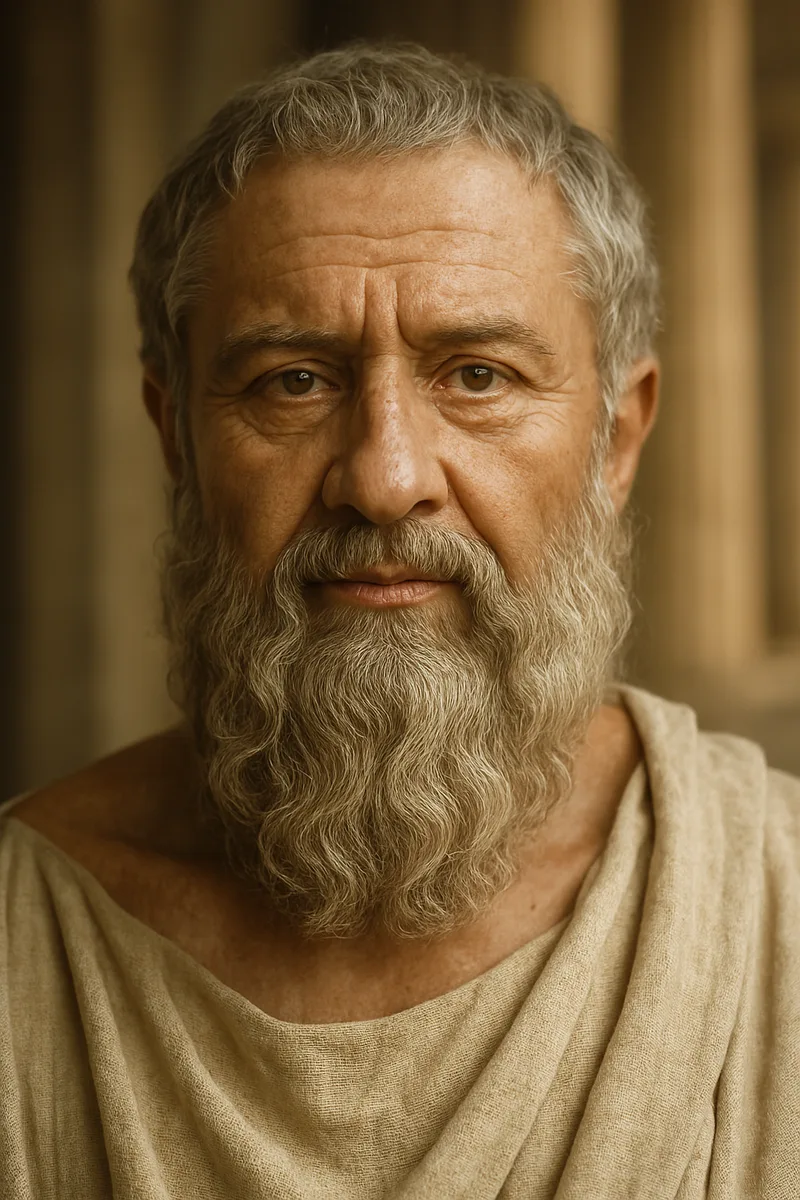
Plato stands as the most influential philosopher in the Western tradition - a thinker whose ideas about reality, knowledge, ethics, and politics have shaped every subsequent generation of thought for nearly two and a half millennia. Born into Athenian aristocracy around 428 BC, Plato was a student of Socrates, whose trial and execution in 399 BC became the defining event of Plato's life and work. He founded the Academy in Athens - often called the first university in the Western world - and composed a series of dialogues that remain among the supreme achievements of philosophical literature. His Theory of Forms, his allegory of the cave, and his vision of the philosopher-king continue to provoke and inspire. As Alfred North Whitehead observed, all of Western philosophy is "a series of footnotes to Plato."
Context & Background
Plato was born around 428 BC in Athens - or possibly on the island of Aegina - into one of the city's most distinguished aristocratic families. His father, Ariston, claimed descent from the last king of Athens; his mother, Perictione, was related to Solon, the great lawgiver. This was a family accustomed to power, and it would have been natural for the young Plato to pursue a career in politics.
But the Athens of Plato's youth was a city in crisis. The Peloponnesian War (431-404 BC) between Athens and Sparta consumed his entire childhood and adolescence. He witnessed the devastating plague that killed Pericles, the disastrous Sicilian Expedition, the oligarchic coup of 404 BC - in which his own relatives participated - and finally the restoration of democracy that led to the trial and execution of Socrates in 399 BC. These experiences convinced Plato that Athenian democracy was deeply flawed and that the city's troubles stemmed from a fundamental failure of moral and intellectual leadership.
The death of Socrates - condemned by a democratic jury on charges of impiety and corrupting the youth - was the catalyst that transformed Plato from a well-born young man into a philosopher. He later wrote that the event made him "dizzy" and convinced him that only philosophy, not politics, could lead humanity toward justice. After Socrates' death, Plato traveled extensively - to Egypt, southern Italy, and Sicily - before returning to Athens around 387 BC to found the Academy, a school of philosophy and mathematics that would endure for over three hundred years, until its closure by the Roman Emperor Justinian in 529 AD.
Plato never wrote a treatise. Instead, he composed dialogues - philosophical conversations, usually featuring Socrates as the main character, that dramatize the process of inquiry itself. This choice of form was deliberate. Plato believed that philosophy was not a body of doctrine to be memorized but a living activity of questioning, and the dialogue form preserves the open-ended, exploratory nature of genuine thought.
The early dialogues - the Apology, Crito, Euthyphro, and others - are relatively faithful portraits of the historical Socrates, a man who claimed to know nothing and spent his days interrogating Athenians about virtue, justice, and piety. The middle dialogues - the Republic, Phaedo, Symposium, and Phaedrus - are Plato's greatest literary and philosophical achievements, in which Socrates becomes a vehicle for Plato's own ambitious metaphysical and political vision. The late dialogues - the Theaetetus, Sophist, Timaeus, and Laws - are more technical and less dramatic, as Plato wrestled with problems his earlier work had raised.
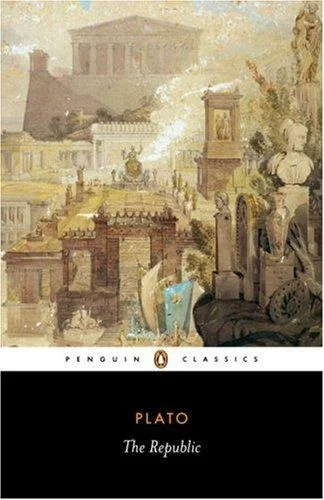
The Republic, Plato's masterpiece, is a sweeping dialogue on justice that encompasses education, psychology, art, metaphysics, and political theory. Its central argument - that a just society requires philosopher-kings, rulers who have grasped the nature of the Good through rigorous philosophical training - has been both celebrated and criticized for two millennia. The allegory of the cave, in which prisoners mistake shadows on a wall for reality, remains one of the most powerful metaphors in all of philosophy.
At the heart of Plato's philosophy lies the Theory of Forms (or Ideas) - the claim that the physical world we perceive through our senses is not the ultimate reality but merely a shadow or imitation of a higher, unchanging realm of perfect, abstract entities. There exists, Plato argued, a Form of Beauty that makes all beautiful things beautiful, a Form of Justice that makes all just actions just, and - highest of all - a Form of the Good that illuminates everything else, as the sun illuminates the visible world.
This theory has been enormously influential. It gave Western philosophy its characteristic concern with abstract universals, its suspicion of mere sense experience, and its aspiration toward a reality beyond the physical. It shaped Christian theology through the Neoplatonists, Renaissance art through its emphasis on ideal beauty, and modern mathematics through its vision of abstract truths that exist independently of the human mind.
Aristotle, Plato's greatest student, spent much of his career arguing against the Theory of Forms - insisting that universals exist in things, not apart from them. This disagreement between teacher and student established the two great poles of Western philosophy: idealism and realism, rationalism and empiricism, the pull toward the abstract and the pull toward the concrete.
"Plato" was almost certainly a nickname - probably meaning "broad," referring to either his forehead or his shoulders. His given name was Aristocles. He was reportedly an accomplished wrestler, and some sources claim he competed at the Isthmian Games. He was also a poet in his youth, but is said to have burned his verses after encountering Socrates.
Plato made three trips to Syracuse in Sicily, attempting to put his political philosophy into practice by advising the tyrant Dionysius II. Each visit ended badly - on one occasion, Plato was reportedly sold into slavery and had to be ransomed by friends. These failures did not shake his conviction that philosophy and politics must be united, but they gave him a hard-won understanding of the gap between theory and practice.
The Academy he founded attracted students from across the Greek world and became the model for all subsequent institutions of higher learning. Among its most famous students was Aristotle, who studied there for twenty years before founding his own school, the Lyceum. Plato died around 348 BC, reportedly at a wedding feast, at approximately eighty years of age.