Republic
Plato · 375 BC
Philosophy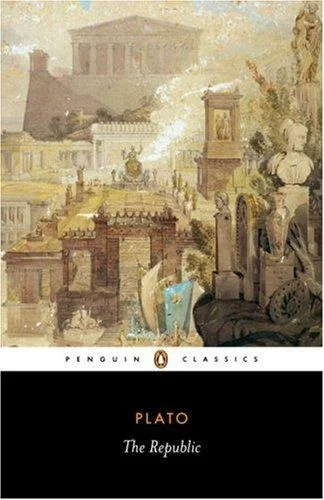
The Foundation of Western Political Philosophy
Plato's Republic is a Socratic dialogue that explores justice, the ideal state, and the nature of the philosopher. Through the character of Socrates, Plato constructs an imaginary city governed by philosopher-kings and introduces the Allegory of the Cave — one of the most enduring images in the history of thought.
Context & Background
Written around 375 BCE, the Republic is arguably the most influential work of philosophy ever written. It asks the fundamental question: what is justice, and is the just person happier than the unjust? Plato's answer takes the reader on a journey through politics, education, psychology, and metaphysics that has shaped Western civilization for over two millennia.
The Allegory of the Cave depicts prisoners who mistake shadows for reality, illustrating the difference between appearances and truth. The Theory of Forms posits that the material world is a shadow of a higher, eternal reality. The tripartite soul (reason, spirit, appetite) mirrors the structure of the ideal city (rulers, warriors, producers). Philosopher-kings — rulers who love wisdom and truth — are the only fit governors of the just city.
Virtually every major Western philosopher has engaged with the Republic. Alfred North Whitehead famously said that all of Western philosophy is "a series of footnotes to Plato." The work continues to provoke debate about democracy, education, censorship, and the relationship between knowledge and power.