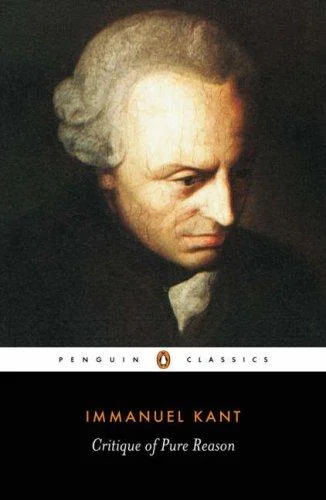
Immanuel Kant
Quotes & Wisdom
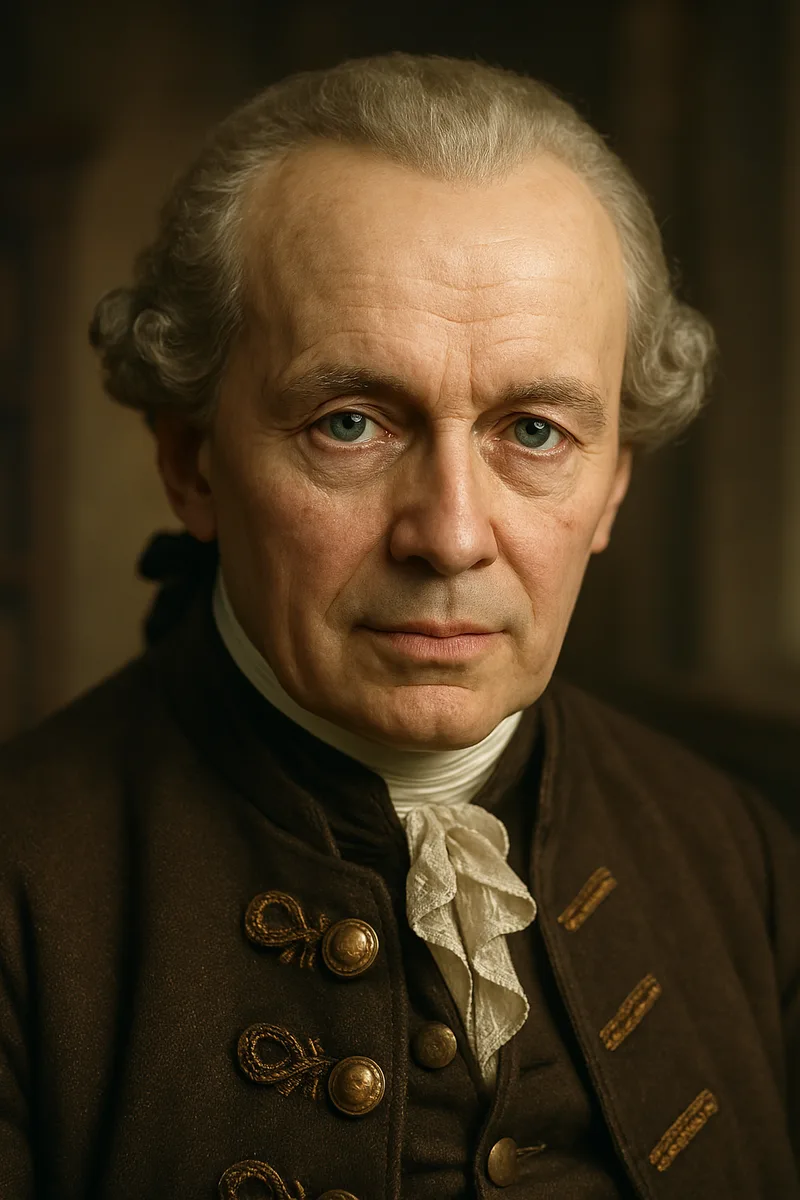
Immanuel Kant: The Philosopher Who Redrew the Boundaries of Thought
Immanuel Kant never traveled more than ten miles from his hometown of Konigsberg, yet his ideas traveled further than those of any philosopher since Aristotle. His three great Critiques - of Pure Reason, Practical Reason, and Judgment - constitute the most ambitious attempt in modern philosophy to determine what the human mind can and cannot know. Kant argued that we do not passively receive reality but actively construct it through the categories of our understanding - a revolution in thought he compared to Copernicus placing the sun at the center of the solar system. His moral philosophy, grounded in duty and the categorical imperative, remains the foundation of modern ethics. Kant's words, precise and demanding, reward the patient reader with insights that reshape how we understand knowledge, morality, and human dignity.
Context & Background
Born on April 22, 1724, in Konigsberg, East Prussia (now Kaliningrad, Russia), Immanuel Kant grew up in a modest household steeped in Pietist Christianity. His father was a harness maker, his mother a woman of deep religious conviction who died when Kant was thirteen. The Pietist emphasis on inner moral life, duty, and self-discipline shaped Kant profoundly - even as he later rejected its theology, he retained its moral seriousness.
Kant studied at the University of Konigsberg, where he was drawn to physics, mathematics, and philosophy. After graduating, he spent years as a private tutor before returning to the university as a lecturer. For fifteen years he taught an astonishing range of subjects - logic, metaphysics, geography, anthropology, mathematics, and physics - while publishing works on everything from earthquakes to the rotation of the earth.
The intellectual crisis that would produce his greatest work came from reading David Hume, who, Kant famously said, 'awakened me from my dogmatic slumber.' Hume's skepticism about causation and knowledge threatened to undermine the foundations of science and morality alike. Kant spent the next decade in near-total silence, working out a response that would become the Critique of Pure Reason. When it appeared in 1781, it changed philosophy forever.
Kant's central insight was that the mind is not a passive mirror reflecting reality but an active organizer that structures experience. Space and time, he argued, are not features of the external world but forms of human intuition - the lenses through which we necessarily perceive everything. Categories like causation, substance, and unity are not discovered in nature but imposed by the mind onto the raw data of sensation.
This 'Copernican revolution' in philosophy had radical consequences. It meant that science could achieve genuine knowledge - but only of the phenomenal world, the world as it appears to us. Things as they are 'in themselves' - the noumenal realm - remain forever beyond human cognition. God, freedom, and immortality cannot be proved by theoretical reason, though they remain essential for practical (moral) reason.
The Critique of Pure Reason is notoriously difficult, and Kant knew it. He published a shorter version, the Prolegomena, to make his ideas more accessible. Both works sparked fierce debate that continues to this day.
Kant's moral philosophy, developed in the Groundwork of the Metaphysics of Morals and the Critique of Practical Reason, is built on a single commanding idea: act only according to principles you could will to be universal laws. This categorical imperative demands that morality be grounded not in consequences, emotions, or divine commands, but in reason itself.
For Kant, the moral worth of an action lies entirely in the intention behind it - specifically, in whether the agent acts from duty rather than inclination. A shopkeeper who gives honest change because it is good for business acts rightly but not morally. Only the shopkeeper who is honest because honesty is a duty acts with genuine moral worth.
This rigorous ethics has been both celebrated and criticized. Its strengths - universality, respect for human dignity, resistance to manipulation - are immense. Its weaknesses - apparent inflexibility, difficulty handling conflicting duties - have been debated by every subsequent generation of philosophers.
Kant's daily routine was so precise that neighbors reportedly set their clocks by his afternoon walk. He rose at five, drank tea, smoked a pipe, lectured, wrote, walked, dined, and retired at ten - every day, for decades. This legendary regularity was not eccentricity but discipline. Kant believed that the moral life required order, and he practiced what he preached.
He was also a gifted conversationalist and dinner host, contrary to his reputation as a dry academic. He insisted on having guests at every meal and held forth on topics from travel (which he never undertook) to cuisine (which he loved). His lectures were popular and lively, filled with humor and real-world examples. Kant's physical world was tiny - Konigsberg and nothing beyond - but his mental world encompassed everything. He proved that the greatest journeys can be taken without leaving home.