Critique of Pure Reason
Immanuel Kant · 1781
Philosophy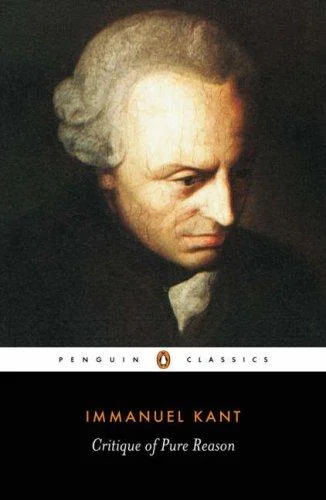
The Book That Revolutionized Philosophy
Kant's Critique of Pure Reason is one of the most important and difficult works in the history of philosophy. It asks a deceptively simple question: what can human reason know, and what are its limits? Kant's answer — his "Copernican revolution" in philosophy — reshaped every field of thought it touched.
Context & Background
Before Kant, philosophy was split between rationalists (who believed knowledge comes from reason alone) and empiricists (who believed it comes from experience). Kant's revolutionary synthesis showed that both were partly right: the mind actively structures experience through built-in categories, so knowledge requires both sensory input and mental framework.
The distinction between analytic and synthetic judgments, and between a priori and a posteriori knowledge, sets up Kant's central question: how are synthetic a priori judgments possible? His answer involves the transcendental aesthetic (space and time as forms of intuition), the transcendental analytic (categories of understanding), and the transcendental dialectic (the illusions of pure reason when it overreaches). The thing-in-itself (noumenon) — reality as it exists independent of our perception — remains forever unknowable.
The Critique is the watershed of modern philosophy. It made possible German Idealism, phenomenology, and analytic philosophy. Every philosopher since has had to engage with Kant's arguments, whether to build on them or refute them. His influence extends into cognitive science, ethics, aesthetics, and political philosophy.