Friedrich Nietzsche
Quotes & Wisdom
Friedrich Nietzsche: The Philosopher Who Shattered Certainties
Friedrich Nietzsche was the most explosive thinker of the nineteenth century, a philosopher who declared God dead, dismantled conventional morality, and challenged humanity to create its own meaning in a godless universe. Born in the Prussian town of Rocken in 1844, he became a professor of classical philology at the University of Basel at the astonishing age of twenty-four and spent the next two decades producing works of dazzling originality - Thus Spoke Zarathustra, Beyond Good and Evil, On the Genealogy of Morality - before suffering a mental collapse in 1889. His ideas on the will to power, the Ubermensch, eternal recurrence, and the critique of slave morality have shaped existentialism, psychology, literature, and philosophy in ways that are still unfolding.
Context & Background
Friedrich Wilhelm Nietzsche was born on October 15, 1844, in Rocken, a small village in the Prussian province of Saxony. His father, Carl Ludwig Nietzsche, was a Lutheran pastor who died when Friedrich was four, leaving the boy to be raised by his mother, grandmother, and two aunts in an intensely female, piously religious household. This suffocating piety may have planted the seeds of his later rebellion against Christianity.
The Germany of Nietzsche's youth was undergoing rapid transformation. Otto von Bismarck was forging a unified German state through "blood and iron," and German intellectual life was dominated by the legacies of Hegel and Schopenhauer, the rise of Darwinian evolutionary theory, and the growing authority of natural science. Nietzsche studied classical philology (the study of ancient Greek and Latin texts) at the universities of Bonn and Leipzig, where he discovered Schopenhauer's The World as Will and Representation - a work that hit him, he said, like a revelation.
At twenty-four, Nietzsche was appointed professor of classical philology at the University of Basel - an extraordinary appointment for someone who had not yet completed his doctorate (it was awarded without the usual examination). His early friendship with the composer Richard Wagner was intense and formative, but it ended in bitter disillusionment as Nietzsche came to see Wagner's nationalism and anti-Semitism as symptoms of the cultural decadence he opposed. Chronic illness - severe migraines, digestive problems, near-blindness - forced him to resign from Basel in 1879, and he spent the next decade as an itinerant writer, wandering through Switzerland, Italy, and southern France, writing the works that would transform modern thought.
Nietzsche's announcement that "God is dead" (in The Gay Science, 1882) was not a celebration but a diagnosis. He recognized that the decline of religious faith in modern Europe would leave a void - a crisis of meaning that could lead to nihilism, the conviction that life has no purpose and no value. The challenge, as Nietzsche framed it, was not simply to reject the old values but to create new ones. The Ubermensch (overman or superman) - the individual who creates their own values and affirms life in its totality - was Nietzsche's response to this crisis.
Thus Spoke Zarathustra (1883-85), written in a prophetic, quasi-biblical style, presents this vision through the figure of the prophet Zarathustra, who descends from a mountain to teach humanity that the meaning of life lies in self-overcoming - the continual surpassing of one's limitations and the creation of new values.
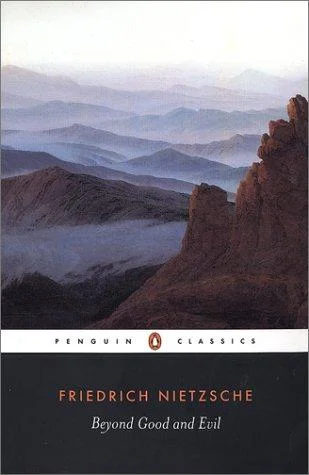
In Beyond Good and Evil (1886) and On the Genealogy of Morality (1887), Nietzsche advanced his most controversial claims: that conventional morality - Christian morality, the morality of compassion, humility, and self-denial - is a "slave morality" created by the weak to restrain the strong; and that a "master morality" of strength, creativity, and self-assertion is more authentic and life-affirming. He did not advocate cruelty but rather the courage to face life without comforting illusions.
The "will to power" - Nietzsche's concept of the fundamental drive in all living things - is not simply the desire for dominance over others but the drive toward self-mastery, growth, and creative expression. It is the force that drives the artist to create, the thinker to challenge convention, and the individual to become who they truly are.
Nietzsche was a gifted pianist and composer who seriously considered a career in music. He served briefly as a medical orderly in the Franco-Prussian War of 1870 and contracted diphtheria and dysentery that may have contributed to his later health problems. He proposed marriage twice and was rejected both times. He wrote many of his greatest works during periods of intense physical suffering, composing in brief bursts between episodes of pain and near-blindness. His mental collapse in January 1889 - triggered, according to legend, by the sight of a horse being beaten in a Turin street - may have been caused by syphilis, brain cancer, or a genetic condition. His sister, Elisabeth Forster-Nietzsche, took control of his literary estate after his collapse and selectively edited his unpublished writings to support her own proto-Nazi ideology - a distortion that took decades to correct. Nietzsche himself was emphatically not an anti-Semite and broke with Wagner partly over this issue. He died on August 25, 1900, in Weimar.