Charles Darwin
Quotes & Wisdom
Charles Darwin: The Naturalist Who Revealed Life's Grand Pattern
Charles Darwin's theory of evolution by natural selection is the single most powerful idea in the history of biology, unifying the diversity of life under a single explanatory framework. Born in Shrewsbury, England, in 1809, Darwin was an unremarkable student who found his calling aboard HMS Beagle, a five-year voyage around the world that exposed him to geological wonders and biological puzzles - particularly the finches and tortoises of the Galapagos Islands. He spent twenty years refining his theory before publishing On the Origin of Species in 1859, a book that transformed science, philosophy, and humanity's understanding of its own place in nature. Cautious, meticulous, and profoundly honest, Darwin ranks among the most consequential thinkers who ever lived.
Context & Background
Charles Robert Darwin was born on February 12, 1809, in Shrewsbury, England - the same day as Abraham Lincoln, on the other side of the Atlantic. His family was wealthy and intellectually distinguished: his father, Robert, was a prosperous physician; his grandfather, Erasmus Darwin, was a renowned natural philosopher who had speculated about evolution decades before Charles made the idea rigorous. His mother, Susannah Wedgwood, came from the famous pottery family.
Darwin's formal education was unimpressive. He found medical school at Edinburgh repulsive (surgery without anesthesia horrified him) and drifted to Cambridge to study for the clergy - not from religious conviction but because it was a respectable career for a gentleman naturalist. At Cambridge, he fell under the influence of the botanist John Stevens Henslow, who recognized Darwin's gifts for observation and recommended him for the position of naturalist aboard HMS Beagle.
The Beagle voyage (1831-1836) took Darwin around the world - to South America, the Galapagos Islands, Tahiti, Australia, and South Africa. He collected thousands of specimens, made geological observations that supported Charles Lyell's theory of gradual geological change, and encountered patterns of species distribution that puzzled him deeply. Why did each Galapagos island have slightly different species of finches and tortoises? The Victorian world Darwin inhabited was one of deep religious faith, where most educated people believed in divine creation. The answer Darwin eventually reached would shake that faith to its foundations.
Darwin's great insight was that species change over time through a process he called natural selection. Organisms vary; some variations improve survival and reproduction; those advantageous traits are passed to offspring, gradually transforming populations over immense spans of time. No divine designer is needed - the appearance of design arises from the blind, cumulative filtering of random variation by environmental pressures.
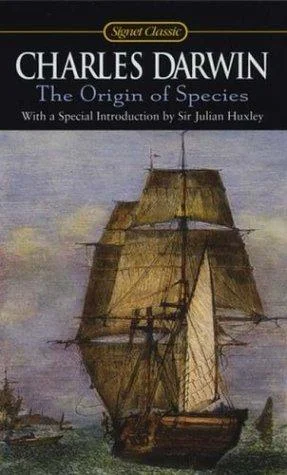
Darwin arrived at this idea by 1838 but delayed publication for two decades, partly because he recognized its explosive implications and partly because of his meticulous temperament. He wanted to build an overwhelming case. He studied barnacles for eight years. He bred pigeons. He corresponded with naturalists worldwide. Only when Alfred Russel Wallace independently reached the same conclusion in 1858 did Darwin finally publish On the Origin of Species (1859). The first edition sold out on its first day.
The reaction to On the Origin of Species was immediate and polarizing. Thomas Huxley became "Darwin's Bulldog," defending evolution in public debates, including the famous 1860 Oxford debate with Bishop Samuel Wilberforce. Religious critics attacked the theory for undermining the special creation of humanity; scientific critics questioned whether natural selection alone was sufficient to explain complex adaptations.
Darwin addressed human evolution directly in The Descent of Man (1871), arguing that humans had evolved from primate ancestors and that sexual selection - competition for mates - was a powerful evolutionary force. He also wrote The Expression of the Emotions in Man and Animals (1872), pioneering the comparative study of emotional behavior across species.
Darwin suffered from a mysterious chronic illness for most of his adult life - symptoms included nausea, vomiting, fatigue, and heart palpitations. Theories range from Chagas disease (contracted in South America) to psychosomatic illness to chronic anxiety. He was a devoted family man who was devastated by the death of his daughter Annie at age ten - an experience that deepened his doubt in a benevolent God. He married his cousin Emma Wedgwood, who was deeply religious and worried about the theological implications of his work. He was an abolitionist who found slavery morally repugnant - a conviction strengthened by his encounters with enslaved people in Brazil. He maintained an enormous correspondence, writing over 15,000 letters. He was fascinated by earthworms and devoted his final book to their role in soil formation. He is buried in Westminster Abbey, near Isaac Newton.