Isaac Newton
Quotes & Wisdom
Isaac Newton: The Mind That Decoded the Universe
Isaac Newton did not merely advance science - he invented the framework within which science would operate for the next two centuries. His Principia Mathematica, published in 1687, unified terrestrial and celestial mechanics under a single set of laws, demonstrating that the same force that pulls an apple to the ground keeps the moon in orbit. He invented calculus, decomposed white light into its spectrum, and built the first reflecting telescope. Yet the man behind these achievements was intensely private, fiercely vindictive toward rivals, and consumed by alchemical and theological investigations that he considered at least as important as his physics. Newton's quotes reveal a mind of staggering power and surprising humility - a man who saw further than anyone before him and knew that he had barely begun to look.
Context & Background
Born on January 4, 1643, in Woolsthorpe Manor, Lincolnshire, England, Isaac Newton entered the world prematurely and so small that, his mother later said, he could have fit inside a quart mug. His father, an illiterate farmer, had died three months before his birth. When his mother remarried, three-year-old Isaac was left with his grandmother - an abandonment that scarred him deeply and may explain the suspicious, combative temperament that marked his adult life.
At the King's School in Grantham, Newton was initially an indifferent student who preferred building mechanical models - clocks, sundials, a working windmill powered by a mouse - to studying. A schoolyard fight that Newton won decisively sparked a competitive drive to excel academically as well. By the time he entered Trinity College, Cambridge, in 1661, he was already teaching himself mathematics far beyond the curriculum.
The plague years of 1665-1666 forced Cambridge to close, sending Newton home to Woolsthorpe. In this extraordinary eighteen-month period - his annus mirabilis - he developed the foundations of calculus, his theory of colors, and the initial insights into gravitational theory. He was twenty-three years old.
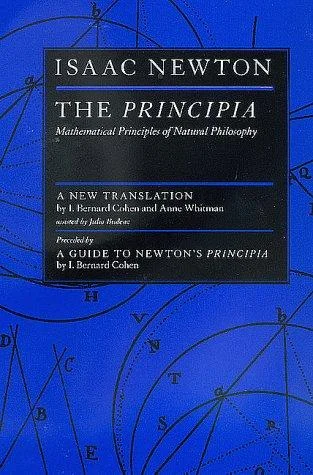
Newton's masterwork, Philosophiae Naturalis Principia Mathematica, published in 1687, is arguably the most important scientific book ever written. In it, Newton formulated the three laws of motion and the law of universal gravitation, demonstrating that a single mathematical framework could explain everything from the trajectory of a cannonball to the orbits of planets.
The Principia almost did not exist. Newton had worked out many of its ideas years earlier but, characteristically, kept them to himself. It took Edmund Halley's persistent encouragement - and financial backing - to persuade Newton to write and publish the work. The bitter priority dispute with Gottfried Leibniz over the invention of calculus, which consumed Newton for decades, revealed the darker side of his genius - a relentless need to claim credit and destroy rivals.
Yet the achievement stands beyond dispute. Albert Einstein himself wrote that Newton's work was 'perhaps the greatest intellectual stride that it has ever been granted to any man to make.' The Newtonian universe - mechanical, predictable, governed by mathematical laws - would dominate scientific thinking until Einstein's own revolution.
Newton devoted more time to alchemy and biblical interpretation than to physics. He wrote over a million words on alchemy, searching for the philosopher's stone and the secrets of material transformation. His theological writings, which he kept secret because they denied the Trinity - a heretical position at the time - filled thousands of manuscript pages.
These pursuits were not distractions from his science but integral to his worldview. Newton saw the universe as a divine code waiting to be deciphered, and he believed that ancient texts held scientific truths that had been lost. His alchemy, his theology, and his physics were all part of a single quest to understand the mind of God.
He also served as Warden and then Master of the Royal Mint, where he pursued counterfeiters with the same intensity he brought to scientific rivals. He sat in Parliament, presided over the Royal Society, and was knighted by Queen Anne in 1705 - the first scientist so honored.
Newton's personal life was marked by isolation and intensity. He never married, had few close friends, and was capable of working for days without eating or sleeping when absorbed in a problem. His assistant reported finding him standing beside his bed in the morning, one leg in his trousers, frozen in thought, having been distracted by an idea while dressing.
He had a lifelong fascination with the color spectrum and conducted dangerous experiments on his own eyes, including staring at the sun and inserting a bodkin (a blunt needle) between his eyeball and eye socket to observe the effects on his vision. His famous statement about standing on the shoulders of giants was likely a barb aimed at Robert Hooke, who was notably short. Newton could be petty, vindictive, and cruel - yet he produced work of transcendent beauty that continues to shape our understanding of the physical world.