On the Origin of Species
Charles Darwin · 1859
Science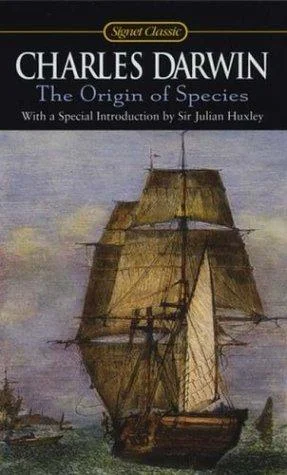
The Foundation of Evolutionary Biology
Charles Darwin's masterwork introduced the theory of evolution by natural selection, the single most powerful idea in the history of biology. Drawing on decades of meticulous observation during his voyage on HMS Beagle and years of careful experimentation at home, Darwin showed that species are not fixed creations but the products of a slow, branching process of descent with modification.
Context & Background
On the Origin of Species fundamentally changed humanity's understanding of its place in nature. Before Darwin, the prevailing view was that each species was individually created and unchanging. Darwin demonstrated that all life on Earth shares a common ancestry and that the diversity of life is the result of natural processes, not supernatural design.
Natural selection is the mechanism: organisms vary, those variations are heritable, and individuals better suited to their environment survive and reproduce more successfully. Over vast stretches of time, this produces new species. Darwin also introduced sexual selection, the struggle for existence, and the concept of common descent linking all living things through a branching tree of life.
The book is arguably the most important scientific work ever published. It unified biology under a single explanatory framework, influenced fields from medicine to philosophy, and remains the foundation of modern evolutionary science. Theodosius Dobzhansky later wrote: 'Nothing in biology makes sense except in the light of evolution.'