
Alexander the Great
Quotes & Wisdom
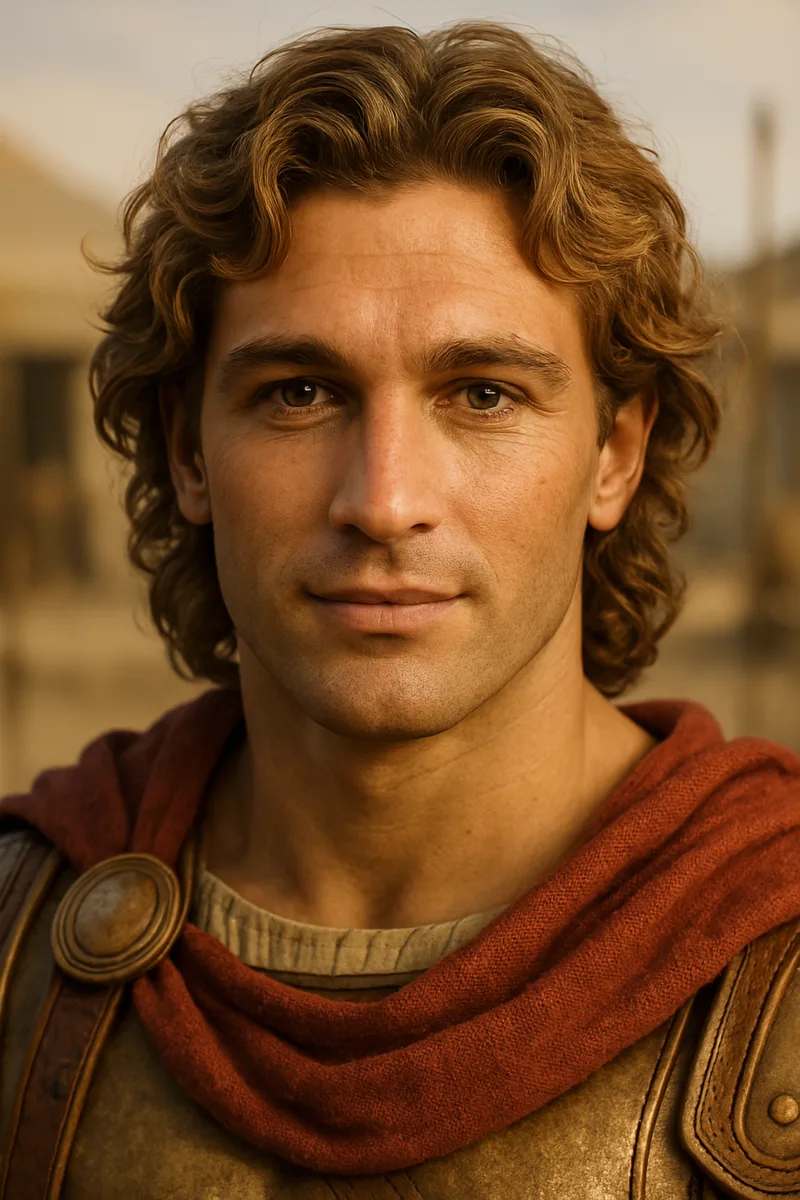
Alexander the Great: The Conqueror Who Reshaped the Ancient World
Alexander III of Macedon carved the largest empire the ancient world had ever seen before his thirty-third birthday. Tutored by Aristotle, crowned king at twenty after his father Philip II's assassination, he led his armies from Greece across Persia, through Egypt, and into the heart of Central Asia and India - never losing a battle. His conquests spread Greek language, culture, and ideas across three continents, igniting the Hellenistic age that bridged classical Greece and the Roman world. Alexander's ambition was limitless, his military genius unmatched, and his early death in Babylon in 323 BC left an empire that fractured but a cultural legacy that endured for centuries.
Context & Background
Alexander was born in 356 BC in Pella, the capital of the Kingdom of Macedon, to King Philip II and Olympias, a princess of Epirus. Macedon was considered a semi-barbaric backwater by the refined city-states of Athens and Thebes, but Philip II transformed it into the dominant military power in Greece through revolutionary tactics - the Macedonian phalanx with its long sarissa spears - and shrewd diplomacy. Alexander grew up in a court that combined warrior culture with intellectual ambition; his father hired Aristotle himself to tutor the young prince at the rural retreat of Mieza.
The Greek world Alexander inherited was one of fractured city-states exhausted by decades of war - the Peloponnesian War between Athens and Sparta, followed by Theban hegemony, followed by Macedon's rise. Philip II had unified Greece under Macedonian leadership through the League of Corinth, but he was assassinated in 336 BC before he could fulfill his plan to invade the Persian Empire. Alexander, just twenty years old, seized the throne, crushed rebellions in Thebes and Illyria, and then turned east with an army of roughly 40,000 men.
The Persian Empire he faced was the largest political entity the world had known - stretching from Egypt to India, governed by the Achaemenid dynasty for over two centuries. Its king, Darius III, commanded vast resources and enormous armies. But the empire was administratively sprawling and militarily sluggish, and Alexander's combined-arms tactics - integrating cavalry, infantry, and siege warfare with speed and audacity - proved devastating.
Alexander's military campaigns between 334 and 323 BC represent one of the most extraordinary achievements in the history of warfare. At the Battle of Granicus (334 BC), he crossed the Hellespont and defeated the Persian satraps of Asia Minor. At Issus (333 BC), he routed Darius III's main army despite being outnumbered. At Gaugamela (331 BC), he shattered the Persian Empire's military power in a decisive engagement on the plains of modern Iraq. Each battle showcased his ability to read terrain, exploit enemy weaknesses, and lead from the front - he was wounded multiple times and always fought alongside his men.
After conquering Egypt - where he founded Alexandria, the city that would become the intellectual capital of the ancient world - he pursued Darius deep into Central Asia. He campaigned through modern Afghanistan and Pakistan, crossing the Hindu Kush mountains and the Indus River, until his exhausted army finally refused to go further at the Hyphasis River in 326 BC. The march home through the Gedrosian Desert cost more lives than many of his battles.
Alexander's legacy extends far beyond military conquest. He founded over twenty cities, many named Alexandria, that became centers of Greek language, culture, and learning across the Near East and Central Asia. His policy of cultural fusion - encouraging intermarriage between Greeks and Persians, adopting Persian court customs, and integrating local elites into his administration - was revolutionary and controversial. His own soldiers resented his adoption of Persian dress and customs, nearly mutinying at Opis in 324 BC.
The Hellenistic age that followed his death saw Greek become the lingua franca of the eastern Mediterranean and Near East, enabling the spread of philosophy, science, and eventually Christianity. The Library of Alexandria, the Ptolemaic dynasty in Egypt, and the Seleucid Empire in the Near East were all products of Alexander's conquests.
Ancient sources describe Alexander as having one blue eye and one brown eye (heterochromia), though this may be legend. He slept with a copy of Homer's Iliad under his pillow - the so-called "casket copy" annotated by Aristotle - and modeled himself on Achilles. He named his beloved horse Bucephalus, and when the horse died in India, he founded a city in its honor. He was a heavy drinker even by Macedonian standards, and alcohol may have contributed to his death in Babylon at age thirty-two. The cause of death remains debated - typhoid fever, poisoning, and alcoholic liver disease are all theories. His body was reportedly preserved in a honey-filled coffin and eventually displayed in Alexandria, where it remained a pilgrimage site for centuries until it vanished from the historical record.