The Tipping Point
Malcolm Gladwell · 2000
Marketing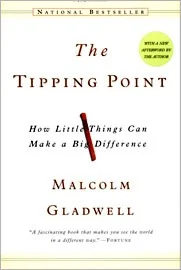
How Little Things Can Make a Big Difference
Malcolm Gladwell's debut explores how ideas, trends, and social behaviors spread like epidemics. He identifies three rules of epidemics — the Law of the Few, the Stickiness Factor, and the Power of Context — that explain why some ideas tip into massive popularity while others fade away.
Context & Background
The Tipping Point was Gladwell's first book and it changed how marketers, entrepreneurs, and social scientists think about the spread of ideas. By treating social phenomena as epidemics — subject to the same rules of transmission, infection, and immunity — Gladwell provided a framework for understanding viral growth before "going viral" was a phrase.
The Law of the Few: a tiny number of people (Connectors, Mavens, and Salesmen) do the lion's share of spreading ideas. The Stickiness Factor: small changes in presentation can make a message far more memorable. The Power of Context: human behavior is exquisitely sensitive to environmental conditions — small changes in context can tip behavior dramatically.
The book has sold over 3 million copies and established Gladwell as the most influential popular nonfiction writer of his generation. Its concepts shaped marketing strategy, public health campaigns, and social media theory. The word "tipping point" itself became ubiquitous in business and cultural discourse.
Quotes from The Tipping Point
Related Books

Crossing the Chasm
Geoffrey A. Moore
Same genre — complementary perspectives on Marketing
Purple Cow
Seth Godin
Essential reading in Marketing

The Innovator's Dilemma
Clayton M. Christensen
Complementary insights from Innovation

Mindset
Carol S. Dweck
Related perspective from Psychology