The Innovator's Dilemma
Clayton M. Christensen · 1997
Innovation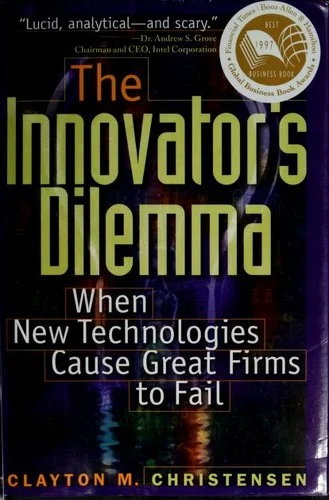
When Doing Everything Right Is the Wrong Thing
Clayton Christensen's landmark study of why great companies fail explains the paradox at the heart of innovation: the very management practices that make companies successful — listening to customers, investing in improvement, studying market trends — are the same practices that leave them vulnerable to disruptive technologies that reshape entire industries.
Context & Background
The Innovator's Dilemma introduced the concept of "disruptive innovation" to the business lexicon. Christensen demonstrated that established companies get disrupted not because of bad management, but because of good management — they rationally focus on profitable existing customers while overlooking cheaper, simpler products that eventually eat their market from below.
Christensen distinguished between sustaining innovations (improvements along existing performance trajectories) and disruptive innovations (simpler, cheaper alternatives that initially serve underserved markets). He showed that incumbents almost always win the sustaining game but almost always lose the disruptive one — and explained why through the economics of resource allocation.
The book transformed how Silicon Valley thinks about competition and strategy. Steve Jobs was deeply influenced by it. Intel's Andy Grove said it was the most important book he'd read in ten years. The phrase "disruptive innovation" became so ubiquitous that Christensen himself later complained about its misuse.