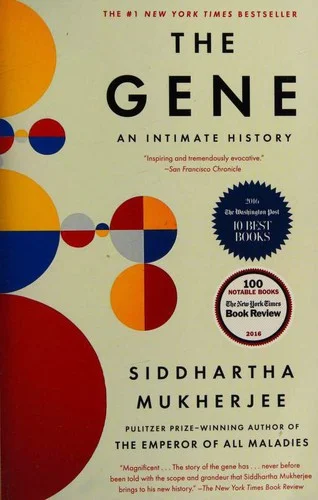
The Emperor of All Maladies
Siddhartha Mukherjee · 2010
Science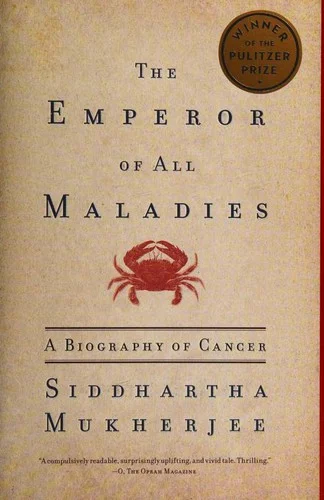
A Biography of Cancer
Siddhartha Mukherjee tells the sweeping story of cancer — from its first documented appearances in ancient Egypt to the gleaming laboratories of modern molecular biology. Part medical history, part detective story, part intimate chronicle of patients and physicians, this Pulitzer Prize-winning work treats cancer not merely as a disease but as a character with its own biography, personality, and terrifying resilience.
Context & Background
Mukherjee, a cancer physician and researcher at Columbia University, wrote this book while treating patients in the oncology ward. The juxtaposition of ancient history and present-day clinical reality gives the book a rare emotional power. He makes readers understand why cancer has been so difficult to conquer and why the war against it has been so long.
Mukherjee traces cancer from Imhotep's description of breast tumors in 2500 BC through the development of radical surgery (Halsted's mastectomy), chemotherapy (Sidney Farber's pioneering work with antifolates), combination chemotherapy, the war on cancer declared by Nixon in 1971, the discovery of oncogenes and tumor suppressors, and the rise of targeted therapy and immunotherapy. Cancer, he shows, is not one disease but hundreds, each requiring its own approach.
The book won the Pulitzer Prize for General Nonfiction in 2011 and was adapted into a Ken Burns documentary for PBS. It became the definitive popular account of cancer and its treatment, helping patients and families understand the disease that affects one in three people. Mukherjee's achievement was to make cancer's complexity comprehensible without oversimplifying it.
Quotes from The Emperor of All Maladies
Related Books

A Brief History of Time
Stephen Hawking
Same genre — complementary perspectives on Science
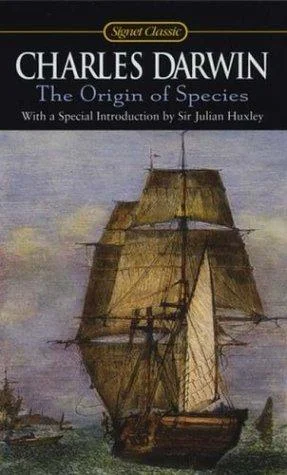
On the Origin of Species
Charles Darwin
Essential reading in Science