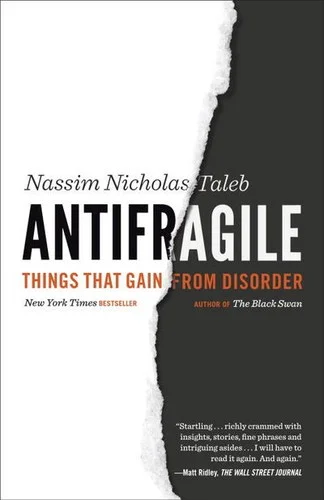
The Black Swan
Nassim Nicholas Taleb · 2007
Economics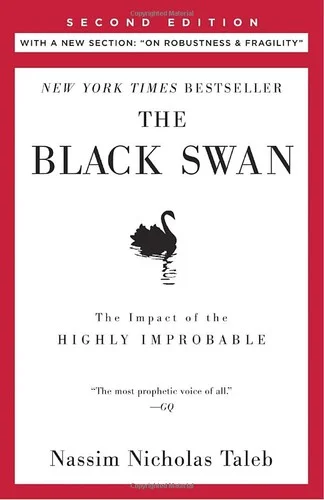
The Impact of the Highly Improbable
Nassim Taleb argues that the most consequential events in history — from wars to market crashes to scientific discoveries — are Black Swans: rare, unpredictable, high-impact events that we rationalize in hindsight. Our entire financial, political, and intellectual apparatus is built to predict the predictable — and is therefore catastrophically fragile.
Context & Background
Published in 2007, just before the financial crisis that would spectacularly validate its thesis, The Black Swan challenged the foundations of risk management, forecasting, and decision-making. Taleb showed that our models systematically underestimate the probability and impact of extreme events.
A Black Swan has three properties: it's an outlier (outside the realm of regular expectations), it carries extreme impact, and after the fact, we concoct explanations that make it seem predictable. Taleb distinguishes Mediocristan (domains where extremes don't matter much, like height) from Extremistan (domains dominated by extremes, like wealth or book sales). His concept of antifragility — systems that gain from disorder — was later developed into a full book.
The 2008 financial crisis made Taleb famous for being right about the fragility of the financial system. The book influenced risk management in finance, technology, and government. "Black Swan event" became standard vocabulary for rare, consequential surprises.
Quotes from The Black Swan
Related Books

The Wealth of Nations
Adam Smith
Same genre — complementary perspectives on Economics
Capitalism and Freedom
Milton Friedman
Essential reading in Economics
The Intelligent Investor
Benjamin Graham
Complementary insights from Finance & Investing
Good to Great
Jim Collins
Related perspective from Strategy