Principia Mathematica
Isaac Newton · 1687
Science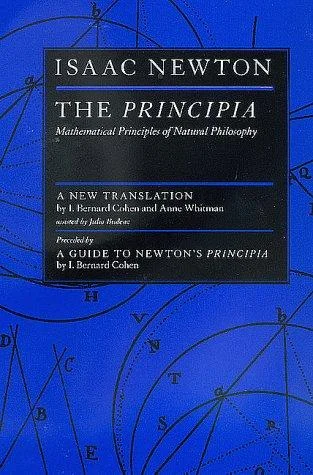
The Laws That Govern the Universe
Isaac Newton's Philosophiae Naturalis Principia Mathematica is arguably the most important scientific work ever published. In it, Newton formulated the three laws of motion and the law of universal gravitation, unifying terrestrial and celestial mechanics for the first time and demonstrating that the same physical laws govern the fall of an apple and the orbit of the Moon.
Context & Background
Before Newton, the motions of planets and the behavior of objects on Earth were considered separate phenomena requiring different explanations. The Principia showed they were governed by the same universal laws, an insight so powerful that it defined the scientific worldview for the next two centuries and established physics as the queen of the sciences.
Newton's three laws of motion: (1) An object at rest stays at rest unless acted upon by a force, (2) Force equals mass times acceleration, (3) Every action has an equal and opposite reaction. The law of universal gravitation: every mass attracts every other mass with a force proportional to their masses and inversely proportional to the square of the distance between them. Newton also developed calculus (which he called 'the method of fluxions') as the mathematical language needed to express these laws.
The Principia launched the Scientific Revolution's most productive phase and made Newton the most famous scientist in history. Its methods and laws dominated physics until Einstein's relativity. Alexander Pope wrote: 'Nature and Nature's Laws lay hid in Night: God said, Let Newton be! and all was Light.' The book remains the foundation upon which all of classical physics is built.