Being and Nothingness
Jean-Paul Sartre · 1943
Philosophy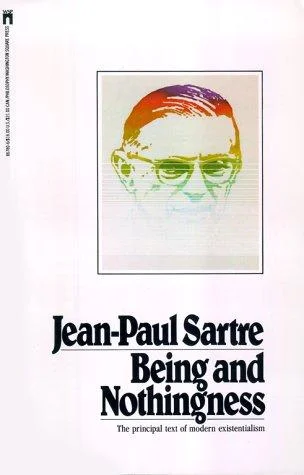
The Masterwork of Existentialist Philosophy
Sartre's Being and Nothingness is the philosophical foundation of existentialism. At its core is a radical claim about human freedom: we are "condemned to be free" — there is no predetermined human nature, no essence before existence. We are what we make of ourselves, and the weight of that responsibility is both terrifying and liberating.
Context & Background
Published in occupied Paris in 1943, Being and Nothingness offered a philosophy of radical freedom at a moment when freedom was under existential threat. Sartre argued that human consciousness is fundamentally different from other beings: we are always aware of what we are not, always projecting ourselves into a future that is not yet determined.
Existence precedes essence — we are not born with a fixed nature but create ourselves through our choices. Bad faith (mauvaise foi) is the self-deception of denying our freedom, pretending we have no choice. The Look (le regard) — being seen by another person — reveals our vulnerability and the inescapable social dimension of existence. Nothingness is not mere absence but an active feature of consciousness: we are always aware of possibilities, of what could be otherwise.
The book made Sartre the intellectual celebrity of the twentieth century and launched existentialism as a cultural phenomenon. Its influence spread far beyond philosophy into literature, psychology, political theory, and popular culture. The idea that we are radically free and wholly responsible for our choices became a defining feature of postwar thought.