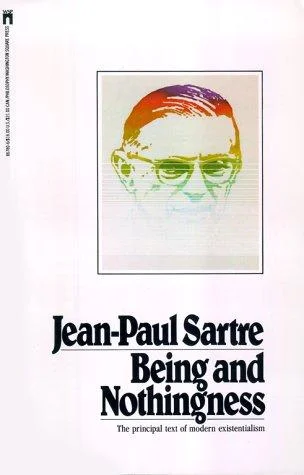
Jean-Paul Sartre
Quotes & Wisdom

Jean-Paul Sartre: The Philosopher of Radical Freedom
Jean-Paul Sartre told the twentieth century what it did not want to hear: that human beings are absolutely free and absolutely responsible for what they make of that freedom. Born in Paris in 1905, he became the most famous philosopher of his era by arguing that existence precedes essence - that we are not born with a fixed nature but must create ourselves through our choices. His plays, novels, and philosophical treatises made existentialism the dominant intellectual movement of postwar Europe. He coined phrases that entered the cultural bloodstream - 'Hell is other people,' 'Man is condemned to be free' - and lived with a provocative consistency, refusing the 1964 Nobel Prize in Literature because he believed a writer should never become an institution. His lifelong partnership with Simone de Beauvoir became a model of intellectual companionship that challenged every convention of bourgeois marriage.
Context & Background
Jean-Paul Charles Aymard Sartre was born on June 21, 1905, in Paris. His father, Jean-Baptiste Sartre, was a naval officer who died of a fever when Jean-Paul was only fifteen months old. His mother, Anne-Marie Schweitzer, moved back to her parents' home, where the young Sartre was raised primarily by his grandfather, Charles Schweitzer - a German teacher and uncle of the famous Albert Schweitzer.
The absence of a father and the dominating presence of his grandfather profoundly shaped Sartre's psychology and philosophy. Without a father to impose expectations, Sartre grew up feeling an existential groundlessness - a sense that his life had no predetermined script. His grandfather treated him as a prodigy and showered him with books, creating an intensely literary childhood but also an artificial one. Sartre later described feeling like a performer in his grandfather's private theater, playing the role of the gifted child rather than simply being one. This early experience of performing an identity - of being what others expected rather than what he genuinely was - became the seed of his philosophical concept of 'bad faith.'
Sartre excelled academically, attending the prestigious Lycee Henri IV and then the Ecole Normale Superieure, where he studied philosophy and graduated first in his class in 1929 - the same year he met Simone de Beauvoir, who finished second. Their relationship would last until his death, though it took a form that scandalized conventional society: they rejected marriage, maintained an open relationship, and treated their partnership as a pact between intellectual equals rather than a romantic possession.
Sartre's philosophical masterwork, Being and Nothingness (1943), was written during the German occupation of Paris - a circumstance that gave its themes of freedom, responsibility, and authenticity an urgency beyond the merely academic. The book is dense, demanding, and brilliant. It draws on the phenomenology of Edmund Husserl and the existential philosophy of Martin Heidegger while pushing both in radically new directions.
The central insight is deceptively simple: human consciousness is fundamentally different from the being of objects. A stone simply is what it is - it has a fixed essence. But a human being is always becoming, always projecting forward into possibilities that do not yet exist. This is what Sartre means by 'existence precedes essence': we are not born with a predetermined nature but must create ourselves through our choices and actions.
This sounds liberating, but Sartre insisted it was also terrifying. If there is no God, no fixed human nature, no cosmic script, then we are entirely responsible for what we become. There are no excuses - no appeals to upbringing, temperament, social pressure, or circumstance that can fully explain away our choices. This radical responsibility is what Sartre meant by his most famous philosophical formulation: 'Man is condemned to be free.'
The concept of 'bad faith' (mauvaise foi) is Sartre's term for the strategies we use to evade this freedom. The waiter who performs his role with mechanical precision, the woman who pretends not to notice her companion's romantic advances, the conformist who claims to be merely following orders - all are examples of consciousness attempting to deny its own freedom by pretending to be a thing with a fixed nature. For Sartre, bad faith is the fundamental form of human self-deception.
Sartre's plays brought existentialist philosophy to audiences who would never read Being and Nothingness. No Exit (Huis Clos), first performed in 1944, is his most famous dramatic work. Three deceased characters - Garcin, Inez, and Estelle - find themselves locked in a room together for eternity. There is no fire, no torture, no traditional hellscape. The punishment is simply each other.
The play's most famous line - 'Hell is other people' (L'enfer, c'est les autres) - is often misunderstood as simple misanthropy. Sartre's point is more specific and more philosophical. Each of the characters needs the others to define their identity, yet each is constitutionally unable to provide what the others need. Garcin wants Inez to confirm he is not a coward; she refuses. Estelle wants Garcin's romantic attention; he is obsessed with Inez's judgment. The hell is not other people per se but the inescapable fact that our sense of self is partly constituted by how others see us - and we cannot control that gaze.
This insight - that the look of the other transforms us into objects, fixing us in their judgment - is one of Sartre's most penetrating contributions to philosophy. It explains the peculiar discomfort of being stared at, the anxiety of being judged, and the deep human desire to control how others perceive us. In the age of social media, Sartre's analysis of the gaze feels more relevant than ever.
Sartre believed that philosophy without political engagement was empty abstraction. After the liberation of Paris, he founded the journal Les Temps Modernes with de Beauvoir and Maurice Merleau-Ponty, making it a platform for politically engaged intellectual commentary. He became the model of the 'engaged intellectual' - a public figure who used philosophical analysis to intervene in political debates.
His political trajectory was controversial and often contradictory. He was a fellow traveler of the Communist Party without ever joining it, supported various Third World liberation movements, opposed the French war in Algeria, and later embraced Maoist politics. His critics accused him of naivety about Communist authoritarianism - he was famously slow to condemn Soviet abuses, and his political pronouncements sometimes seemed driven more by contrarianism than by careful analysis.
The most dramatic expression of Sartre's commitment to intellectual independence came in 1964, when he was awarded the Nobel Prize in Literature. He refused it - the first laureate to voluntarily do so. His reasons were characteristically provocative: he believed that accepting the prize would transform him from a living, arguing, contradicting thinker into a monument, an institution, a brand. 'A writer should not allow himself to be turned into an institution,' he explained. The refusal was consistent with his philosophy: to accept the prize would be to allow others to fix his identity, to become a thing rather than a consciousness.
Sartre's relationship with Simone de Beauvoir is one of the most famous intellectual partnerships in history. For over fifty years, they were each other's first readers, sharpest critics, and most devoted advocates. Their open relationship - which included numerous affairs on both sides, some of which caused considerable pain - was a deliberate experiment in living according to existentialist principles: rejecting possessiveness, embracing freedom, and treating love as an ongoing choice rather than a binding contract.
The partnership was not without its costs. De Beauvoir's The Second Sex (1949), one of the founding texts of modern feminism, was partly inspired by the gender dynamics within their own relationship. And some of their romantic involvements with students and younger partners raised ethical questions that complicate the image of philosophical liberation.
Yet the intellectual fruits of the partnership were extraordinary. They challenged each other's thinking, refined each other's arguments, and produced a combined body of work - philosophical, literary, and political - that reshaped how the Western world thought about freedom, responsibility, and human relationships.
Sartre's physical appearance was distinctive and, by his own account, defining. He was short, cross-eyed, and considered himself ugly - a self-perception that informed his philosophical interest in how the body mediates our experience of the world and how we are seen by others. Despite his appearance, he was famously charismatic and attracted numerous romantic partners throughout his life.
His writing habits were prodigious and chemically assisted. He wrote for hours every day, fueled by massive quantities of coffee, tobacco, and amphetamines. His output was staggering: novels, plays, philosophical treatises, political essays, literary criticism, biographies, and an autobiography that runs to thousands of pages.
Sartre's health deteriorated in his final years. He became nearly blind in 1973 and was increasingly dependent on others for daily life. He died on April 15, 1980, in Paris. An estimated 50,000 people followed his funeral procession through the streets - a remarkable tribute to a philosopher who had spent his career arguing that we should resist the temptation to follow anyone. He is buried at Montparnasse Cemetery, sharing a grave with Simone de Beauvoir, who died six years later. In death as in life, they remain inseparable.