
Siddhartha Gautama
Quotes & Wisdom
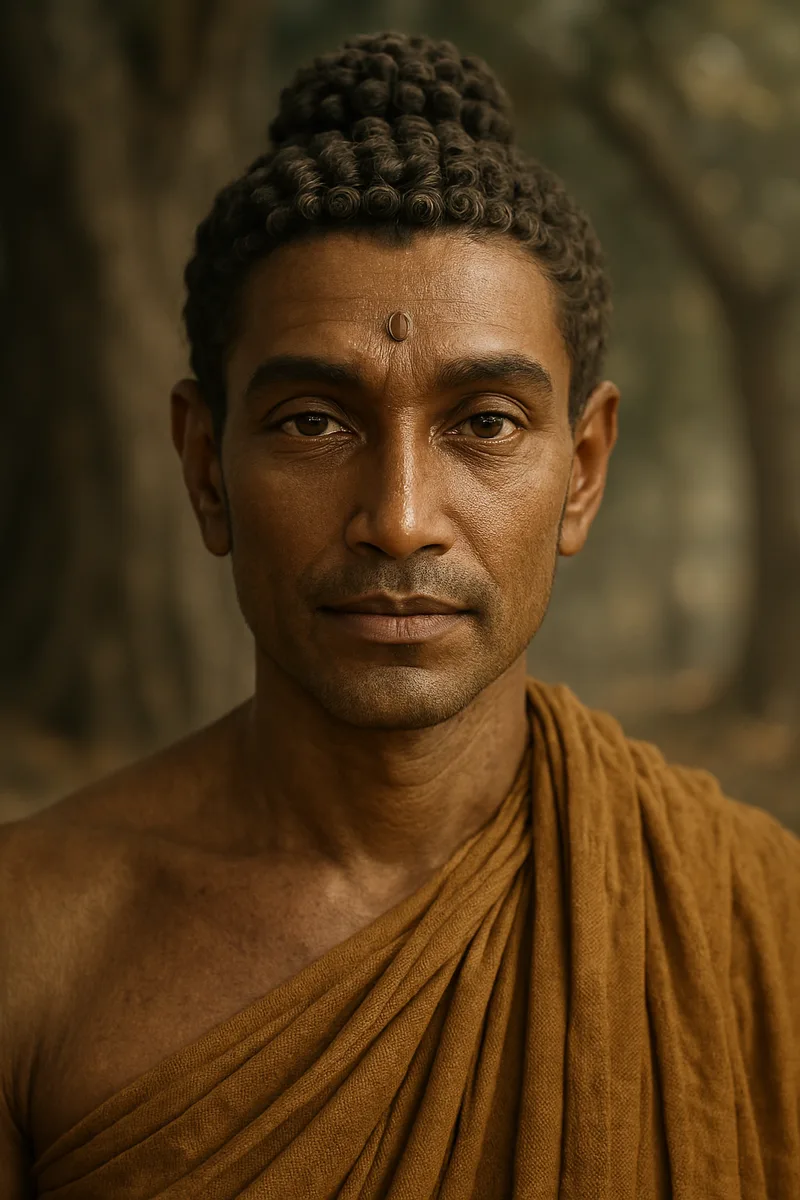
Siddhartha Gautama: The Awakened One
Siddhartha Gautama - the historical figure who became known as the Buddha, meaning "the awakened one" - is among the most influential human beings who ever lived. Born a prince in what is now Nepal around 563 BC, he renounced wealth, privilege, and family to seek an answer to the fundamental problem of human suffering. After years of ascetic practice and deep meditation, he attained enlightenment under the Bodhi tree at Bodh Gaya and spent the remaining forty-five years of his life teaching the path he had discovered. His teachings - the Four Noble Truths, the Eightfold Path, the Middle Way - became the foundation of Buddhism, a tradition that now claims over 500 million adherents worldwide. His insights into the nature of the mind, suffering, and compassion continue to resonate across cultures and centuries.
Context & Background
Siddhartha Gautama was born around 563 BC in Lumbini, in the foothills of the Himalayas, in what is now southern Nepal. His father, Suddhodana, was the chief or king of the Shakya clan, a warrior aristocracy that governed a small republic in the Ganges plain. His mother, Maya, is said to have died seven days after his birth, and he was raised by his maternal aunt, Mahapajapati.
The northeastern India of Siddhartha's youth was a region of extraordinary intellectual and spiritual ferment. The old Vedic religion, with its elaborate rituals and priestly hierarchy, was being challenged by a diverse array of wandering teachers, ascetics, and philosophers who sought direct personal experience of the ultimate reality. The Upanishads, composed during this period, explored the nature of the self (atman) and its relationship to the universal principle (Brahman). Mahavira, the founder of Jainism, was Siddhartha's approximate contemporary. It was an axial age - a period of spiritual revolution that also produced Confucius in China, Socrates in Greece, and the Hebrew prophets in Israel.
According to traditional accounts, Siddhartha was raised in luxury, shielded by his father from all knowledge of suffering. A prophecy at his birth had declared that he would become either a great king or a great spiritual teacher, and Suddhodana, wanting a king, surrounded the boy with every pleasure and distraction. Siddhartha married Yasodhara, fathered a son named Rahula, and lived in privileged comfort until, at the age of twenty-nine, he ventured beyond the palace walls and encountered - for the first time - an old man, a sick man, a corpse, and a wandering ascetic. These "four sights" shattered his illusions about the nature of life and propelled him to renounce his princely life in search of a solution to suffering.
Siddhartha's spiritual quest lasted six years and took him through the major religious practices available in ancient India. He studied with two renowned meditation teachers, mastering their techniques but finding them insufficient. He then practiced extreme asceticism with a group of five companions, fasting until his body was emaciated and his spine could be felt through his stomach. According to tradition, he came close to death before concluding that self-mortification was as futile as self-indulgence.
This realization led to his most distinctive insight: the Middle Way, a path between the extremes of sensory pleasure and severe asceticism. He resumed eating, took a seat beneath a pipal tree (the Bodhi tree) at Bodh Gaya, and resolved not to rise until he had attained enlightenment. After a night of deep meditation - during which, tradition holds, he was tempted by the demon Mara - he achieved full awakening at the age of thirty-five.
The content of his enlightenment was formulated as the Four Noble Truths: life involves suffering (dukkha); suffering arises from craving and attachment (tanha); suffering can cease (nirodha); and there is a path to its cessation, the Noble Eightfold Path (magga). This path - encompassing right understanding, right intention, right speech, right action, right livelihood, right effort, right mindfulness, and right concentration - was not a set of commandments but a practical program for transforming the mind.
After his enlightenment, the Buddha traveled to the Deer Park at Sarnath, near Varanasi, where he delivered his first sermon - the "Turning of the Wheel of Dharma" - to his five former companions. They became his first disciples, and from this small beginning, the Buddha built a monastic community (sangha) that would grow into one of the world's great religions.
For the next forty-five years, the Buddha wandered across northeastern India, teaching an astonishing range of people - kings and beggars, Brahmins and outcasts, men and women. His teaching method was remarkably adaptive: he tailored his message to the understanding and needs of each audience, using parables, dialogues, and practical instruction rather than abstract dogma. He founded an order of monks and, after some hesitation, an order of nuns - one of the first religious communities in history to include women.
His central teaching was the impermanence (anicca) of all conditioned phenomena and the absence of a permanent, unchanging self (anatta). These doctrines challenged the prevailing Hindu belief in an eternal soul and placed the emphasis not on metaphysical speculation but on direct, experiential understanding of the nature of mind and reality.
The historical Buddha was not the serene, plump figure of later artistic convention. Early texts describe him as tall, athletic, and possessed of a commanding physical presence - consistent with his warrior-caste upbringing. He was also pragmatic and sometimes wryly humorous. When asked metaphysical questions - Does the universe have a beginning? Does the self survive death? - he famously refused to answer, comparing such speculation to a man struck by a poisoned arrow who insists on knowing the name and clan of the archer before allowing the arrow to be removed.
The Buddha died around 483 BC at the age of eighty, in Kushinagar, after eating a meal that caused severe illness (the exact nature of the food - whether pork or mushrooms - has been debated for centuries). His last words, as recorded in the Pali Canon, were: "All conditioned things are impermanent. Work out your own salvation with diligence." He was cremated, and his relics were distributed among eight kingdoms, where they were enshrined in stupas that became the first Buddhist pilgrimage sites.