Lao Tzu
Quotes & Wisdom
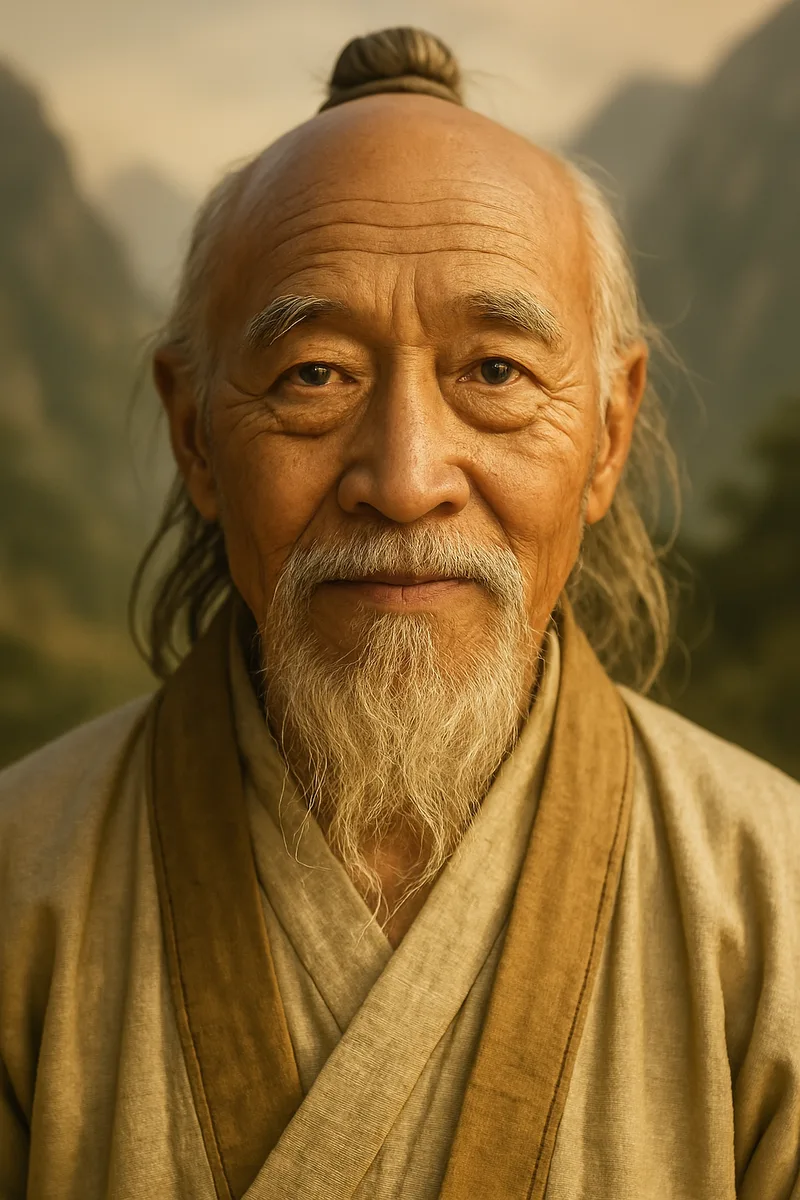
Lao Tzu: The Sage Who Found Strength in Stillness
Lao Tzu - whose name means 'Old Master' - is the legendary founder of Taoism and the attributed author of the Tao Te Ching, one of the most translated and influential texts in world literature. Whether Lao Tzu was a single historical figure, a composite of several sages, or a purely mythical creation remains debated by scholars. What is certain is that the ideas associated with his name have shaped Chinese philosophy, religion, and culture for over two thousand years. The Tao Te Ching's eighty-one brief chapters offer paradoxical wisdom on the nature of reality, the art of governance, and the path to inner peace. In an age obsessed with doing more, Lao Tzu's radical counsel to do less - to yield, to empty, to follow the natural way - feels more urgent than ever.
Context & Background
Traditional accounts place Lao Tzu's birth around 601 BC in the state of Chu during China's Zhou dynasty. The historian Sima Qian, writing in the first century BC, identified him as Li Er, an archivist at the Zhou court. According to legend, Lao Tzu grew disillusioned with the corruption and decline of the dynasty and decided to leave civilization. At the western gate of the kingdom, a guard recognized the sage and begged him to write down his wisdom before departing. Lao Tzu composed the Tao Te Ching - roughly five thousand characters of compressed philosophical poetry - and rode away on a water buffalo, never to be seen again.
Whether or not this story is literally true, it captures something essential about Taoist philosophy: the sage withdraws from power rather than pursuing it. In the turbulent period of Chinese history known as the Spring and Autumn period, when rival states competed for dominance and Confucius was advocating social harmony through ritual and hierarchy, Lao Tzu (or the tradition bearing his name) offered a radically different vision - one rooted in nature rather than civilization, in spontaneity rather than ceremony.
The Tao Te Ching emerged from a culture steeped in observation of the natural world. Water, valleys, the uncarved block, the empty vessel - these images drawn from nature became metaphors for the deepest truths of existence. The text's spare, paradoxical style reflects a philosophy that distrusts elaborate argument and believes the deepest truths cannot be captured in words.
The central concept of the Tao Te Ching is the Tao itself - the Way, the fundamental principle underlying all reality. The text's famous opening line - 'The Tao that can be spoken is not the true Tao' - announces that ultimate reality transcends language and conceptual thought. The Tao is not a god, not a force, not a substance - it is the pattern of natural order that everything follows when unobstructed.
Lao Tzu describes the Tao through negation and paradox. It is empty yet inexhaustible. It does nothing yet nothing is left undone. It is the source of all things yet cannot be grasped. This approach reflects a profound skepticism about the ability of language and rational thought to capture reality - a position that resonates with traditions from Buddhism to modern phenomenology.
Perhaps the most practically useful concept in the Tao Te Ching is wu wei - literally 'non-action' or 'effortless action.' Wu wei does not mean passivity but rather acting in harmony with the natural flow of circumstances rather than forcing outcomes through willpower and aggression.
Water is Lao Tzu's favorite metaphor for wu wei. Water is soft and yielding, yet it wears away the hardest stone. It flows to the lowest places that everyone else avoids. It takes the shape of whatever contains it without losing its essential nature. The sage, like water, achieves great things not through force but through persistence, flexibility, and alignment with the deeper currents of reality.
This principle has applications far beyond philosophy. In martial arts, the concept of using an opponent's force against them derives from wu wei. In leadership, the idea that the best leaders are those whose subjects barely notice them - 'When the best leader's work is done, the people say: we did it ourselves' - remains one of the most sophisticated theories of governance ever articulated.
The Tao Te Ching has been translated more than any book except the Bible and has influenced traditions far beyond Chinese Taoism. Zen Buddhism absorbed Taoist ideas about spontaneity and the limits of rational thought. Western thinkers from Schopenhauer to Heidegger have engaged with Taoist concepts. In the twentieth century, the counterculture movement embraced Lao Tzu as an alternative to Western materialism and competition.
The mystery surrounding Lao Tzu is itself a kind of Taoist teaching. A philosophy that values emptiness over fullness, anonymity over fame, and yielding over asserting is perfectly served by a founder who may not have existed as a single individual. The text matters more than the author - and the text counsels us to look beyond texts altogether.
In Chinese folk religion, Lao Tzu was eventually deified as Laojun, one of the Three Pure Ones of Taoism - a development that would have struck the author of the Tao Te Ching as deeply ironic. The sage who taught that names and categories distort reality became the object of elaborate naming and categorization. Yet even this irony carries a lesson: the human need for stories and symbols is itself part of the natural way, and the Tao, which encompasses everything, encompasses even the misunderstanding of the Tao.