
John Wooden
Quotes & Wisdom
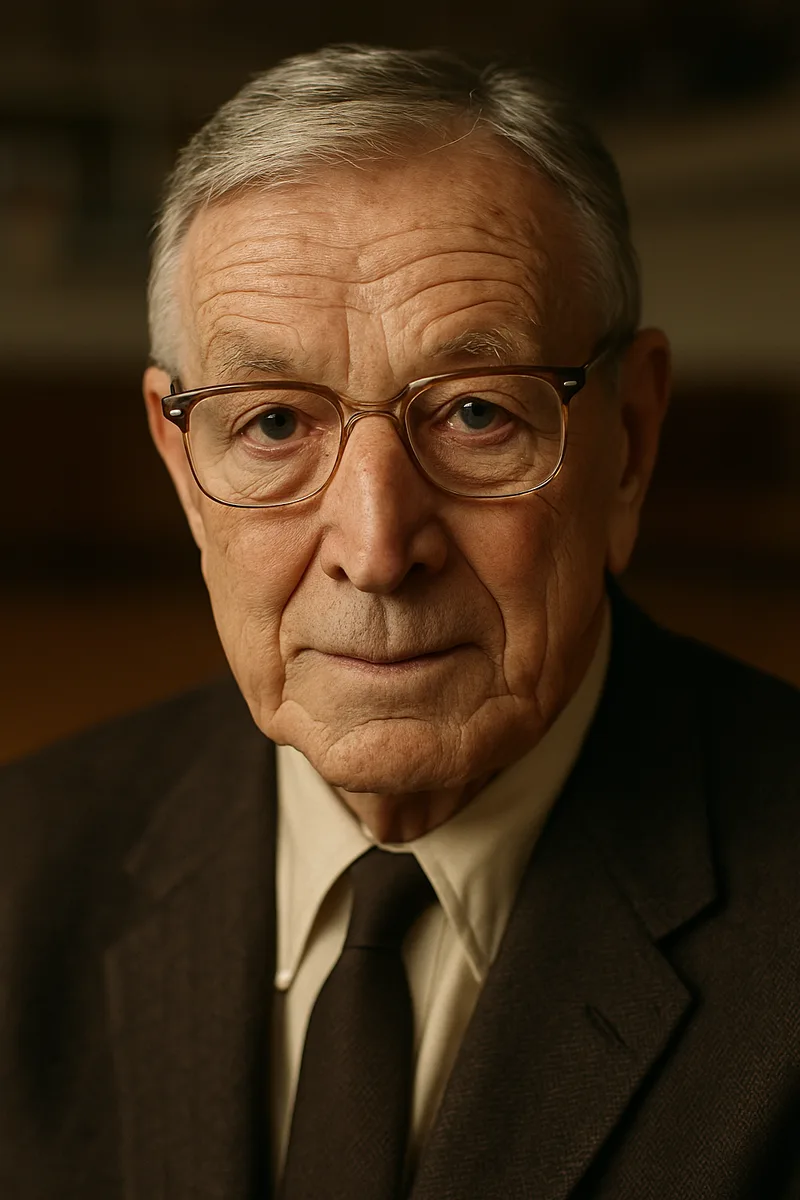
John Wooden: The Coach Who Taught That Character Is the Real Victory
John Wooden won ten NCAA basketball championships in twelve years at UCLA - a record that will almost certainly never be matched. Yet the 'Wizard of Westwood' considered his greatest achievement not the trophies but the men his players became. Wooden built his coaching philosophy on a foundation of moral principles, crystallized in his famous Pyramid of Success - a framework he developed over fourteen years that placed industriousness and enthusiasm at the base and competitive greatness at the peak. He never talked about winning. He talked about preparation, effort, and becoming the best version of yourself. His quotes carry the quiet authority of a man who proved, over a lifetime, that integrity and excellence are not contradictions but companions.
Context & Background
Born on October 14, 1910, on a farm near Hall, Indiana, John Robert Wooden grew up in the kind of rural America that was already disappearing. His father Joshua was a farmer who lost everything in the agricultural downturn of the 1920s but never lost his dignity. The elder Wooden gave his son a card with seven rules to follow - among them 'Make each day your masterpiece' and 'Drink deeply from good books, especially the Bible.' John carried that card for the rest of his life.
Basketball was the lifeblood of small-town Indiana, and Wooden was a natural. He led Martinsville High School to the state championship game three consecutive years, winning once. At Purdue University, he was a three-time All-American guard and the 1932 national Player of the Year. His playing style was fierce, quick, and disciplined - qualities that would define his coaching.
After graduating, Wooden taught English and coached basketball and baseball at the high school level in Indiana for eleven years. He served in the Navy during World War II, then coached at Indiana State before accepting the UCLA position in 1948 - a job he took only because his first choice, the University of Minnesota, failed to call in time due to a snowstorm that knocked out phone lines.
Wooden's first fifteen years at UCLA were successful but not extraordinary. The dynasty began in 1964 and lasted through 1975 - ten championships in twelve seasons, including seven consecutive titles from 1967 to 1973 and an eighty-eight-game winning streak. No program in any sport has matched this sustained dominance.
Wooden's approach was methodical. He planned every practice to the minute, scripted on three-by-five index cards. He drilled fundamentals relentlessly - how to put on socks, how to tie shoes, how to make a proper pass. He believed that mastery of small things created excellence in large ones. His teams played a fast, pressing style that was exhausting to face because UCLA players were in superior condition - a direct product of practices that were more demanding than any game.
He recruited character as much as talent. Players like Bill Walton and Kareem Abdul-Jabbar (then Lew Alcindor) were generational athletes, but Wooden shaped them into team players who subordinated individual glory to collective purpose. His definition of success - 'peace of mind which is a direct result of self-satisfaction in knowing you made the effort to become the best of which you are capable' - had nothing to do with scoreboards.
Wooden spent fourteen years developing his Pyramid of Success, a framework that he considered his most important contribution. The pyramid consists of fifteen building blocks arranged in five tiers. The foundation is industriousness and enthusiasm. The middle tiers include friendship, loyalty, cooperation, self-control, alertness, initiative, and intentness. The apex is competitive greatness - performing at your best when your best is needed.
What made the pyramid powerful was not its originality but its consistency. Wooden lived it. He treated opponents with respect, never scouted other teams (preferring to focus on his own preparation), and refused to use profanity. He demanded the same standards from his players - not because he was rigid but because he believed character was built through daily habits, not dramatic moments.
Wooden was married to his high school sweetheart, Nellie, for fifty-three years until her death in 1985. For the remaining twenty-five years of his life, he wrote her a love letter on the twenty-first of every month and placed it on her pillow. He never removed her belongings from their modest Encino condominium.
He was a devoted reader of poetry, particularly fond of Abraham Lincoln and Mother Teresa. He could recite lengthy passages from memory well into his nineties. Despite his fame, he lived simply - same small apartment, same modest car, same willingness to answer every letter from fans and former players. He died on June 4, 2010, at ninety-nine, four months before his hundredth birthday. The gymnasium he coached in still bears his name, but his real monument is the thousands of people who carry his lessons forward.