
John F. Kennedy
Quotes & Wisdom
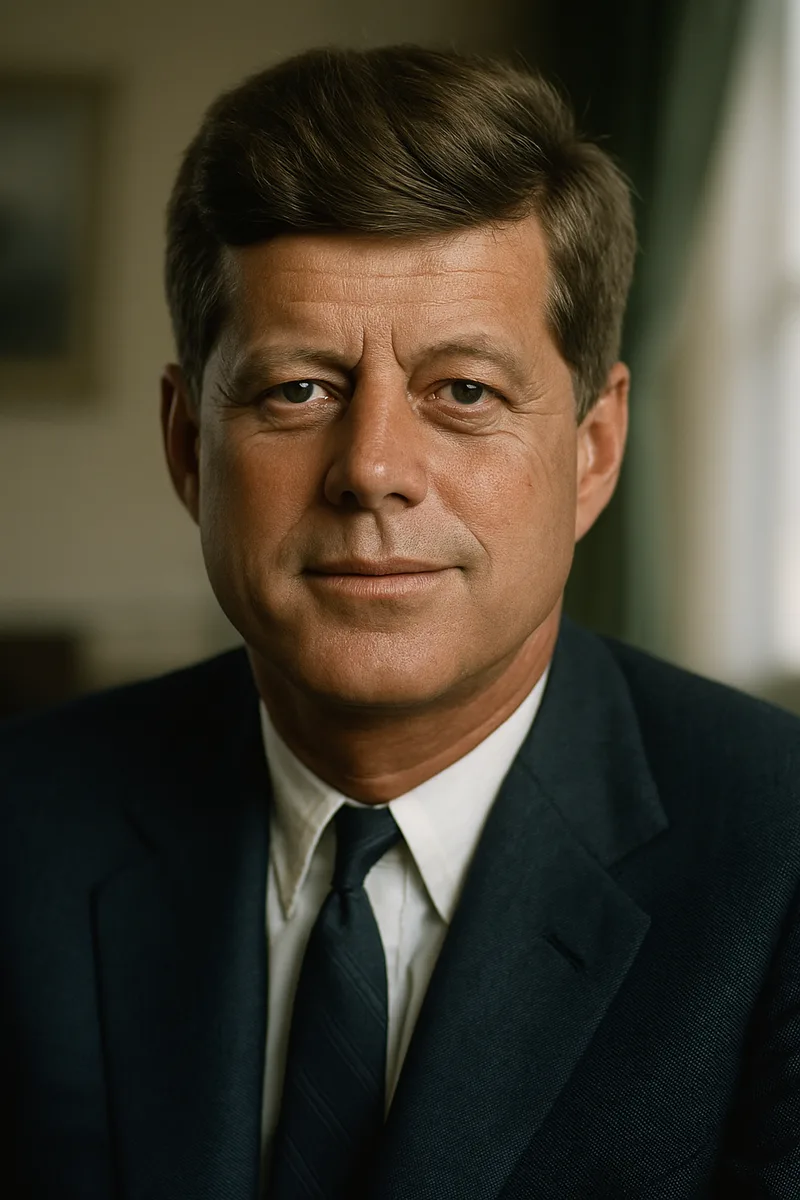
John F. Kennedy: The President Who Called a Nation to Its Better Self
John F. Kennedy served as president for just over a thousand days, yet his words and image remain imprinted on the American imagination like few others. Young, eloquent, and projecting an energy that felt like a break from everything that came before, Kennedy embodied the optimism of postwar America even as he navigated the terrifying realities of the Cold War. His inaugural address - 'Ask not what your country can do for you' - set a standard for political rhetoric that no successor has matched. His assassination in Dallas on November 22, 1963, froze him forever at forty-six, creating a myth of lost promise that has shaped American politics ever since. Kennedy's quotes reveal a leader who understood that words themselves are a form of action - that the right sentence, at the right moment, can move history.
Context & Background
Born on May 29, 1917, in Brookline, Massachusetts, John Fitzgerald Kennedy grew up in the most ambitious Irish-American family of his generation. His father, Joseph P. Kennedy Sr., was a ruthless businessman who built a fortune in banking, Hollywood, and liquor, and who intended one of his sons to become president. That role was originally assigned to the eldest son, Joe Jr., who died in a World War II bombing mission in 1944. The mantle passed to Jack.
Kennedy's childhood was marked by chronic illness - scarlet fever, colitis, Addison's disease, and severe back problems that would plague him throughout his life. He spent long stretches in hospitals and sickbeds, reading voraciously and developing the detached, ironic sensibility that would distinguish his public persona. At Choate and later at Harvard, he was charming but academically inconsistent - a pattern broken by his senior thesis, published as Why England Slept, which analyzed Britain's failure to prepare for war.
His wartime service on PT-109 in the Solomon Islands - where he saved his crew after a Japanese destroyer cut their boat in half - gave him both a heroic narrative and a permanent worsening of his back injuries. The war killed his brother and his brother-in-law, experiences that deepened Kennedy's sense that life was fragile and time was short.
Kennedy entered politics in 1946, winning a congressional seat in Massachusetts with help from his father's money and connections. He was not a distinguished congressman or senator - his legislative record was thin, and his absences frequent. What set him apart was style. Kennedy understood television better than any politician of his generation, and the 1960 presidential debates against Richard Nixon - where Kennedy appeared confident and vital while Nixon looked haggard - may have decided the election.
His presidency began with the disastrous Bay of Pigs invasion in April 1961, a CIA-planned attempt to overthrow Fidel Castro that failed spectacularly. Kennedy took public responsibility - 'Victory has a thousand fathers, but defeat is an orphan' - and the lesson chastened him. By the time of the Cuban Missile Crisis in October 1962, he had learned to resist the advice of hawkish advisors and seek diplomatic solutions to existential threats.
The missile crisis brought the world closer to nuclear war than at any point before or since. Kennedy's handling of it - firm but restrained, combining public pressure with secret back-channel negotiations - is widely regarded as his finest hour.
Kennedy's relationship with the civil rights movement was complicated. He had won the 1960 election partly through Black votes but was cautious about pushing civil rights legislation that might alienate Southern Democrats. For two years, he moved slowly, issuing executive orders rather than championing legislation.
The events of 1963 forced his hand. The violent repression of protesters in Birmingham, Alabama, and the standoff at the University of Alabama - where Governor George Wallace blocked Black students from enrolling - compelled Kennedy to act. In a nationally televised address in June 1963, he framed civil rights as a moral issue 'as old as the Scriptures and as clear as the American Constitution.' He submitted comprehensive civil rights legislation to Congress that would, after his death, become the Civil Rights Act of 1964 under Abraham Lincoln's political heir Lyndon Johnson.
Kennedy was shot and killed in Dallas, Texas, on November 22, 1963. He was forty-six years old. The assassination traumatized the nation and created a mythology of lost potential - the idea that America's best future was stolen in Dealey Plaza. The reality was more complex. Kennedy's actual legislative achievements were modest, his Vietnam policy was escalating, and his personal life involved reckless behavior that would have been devastating if exposed.
Yet the power of his rhetoric was genuine. His call to public service inspired the Peace Corps, the space program, and a generation of Americans who entered politics believing they could make a difference.
Kennedy was a gifted writer who won the Pulitzer Prize for Profiles in Courage, though the extent of his speechwriter Ted Sorensen's contribution remains debated. He read extraordinarily fast - reportedly 1,200 words per minute - and consumed newspapers, briefing papers, and history with voracious appetite.
He had a dry, self-deprecating wit that distinguished him from the ponderous style of most politicians. When asked how he became a war hero, he answered, 'It was involuntary. They sank my boat.' His press conferences were performances of charm and intelligence that no subsequent president has matched. Behind the glamour was a man in constant physical pain who lived with the knowledge - reinforced by the losses of his siblings - that time was not guaranteed.