
Gautama Buddha
Quotes & Wisdom
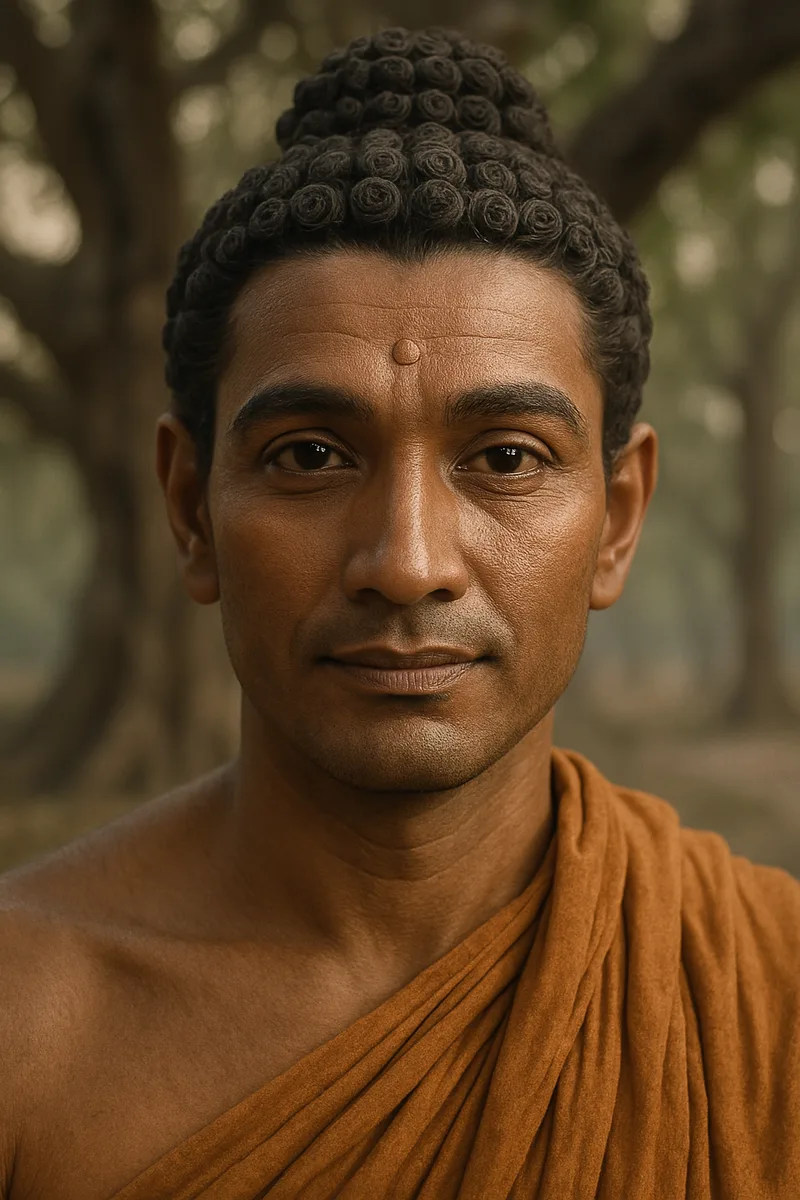
Gautama Buddha: The Awakened Teacher Who Transformed the Human Understanding of Suffering
Siddhartha Gautama, known as the Buddha - "the awakened one" - founded one of the world's great religions and philosophical traditions. Born a prince in what is now Nepal around 563 BC, he renounced his privileged life to seek the cause of human suffering and, after years of ascetic practice and meditation, achieved enlightenment under the Bodhi tree. His teachings - the Four Noble Truths, the Eightfold Path, and the doctrine of dependent origination - offered a systematic path from suffering to liberation that has guided hundreds of millions of people across Asia and increasingly the Western world. The Buddha taught not theology but psychology - a practical method for understanding the mind and freeing it from the patterns that create suffering.
Context & Background
Siddhartha Gautama was born around 563 BC in Lumbini, in the foothills of the Himalayas in what is now southern Nepal. His father, Suddhodana, was the ruler of the Shakya clan, and Siddhartha grew up in luxury - shielded, according to tradition, from all knowledge of suffering, aging, and death. His mother, Maya, died shortly after his birth, and he was raised by his aunt Mahapajapati.
The India of Buddha's time was undergoing profound intellectual and social upheaval. The Vedic religion, centered on ritual sacrifice and the authority of the Brahmin priest class, was being challenged by a diverse array of wandering ascetics, philosophers, and spiritual seekers known as the shramanas. This was the era of the Upanishads - philosophical texts that explored the nature of the self (atman) and ultimate reality (Brahman). It was also a period of urbanization, trade expansion, and the rise of powerful kingdoms, which disrupted traditional social structures and created an audience for new spiritual teachings.
According to Buddhist tradition, the young Siddhartha encountered four sights during excursions beyond the palace walls: an old man, a sick man, a corpse, and a wandering ascetic. These encounters shattered his sheltered worldview and drove him, at age twenty-nine, to abandon his family, his wealth, and his future throne to seek the truth about suffering.
After six years of extreme asceticism - fasting, self-mortification, and meditation practices that nearly killed him - Siddhartha concluded that neither luxury nor self-denial led to liberation. He chose a "Middle Way" between extremes and, meditating under a pipal tree (later called the Bodhi tree) in Bodh Gaya, achieved enlightenment at age thirty-five.
The content of his enlightenment is expressed in the Four Noble Truths: (1) life involves suffering (dukkha - unsatisfactoriness, pain, impermanence); (2) suffering arises from craving (tanha - desire, attachment, aversion); (3) suffering can cease (nirodha); and (4) the path to the cessation of suffering is the Noble Eightfold Path - right understanding, right intention, right speech, right action, right livelihood, right effort, right mindfulness, and right concentration.
This framework is not a theology but a practical psychology. The Buddha was famously reluctant to speculate about metaphysical questions - whether the universe is eternal, whether the soul survives death - considering them distractions from the urgent practical work of ending suffering.
After his enlightenment, the Buddha spent the remaining forty-five years of his life teaching. He established the Sangha - a monastic community of monks and, later, nuns - that became the vehicle for preserving and transmitting his teachings. The Sangha was organized around simple rules of conduct, communal property, and democratic decision-making, and it was open to all castes - a revolutionary principle in the rigidly hierarchical society of ancient India.
The Buddha's teaching method was characteristically flexible. He tailored his instructions to the capacity and circumstances of each listener, using parables, analogies, and questions rather than dogmatic assertions. He emphasized direct experience over blind faith: "Do not accept anything on mere hearsay... When you know for yourselves that these things are wholesome, blameless, praised by the wise, and lead to benefit and happiness, then you should accept and practice them."
The historical Buddha was not the serene, smiling figure of popular iconography but a rigorous thinker and disciplined organizer who built an institution that survived for millennia. He debated rival philosophers, managed conflicts within the Sangha, and navigated the politics of competing kingdoms. He reportedly had a sense of humor, using pointed stories and unexpected responses to shake students out of complacent thinking. He rejected the caste system and accepted disciples from all social backgrounds, including former criminals and courtesans. He allowed his cousin Ananda to establish an order of nuns, though tradition says he did so reluctantly and predicted that it would shorten the lifespan of his teachings. He died around 483 BC at the age of eighty, reportedly from food poisoning, in Kushinagar, India. His last words, according to the Pali Canon, were: "All conditioned things are impermanent. Strive on with diligence."