Adam Smith
Quotes & Wisdom
Adam Smith: The Father of Modern Economics
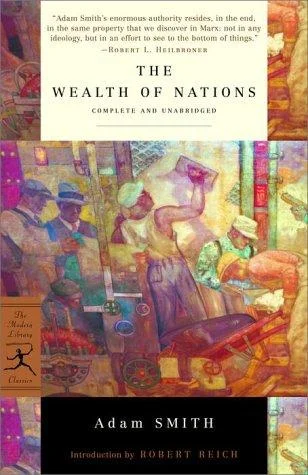
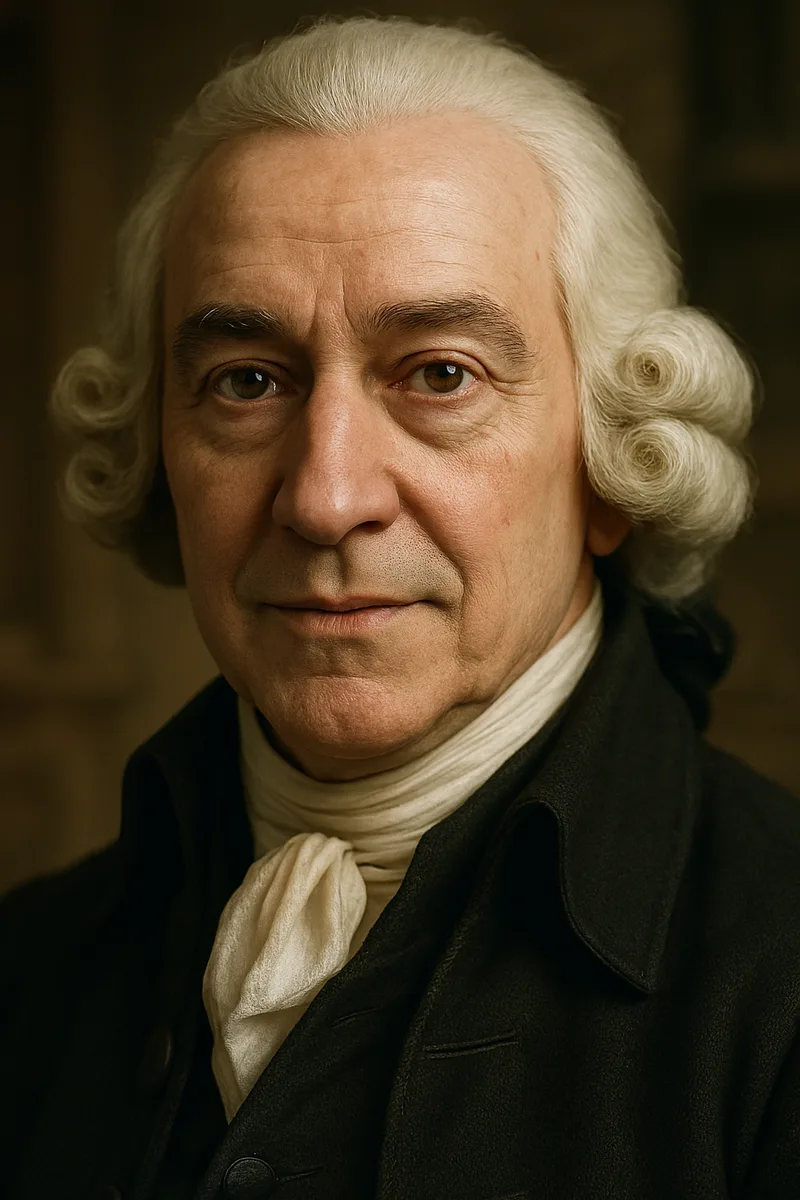
Adam Smith, born in the Scottish town of Kirkcaldy in 1723, transformed how humanity understands commerce, labor, and prosperity. A professor of moral philosophy at the University of Glasgow, he produced two masterworks that anchor Western thought: The Theory of Moral Sentiments and An Inquiry into the Nature and Causes of the Wealth of Nations. Smith demonstrated that self-interest, channeled through competitive markets, could generate collective prosperity - an insight that reshaped governments and economies worldwide. Yet he was no cold rationalist; his first great work explored empathy, conscience, and the human desire for mutual approval. Smith's intellectual legacy bridges philosophy and economics, reminding us that markets are human institutions, shaped by the moral character of the people within them.
Context & Background
Adam Smith was born in 1723 in Kirkcaldy, a small port town on the east coast of Scotland, just across the Firth of Forth from Edinburgh. His father, a customs official, died before Adam was born, and his mother, Margaret Douglas, raised him with the support of a close-knit family. Scotland in the early eighteenth century was undergoing a remarkable intellectual transformation. The Act of Union in 1707 had joined Scotland and England, and rather than being absorbed, Scottish culture responded with an explosion of creativity known as the Scottish Enlightenment.
Smith studied at the University of Glasgow under Francis Hutcheson, a moral philosopher who argued that human beings possess an innate moral sense. He then spent six years at Balliol College, Oxford, which he found intellectually stifling compared to Glasgow. Returning to Scotland, he delivered public lectures in Edinburgh that caught the attention of David Ricardo's intellectual predecessors and won him the chair of moral philosophy at Glasgow in 1752. His circle included David Hume, his closest friend, as well as scientists, engineers, and merchants who were building the infrastructure of the Industrial Revolution.
The world Smith inhabited was one of rapid change. Agricultural improvements were displacing rural populations into growing cities. Overseas trade was expanding dramatically. The mercantilist system - where governments controlled trade to accumulate gold and silver - was the dominant economic orthodoxy. Smith observed these transformations firsthand, traveling to France in 1764-66 as tutor to the young Duke of Buccleuch, where he met Voltaire and the Physiocrat economists who argued that land was the source of all wealth. These experiences fed directly into The Wealth of Nations, published in 1776, the same year the American colonies declared independence.
Smith's central insight in The Wealth of Nations was that the prosperity of nations depends not on accumulated gold but on the productive labor of their people. He demonstrated through careful observation - visiting pin factories, studying colonial trade records, analyzing agricultural practices - that the division of labor, free exchange, and competition could generate wealth far beyond what any central planner could achieve. His famous metaphor of the "invisible hand" described how individuals pursuing their own interests can inadvertently promote the public good, not through altruism but through the coordinating power of prices and competition.
Yet Smith was no market fundamentalist. He recognized the need for public goods - roads, bridges, education, and defense - that markets alone would not provide. He warned that merchants and manufacturers would always seek to collude against the public interest, and he advocated for regulations that protected workers and consumers. His analysis of the ways powerful interests distort markets for their own benefit reads as freshly today as it did in 1776.
Before he was an economist, Smith was a moral philosopher, and The Theory of Moral Sentiments (1759) is arguably the more original of his two great works. In it, Smith argued that human morality is grounded in sympathy - our ability to imaginatively place ourselves in another person's situation and share their feelings. He introduced the concept of the "impartial spectator," an internalized observer through whom we judge our own conduct by imagining how a fair-minded person would view our actions.
This moral framework is essential context for reading The Wealth of Nations. Smith never believed that greed was good in itself. He believed that self-interest, when constrained by the moral sentiments of sympathy, fairness, and the desire for approval, could be a productive force. When those moral constraints break down - when merchants collude, when landlords exploit, when governments serve the powerful rather than the public - markets become engines of injustice rather than prosperity. Smith's two books are not contradictory; they are complementary halves of a single vision of human society.
Smith was famously absent-minded. He once walked fifteen miles in his dressing gown, lost in thought, before church bells snapped him back to reality. He lived with his mother for most of his adult life and never married. He was deeply private about his personal writings, ordering that nearly all of his unpublished manuscripts be burned before his death in 1790. He served as Commissioner of Customs in Edinburgh for the last twelve years of his life - an ironic post for the great critic of trade restrictions, though he took the work seriously and enforced the regulations diligently. He was a generous patron, quietly giving away much of his income to charity. His library at the time of his death contained over 1,500 volumes, reflecting interests that spanned astronomy, linguistics, music, and natural history alongside economics and philosophy.