The Structure of Scientific Revolutions
Thomas S. Kuhn · 1962
Science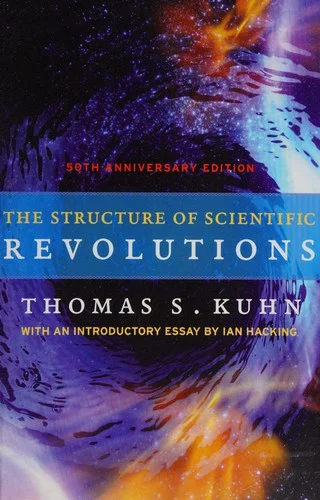
How Science Really Changes
Thomas Kuhn shattered the comforting myth that science progresses through the steady accumulation of facts. Instead, he argued, science alternates between periods of 'normal science' — puzzle-solving within an accepted paradigm — and dramatic 'paradigm shifts' that revolutionize entire fields. His framework changed how we understand the nature of scientific progress itself.
Context & Background
Kuhn's book is one of the most cited academic works of the twentieth century. Before Kuhn, the dominant view was that science advanced linearly — each discovery building neatly on the last. Kuhn showed that the history of science is far messier: established theories resist change, anomalies accumulate, and eventually a crisis triggers a revolution that replaces the old framework entirely.
Paradigms are the shared frameworks of assumptions, methods, and standards that define normal science in any field. Normal science is the puzzle-solving activity that takes place within a paradigm. Anomalies are observations that don't fit the paradigm. When anomalies accumulate beyond a critical mass, a paradigm shift occurs — a scientific revolution that replaces the old framework with a fundamentally new one, as when Copernican astronomy replaced Ptolemaic.
The phrase 'paradigm shift' entered everyday language and is now used (often loosely) far beyond science. Kuhn's work influenced philosophy, sociology, economics, and management theory. The book forced scientists to confront the social and psychological dimensions of scientific practice and remains required reading in philosophy of science courses worldwide.