The Social Contract
Jean-Jacques Rousseau · 1762
Philosophy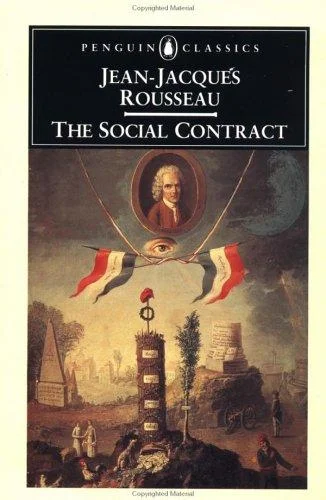
The Book That Inspired Revolutions
Rousseau's The Social Contract opens with one of philosophy's most famous lines: "Man is born free, and everywhere he is in chains." It argues that legitimate political authority comes not from divine right or force but from a social contract among free citizens. Its ideas directly inspired both the French and American Revolutions.
Context & Background
Published in 1762, The Social Contract challenged the entire basis of political authority in Europe. Rousseau argued that sovereignty belongs to the people, not to kings, and that any government that fails to serve the general will has lost its legitimacy. These ideas were intellectual dynamite in the age of absolute monarchy.
The general will (volonte generale) is the collective interest of all citizens, distinct from the sum of private interests. Popular sovereignty holds that political authority ultimately resides in the people. The social contract is the agreement by which free individuals create a political community, exchanging natural liberty for civil liberty and moral freedom. Civil religion — a minimal set of shared values — binds citizens together.
Rousseau's ideas were carried into the streets during the French Revolution, where leaders like Robespierre explicitly invoked The Social Contract. The book influenced the American founding fathers, the development of democratic theory, and the Universal Declaration of Human Rights. Its tension between individual freedom and collective authority remains central to political philosophy.