The Sixth Extinction
Elizabeth Kolbert · 2014
Science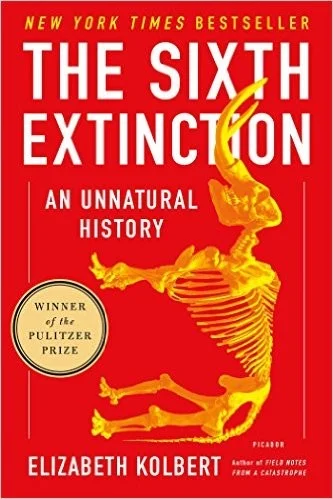
An Unnatural History
Elizabeth Kolbert documents the current mass extinction event — the sixth in Earth's history and the first caused by a single species: us. Traveling from the Panamanian rainforest to the Great Barrier Reef to the Andes, she investigates how human activity — habitat destruction, ocean acidification, climate change, and the global shuffling of species — is driving life on Earth toward catastrophic collapse.
Context & Background
Kolbert, a staff writer for The New Yorker, synthesized decades of research across paleontology, marine biology, botany, and geology into a compelling narrative about humanity's impact on life on Earth. Her reporting gave readers a visceral understanding of extinction — not as an abstract concept but as something happening right now, in real places, to real species.
The previous five mass extinctions each eliminated a significant percentage of life on Earth, with the most devastating (the end-Permian event) killing 90% of all species. The current sixth extinction is unique because it is driven by a single species: Homo sapiens. Kolbert documents the mechanisms: ocean acidification (the 'evil twin' of climate change), habitat fragmentation, invasive species, and the unprecedented speed of environmental change that outpaces evolution's ability to adapt.
The book won the Pulitzer Prize for General Nonfiction in 2015 and became a touchstone of the climate and biodiversity conversation. It helped shift public discourse from climate change alone to the broader biodiversity crisis, making clear that the loss of species is as urgent a threat as rising temperatures.