The Elegant Universe
Brian Greene · 1999
Science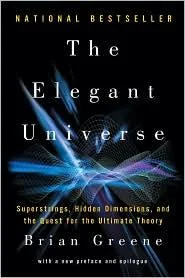
Superstrings, Hidden Dimensions, and the Quest for the Ultimate Theory
Brian Greene takes readers on a breathtaking journey to the cutting edge of physics, where tiny vibrating strings of energy may be the fundamental building blocks of everything in the universe. He explains how string theory promises to unify Einstein's general relativity with quantum mechanics — the two pillars of modern physics that have stubbornly refused to get along.
Context & Background
Greene, a professor of physics and mathematics at Columbia University, accomplished the seemingly impossible: he made string theory — one of the most mathematically complex ideas in all of physics — accessible and even exciting for general readers. The book brought the frontiers of theoretical physics to a mainstream audience.
Greene explains the conflict between general relativity (which governs the very large) and quantum mechanics (which governs the very small), and how string theory proposes to resolve it by replacing point particles with tiny, vibrating strings. He introduces extra dimensions (string theory requires 10 or 11 dimensions of space-time), Calabi-Yau manifolds (the shapes of hidden dimensions), and the concept of a multiverse arising from different possible configurations of these dimensions.
The book was a Pulitzer Prize finalist and became a bestseller, and was adapted into a NOVA television series. It established Greene as one of the leading public voices for theoretical physics and inspired a generation of students to pursue physics. While string theory remains unproven experimentally, Greene's exposition remains the gold standard for popular accounts of the subject.