The Double Helix
James D. Watson · 1968
Science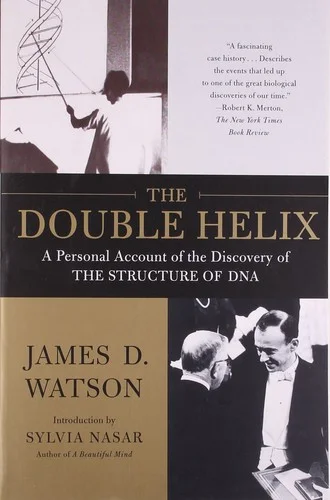
A Personal Account of the Discovery of the Structure of DNA
James Watson's candid, controversial memoir tells the story of how he and Francis Crick discovered the double helix structure of DNA in 1953 — one of the most important scientific breakthroughs of the twentieth century. Part scientific thriller, part office politics, the book reveals science as it is actually practiced: messy, competitive, and driven as much by ambition and personality as by logic.
Context & Background
The Double Helix was one of the first books to pull back the curtain on how major scientific discoveries actually happen. Watson's brutally honest account — showing the rivalries, mistakes, and lucky breaks behind the discovery — shattered the myth of the dispassionate, methodical scientist and revealed the human drama at the heart of great science.
The book chronicles the race to determine the structure of DNA, the molecule of heredity. Watson and Crick used X-ray crystallography data (crucially, Rosalind Franklin's Photo 51) and model building to deduce that DNA is a double helix — two intertwined strands connected by base pairs (A-T, C-G). This structure immediately suggested the mechanism of genetic replication: the strands separate and each serves as a template for a new complementary strand.
The book remains the most famous first-person account of a scientific discovery. It sparked important debates about scientific credit (particularly regarding Rosalind Franklin's contribution), the ethics of competition in science, and the role of personality in discovery. Watson, Crick, and Maurice Wilkins received the Nobel Prize in 1962.