
The 48 Laws of Power
Robert Greene · 1998
Strategy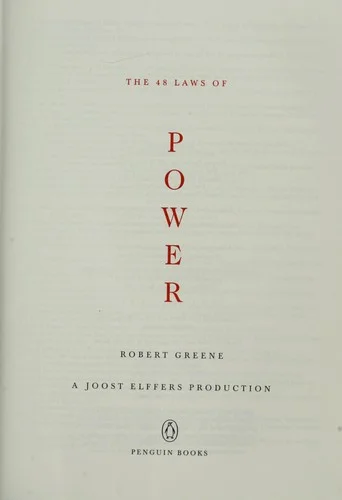
The Modern Machiavelli
Robert Greene synthesizes 3,000 years of history into 48 laws of power — from "Never Outshine the Master" to "Assume Formlessness." Drawing on Machiavelli, Sun Tzu, and historical figures from Louis XIV to P.T. Barnum, it's an amoral guidebook to understanding how power really works in organizations and society.
Context & Background
The 48 Laws of Power is one of the most controversial and most-read business books of the past quarter century. Greene's unflinching examination of power dynamics — without moral judgment — gives readers a realistic framework for understanding office politics, negotiations, and competitive dynamics.
Each of the 48 laws is illustrated with historical examples of observance and transgression. Key laws include: Law 1: Never Outshine the Master, Law 3: Conceal Your Intentions, Law 15: Crush Your Enemy Totally, Law 28: Enter Action with Boldness, Law 33: Discover Each Man's Thumbscrew, and Law 48: Assume Formlessness. Greene presents power as neither good nor evil but as a reality that must be understood.
The book has sold over 2 million copies and is reportedly the most requested book in American prisons. In business, it's valued as a Rosetta Stone for organizational politics. Critics call it manipulative; defenders call it realistic. Either way, it remains one of the most widely read books on power dynamics.
Quotes from The 48 Laws of Power
Related Books
Good to Great
Jim Collins
Same genre — complementary perspectives on Strategy
Competitive Strategy
Michael E. Porter
Essential reading in Strategy

The Toyota Way
Jeffrey K. Liker
Complementary insights from Management
The 7 Habits of Highly Effective People
Stephen R. Covey
Related perspective from Leadership