Silent Spring
Rachel Carson · 1962
Science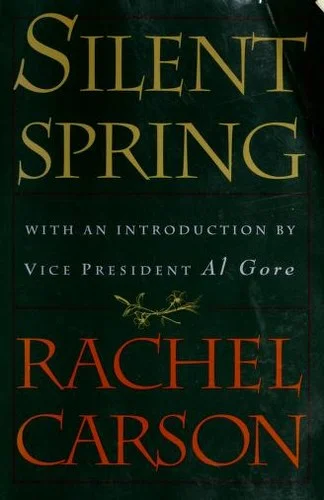
The Book That Launched the Environmental Movement
Rachel Carson's courageous investigation into the devastating effects of pesticides — particularly DDT — on wildlife and human health ignited a firestorm of controversy and a revolution in public consciousness. With poetic prose and rigorous science, she showed how the indiscriminate use of chemicals was silencing the birdsong of spring and poisoning the web of life.
Context & Background
Silent Spring is widely credited with launching the modern environmental movement. Carson, a marine biologist and gifted writer, took on the powerful chemical industry at great personal risk — she was already battling breast cancer when the book was published. The chemical industry spent millions trying to discredit her, but her science held.
Carson documented how DDT and other pesticides bioaccumulate through the food chain, concentrating in predators and causing reproductive failure in birds. She introduced the public to the concept of ecological interconnectedness — that poisoning insects inevitably poisons the entire ecosystem. Her core argument was not against all pesticides but against their indiscriminate, widespread use without understanding the consequences.
The book led directly to the banning of DDT in the United States and the creation of the Environmental Protection Agency in 1970. It established the precautionary principle in environmental policy and inspired generations of environmentalists. Time magazine named Carson one of the 100 most influential people of the twentieth century.