
Measure What Matters
John Doerr · 2018
Management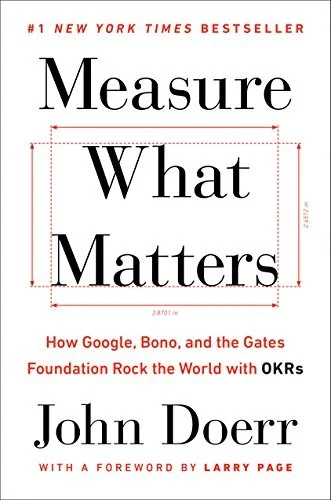
How OKRs Drive Alignment and Accountability
John Doerr introduced Google's founders to OKRs — Objectives and Key Results — a goal-setting system he learned from Andy Grove at Intel. This simple framework of ambitious objectives paired with measurable key results helped Google grow from 40 employees to over 100,000 while maintaining focus and alignment.
Context & Background
Doerr, one of the most successful venture capitalists in history, has been evangelizing OKRs since he funded Google in 1999. Measure What Matters finally codified the system, combining Doerr's personal experience with case studies from Google, the Gates Foundation, Bono's ONE Campaign, and others.
OKRs consist of an Objective (what you want to achieve — qualitative and inspiring) and Key Results (how you'll know you got there — quantitative and measurable). Doerr's four superpowers of OKRs: Focus (say no to everything that doesn't matter), Align (make goals transparent so everyone pulls in the same direction), Track (measure progress with data), and Stretch (set ambitious goals that push beyond comfort zones).
OKRs have been adopted by thousands of companies, from startups to Fortune 500 firms. The system's simplicity and transparency make it one of the most widely implemented management tools of the 21st century. Companies like LinkedIn, Twitter, Spotify, and Samsung use OKRs to maintain strategic alignment at scale.
Quotes from Measure What Matters
Related Books
The Toyota Way
Jeffrey K. Liker
Same genre — complementary perspectives on Management
The Goal
Eliyahu M. Goldratt
Essential reading in Management
Good to Great
Jim Collins
Complementary insights from Strategy
The 7 Habits of Highly Effective People
Stephen R. Covey
Related perspective from Leadership