Man's Search for Meaning
Viktor E. Frankl · 1946
Philosophy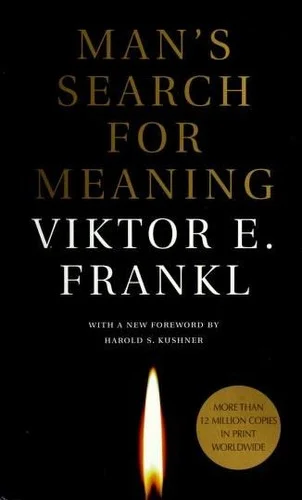
A Holocaust Survivor's Discovery of Purpose
Viktor Frankl's memoir of surviving Auschwitz and other Nazi concentration camps is one of the most profound books of the twentieth century. From unimaginable suffering, Frankl distilled a life-changing insight: those who found meaning in their suffering could endure almost anything. This became the foundation of logotherapy, his school of psychotherapy.
Context & Background
First published in 1946, Man's Search for Meaning has sold over 16 million copies and been translated into more than 50 languages. It offers testimony from the darkest chapter of human history alongside a therapeutic framework that has helped millions find purpose and resilience. The Library of Congress named it one of the ten most influential books in America.
Logotherapy (from Greek logos, meaning) holds that the primary motivational force in human beings is the search for meaning — not pleasure (Freud) or power (Adler). Frankl identified three sources of meaning: creative values (what we give to the world through work), experiential values (what we receive through love and beauty), and attitudinal values (the stance we take toward unavoidable suffering). His most famous insight: "Everything can be taken from a man but one thing: the last of the human freedoms — to choose one's attitude in any given set of circumstances."
Frankl's work bridges philosophy, psychology, and memoir in a way no other book does. It influenced the development of positive psychology, existential therapy, and resilience research. His emphasis on meaning as central to human well-being anticipated findings in modern psychology by decades.