
Freakonomics
Steven D. Levitt · 2005
Economics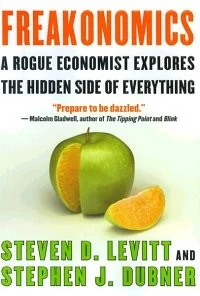
A Rogue Economist Explores the Hidden Side of Everything
Economist Steven Levitt and journalist Stephen Dubner explore the hidden side of everything — from the economics of drug dealing to why crime rates dropped in the 1990s. By applying economic thinking to unexpected domains, they revealed that incentives are the cornerstone of modern life and that conventional wisdom is frequently wrong.
Context & Background
Written with Stephen Dubner, Freakonomics showed that economics isn't just about GDP and interest rates — it's a toolbox for understanding human behavior. By asking provocative questions and following the data wherever it led, Levitt and Dubner demonstrated that careful analysis often overturns comfortable assumptions.
The book's central thesis is that incentives are everything — and that understanding the right incentives explains behavior that otherwise seems baffling. Their analysis of information asymmetry (real estate agents, the Ku Klux Klan), cheating (sumo wrestlers, schoolteachers), and the economics of parenting showed that economic thinking applies far beyond traditional economics.
Freakonomics sold over 4 million copies and spawned a franchise (sequels, podcast, and documentary). It popularized the idea that data-driven analysis can illuminate any domain and inspired a generation of "pop economics" books. Its most controversial claim — that legalized abortion reduced crime — remains debated in academic circles.
Quotes from Freakonomics
Related Books
The Wealth of Nations
Adam Smith
Same genre — complementary perspectives on Economics
Capitalism and Freedom
Milton Friedman
Essential reading in Economics
The Intelligent Investor
Benjamin Graham
Complementary insights from Finance & Investing
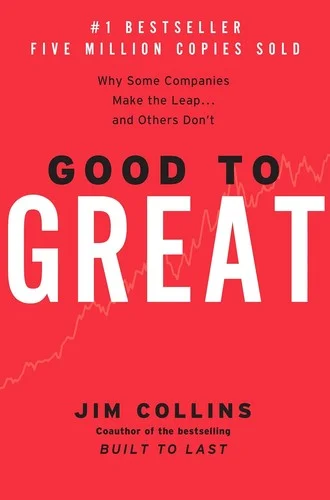
Good to Great
Jim Collins
Related perspective from Strategy