A Guide to the Good Life
William B. Irvine · 2008
Philosophy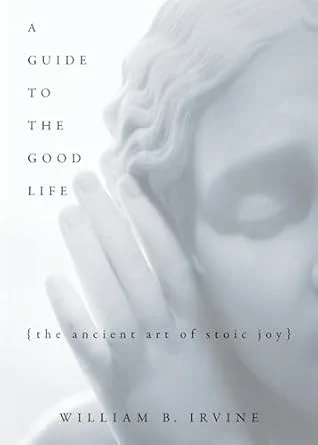
The Ancient Art of Stoic Joy
William Irvine's A Guide to the Good Life is the book that launched the modern Stoic revival. A philosophy professor who adopted Stoicism as his personal philosophy, Irvine presents ancient Stoic techniques — negative visualization, the dichotomy of control, voluntary discomfort — as a practical operating system for modern life.
Context & Background
Before Irvine's book, Stoicism was largely confined to classics departments and philosophy seminars. A Guide to the Good Life demonstrated that Stoic techniques could be practiced by anyone, and that doing so could dramatically reduce anxiety, increase gratitude, and improve overall life satisfaction. It turned an ancient philosophy into a modern self-help movement.
Negative visualization (the Stoic practice of imagining the loss of things we value) increases gratitude and prepares us for adversity. The dichotomy of control (distinguishing between what we can and cannot influence) reduces anxiety by focusing effort where it can make a difference. Voluntary discomfort (deliberately experiencing mild hardship) builds resilience and appreciation. Setting an internal rather than external goal (focusing on effort rather than outcomes) protects our tranquility from fortune.
The book is widely credited with sparking the modern Stoicism movement. It preceded and influenced the wave of popular Stoic books by Ryan Holiday, Massimo Pigliucci, and others. Stoic Week, Stoicon, and online Stoic communities all trace part of their lineage to Irvine's accessible introduction.