
Walter White
Quotes & Wisdom
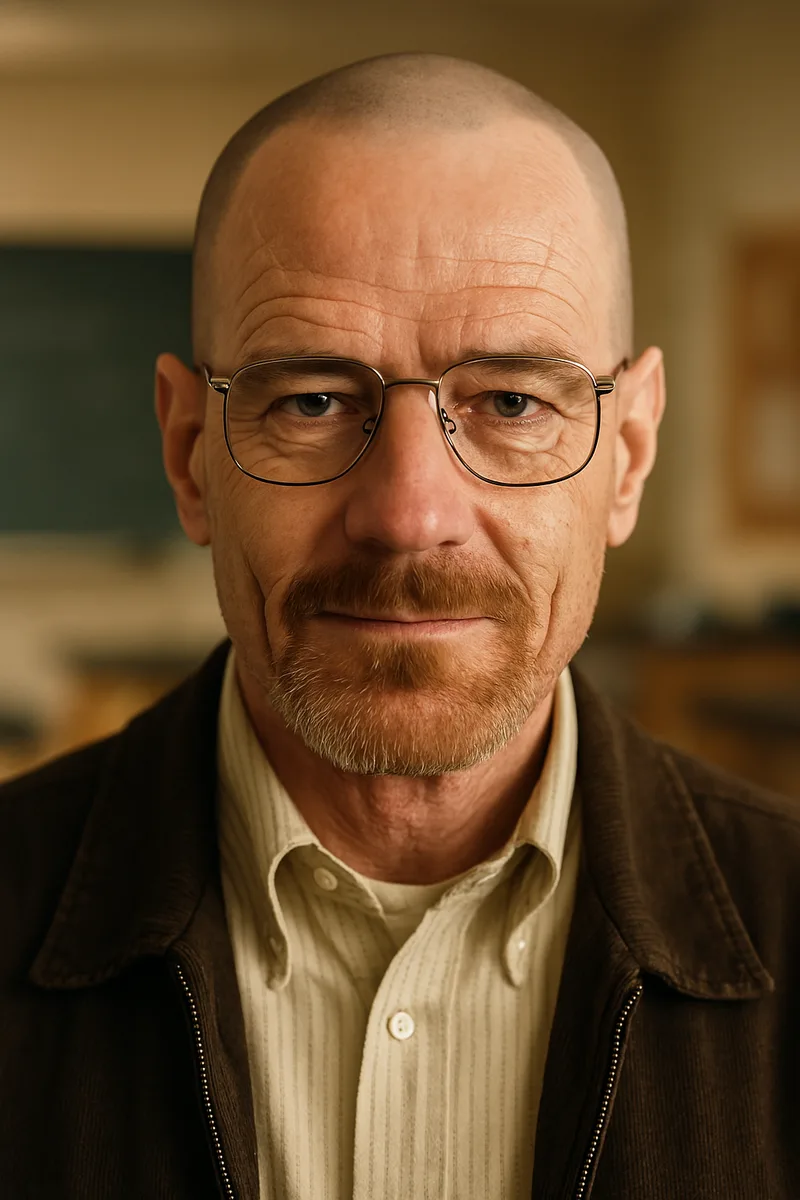
Walter White: The Chemistry Teacher Who Became Heisenberg
Walter White is the mild-mannered high school chemistry teacher who transformed into a methamphetamine kingpin in Vince Gilligan's Breaking Bad (2008-2013), one of the greatest television dramas ever produced. Played by Bryan Cranston in a performance of shattering range, Walter begins as a sympathetic figure - an overqualified, underpaid teacher diagnosed with terminal lung cancer who starts cooking meth to provide for his family after his death. But the show methodically strips away that justification, revealing that Walter's true motivation is not love but pride - a wounded ego that found in the drug trade the power and respect the straight world had denied him. His transformation from Mr. White to Heisenberg is television's definitive portrait of moral corruption, and his lines have become touchstones of modern storytelling.
Context & Background
Walter Hartwell White inhabits the sun-scorched sprawl of Albuquerque, New Mexico, a landscape of strip malls, car washes, and desert emptiness that Breaking Bad transforms into a moral wasteland of extraordinary visual power. When the series begins, Walter is fifty years old, brilliant, and invisible. He holds a chemistry degree from Caltech, co-founded a company called Gray Matter Technologies that became worth billions after he sold his share for five thousand dollars, and now teaches high school chemistry to indifferent teenagers while working a second job at a car wash to support his pregnant wife and disabled son.
The diagnosis of inoperable lung cancer in the pilot episode sets the plot in motion, but the show's genius lies in revealing that the cancer is not the cause of Walter's transformation - it is merely the catalyst that accelerates a reaction that was always waiting to happen. Walter's resentment, his thwarted ambition, his conviction that the world has cheated him of his due - these are the real raw materials of Heisenberg.
Walter's descent - or, as he might see it, his ascent - unfolds over five seasons with the meticulous logic of a chemical equation. He begins by cooking meth with Jesse Pinkman, a former student, in a battered RV in the desert. He ends as the architect of a multimillion-dollar drug empire, responsible for dozens of deaths, including people he once loved.
The show's central question - when exactly does Walter White become irredeemable? - has no easy answer, and that is the point. Every moral line he crosses is justified, in his own mind, by necessity. Every act of violence is rationalized as protection. The brilliance of Cranston's performance is that he makes Walter's self-deception utterly convincing, even as the audience watches in horror.
His final confession to his wife Skyler in the series finale - "I did it for me. I liked it. I was good at it. And I was really... I was alive" - is one of the most devastating moments of honesty in television history, the moment when the last mask falls and the truth stands naked.
Breaking Bad is widely regarded as one of the finest television series ever made, and Walter White stands alongside Tony Soprano and Don Draper as one of the defining antiheroes of the golden age of television. Bryan Cranston's transformation from Malcolm in the Middle dad to terrifying drug lord is one of the most remarkable reinventions in acting history. The show's influence on television storytelling - its novelistic structure, its moral complexity, its visual precision - continues to shape the medium.