
Rocky Balboa
Quotes & Wisdom
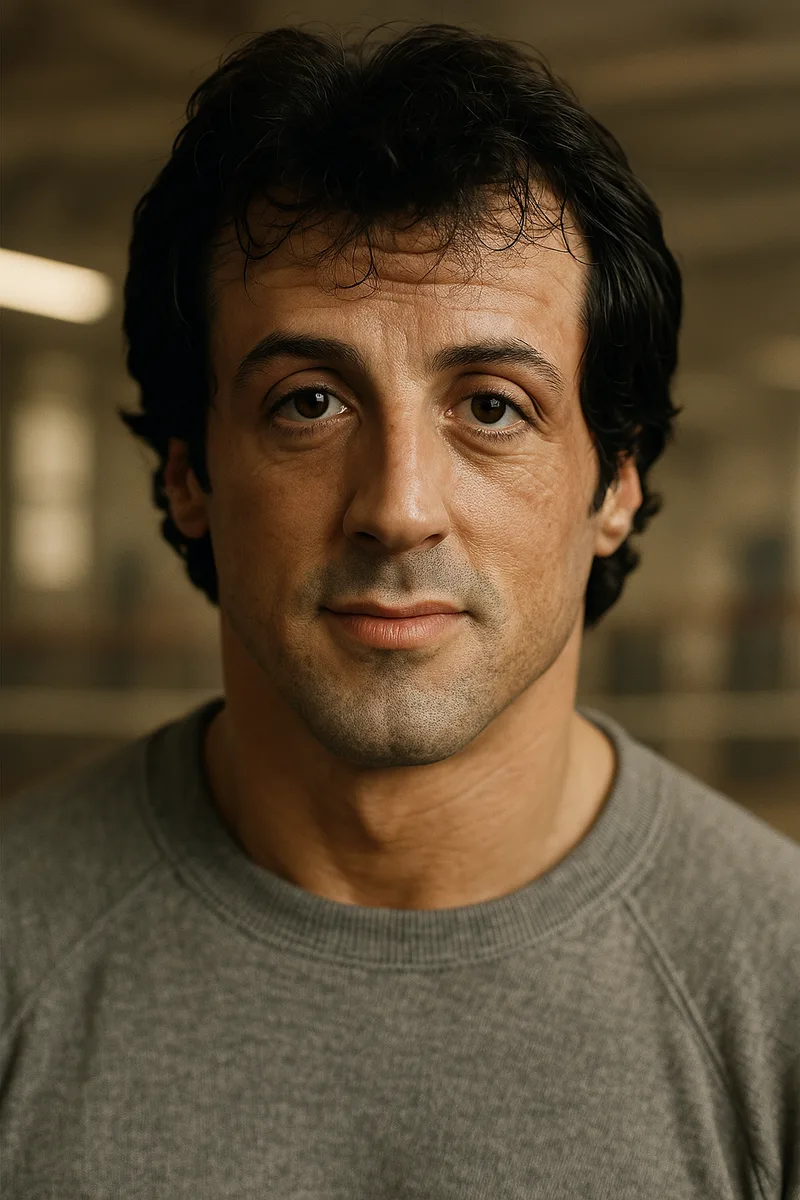
Rocky Balboa: The Ultimate Underdog
Rocky Balboa is the fictional Philadelphia boxer created by Sylvester Stallone who became one of the most enduring symbols of perseverance in American cinema. First appearing in the 1976 film Rocky - which won the Academy Award for Best Picture - the character is a small-time club fighter who gets a once-in-a-lifetime shot at the heavyweight championship and discovers that winning is not about the scorecards but about having the heart to keep standing. Across eight films spanning four decades, Rocky evolved from a lovable underdog into a mentor and father figure, but his core message never changed: it is not about how hard you hit, it is about how hard you can get hit and keep moving forward.
Context & Background
Rocky Balboa inhabits the working-class neighborhoods of Philadelphia, a city that serves as both setting and metaphor throughout the film series. When audiences first meet Rocky in the 1976 original, he is a small-time debt collector and club boxer scraping by in the Italian Market district - a man whose talent is modest but whose heart is limitless. The film was written by Stallone in three and a half days, inspired by the 1975 fight between Muhammad Ali and Chuck Wepner, an unknown journeyman who went the distance against the champion. Like Wepner, Rocky is nobody's idea of a contender - until he proves that courage matters more than skill.
The Rocky series spans from 1976 to 2018, encompassing six Rocky films and two Creed films. Through this saga, Rocky fights Apollo Creed, Clubber Lang, Ivan Drago, Tommy Gunn, and Mason Dixon, each opponent representing a different challenge - pride, anger, the Cold War, betrayal, and aging. The character's journey mirrors the arc of American life over four decades: from the economic struggles of the 1970s through the patriotic fervor of the 1980s to the quieter battles of middle and old age.
Rocky Balboa's defining characteristic is not his boxing skill - he is never portrayed as the most talented fighter - but his absolute refusal to quit. In the original film, Rocky does not even win the fight against Apollo Creed. He loses on a split decision. But he goes the distance - all fifteen rounds - and that is his victory. The message is radical in its simplicity: success is not about winning but about refusing to be defeated.
This philosophy reaches its most eloquent expression in Rocky Balboa (2006), when the aging fighter delivers a speech to his son that has resonated far beyond the film: "It ain't about how hard you hit. It's about how hard you can get hit and keep moving forward." The speech is about boxing on the surface, but its real subject is life itself - the ability to absorb disappointment, failure, and loss without surrendering the will to continue.
Rocky Balboa transcended cinema to become a genuine cultural symbol. The bronze statue of Rocky at the foot of the Philadelphia Museum of Art steps has become one of the most visited landmarks in the city. The "Rocky Steps" run - charging up the museum stairs to the triumphant Gonna Fly Now theme - has been recreated by millions of visitors and referenced in countless films, television shows, and advertisements. Rocky's training montages, with their emphasis on old-fashioned hard work and grit, became a template for the entire genre of sports filmmaking.