
Qin Shi Huang
Quotes & Wisdom
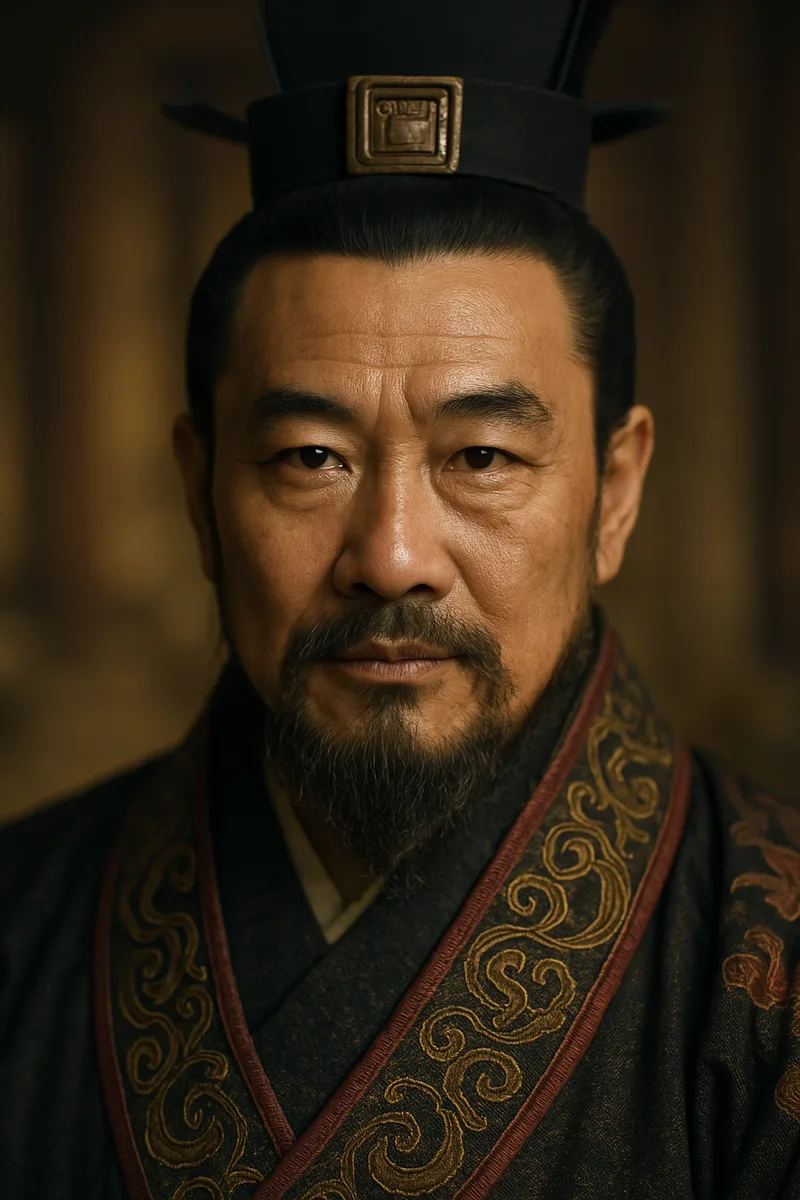
Qin Shi Huang: The First Emperor of China
Qin Shi Huang unified the warring states of China in 221 BC and forged them into a single empire that would endure, in various forms, for over two thousand years. Born Ying Zheng, he ascended the throne of the state of Qin at thirteen and spent the next quarter-century conquering his rivals through a combination of military brilliance, ruthless diplomacy, and relentless administrative reform. As emperor, he standardized weights, measures, currency, and writing across his vast domain, connected existing fortifications into an early Great Wall, and built a road network that rivaled Rome's. He also burned books and buried scholars alive, earning a reputation for tyranny that has shaped how China remembers its founding. His terracotta army, discovered in 1974, remains one of the most astonishing archaeological finds in history.
Context & Background
Ying Zheng was born in 259 BC, during the Warring States period - one of the most violent and intellectually fertile eras in Chinese history. For over two centuries, seven major kingdoms had fought for supremacy: Qin, Chu, Zhao, Wei, Han, Yan, and Qi. Alliances shifted constantly, armies numbered in the hundreds of thousands, and the accumulated death toll was staggering. Yet this era also produced China's greatest philosophical traditions - Confucianism, Daoism, Legalism, and Mohism - as thinkers competed to offer rulers a viable formula for peace and order.
Ying Zheng's birth was itself dramatic. His father, Yiren, was a hostage prince of the Qin state held in the rival kingdom of Zhao. A wealthy merchant named Lu Buwei orchestrated Yiren's rise to power, and there were persistent rumors - possibly malicious - that Lu Buwei was actually Ying Zheng's biological father. When Yiren died in 247 BC, the thirteen-year-old Ying Zheng inherited the throne of Qin, with Lu Buwei serving as regent.
The state of Qin, located in the Wei River valley in northwestern China, had already undergone a century of Legalist reform under the minister Shang Yang. Legalism emphasized strict laws, harsh punishments, meritocratic bureaucracy, and the absolute power of the state. Where Confucius taught moral cultivation and benevolent governance, the Legalists taught control. Qin's military and administrative efficiency, built on these principles, gave it a decisive advantage over its more traditional rivals.
Between 230 and 221 BC, Ying Zheng conquered the remaining six kingdoms one by one, completing the first unification of China. He then took the unprecedented title of Shi Huangdi - "First Emperor" - signaling that he had created something entirely new: a centralized, bureaucratic empire that would replace the old feudal order.
The speed and scope of his reforms were breathtaking. He abolished feudal landholding and replaced it with a system of centrally appointed governors. He standardized the Chinese writing system, creating a unified script that allowed communication across the empire's vast linguistic diversity. He standardized weights, measures, axle widths, and currency. He built a network of roads and canals that connected the empire and facilitated both trade and military mobilization.
Most ambitiously, he ordered the connection and extension of existing defensive walls along the northern frontier, creating the precursor to the Great Wall of China. The project consumed the labor of hundreds of thousands of conscripted workers and claimed countless lives. It was a monument to both the emperor's vision and his willingness to spend human life in pursuit of his goals.
Qin Shi Huang's achievements came at an enormous human cost. His Legalist philosophy held that the state's interests always outweighed those of the individual, and he governed accordingly. The most notorious episode was the "Burning of Books and Burying of Scholars" in 213-212 BC, in which the emperor ordered the destruction of philosophical texts - particularly Confucian works - that challenged his authority, and reportedly executed over 460 scholars who defied his edicts.
Modern historians debate the scale of these events - later Confucian historians had every reason to exaggerate - but the episode established Qin Shi Huang as the archetype of the brilliant tyrant in Chinese historical memory. He demanded absolute obedience and tolerated no dissent. His legal code was harsh, with punishments including mutilation and forced labor.
In his later years, the emperor became increasingly obsessed with immortality. He dispatched expeditions to find the legendary elixir of life, employed alchemists and magicians, and may have consumed mercury-based "medicines" that hastened his death. He died on September 10, 210 BC, during a tour of eastern China, at the age of forty-nine. His chief minister, Li Si, and the eunuch Zhao Gao concealed his death and forged an edict installing a more pliable heir, setting in motion the rapid collapse of the Qin dynasty.
The Terracotta Army, discovered by farmers near Xi'an in 1974, consists of over 8,000 life-sized clay soldiers, horses, and chariots, each with individualized facial features. They were designed to protect the emperor in the afterlife, and they represent only a fraction of the vast tomb complex, much of which remains unexcavated. Ancient sources describe the tomb itself as containing rivers of mercury and a map of the heavens on the ceiling; soil tests have confirmed elevated mercury levels at the site.
Qin Shi Huang survived at least three assassination attempts, the most famous involving a would-be assassin named Jing Ke who concealed a poisoned dagger inside a rolled-up map. The emperor managed to draw his sword and fight off the attacker, but the experience deepened his paranoia and likely contributed to his increasing isolation.
His dynasty lasted only fifteen years - collapsing in rebellion just three years after his death - but the empire he created set the pattern for Chinese governance for the next two millennia. Every subsequent dynasty inherited his framework of centralized bureaucratic rule, unified writing, and standardized administration. In that sense, Qin Shi Huang achieved a form of immortality after all, though not the kind he sought.