
Jerry Seinfeld
Quotes & Wisdom
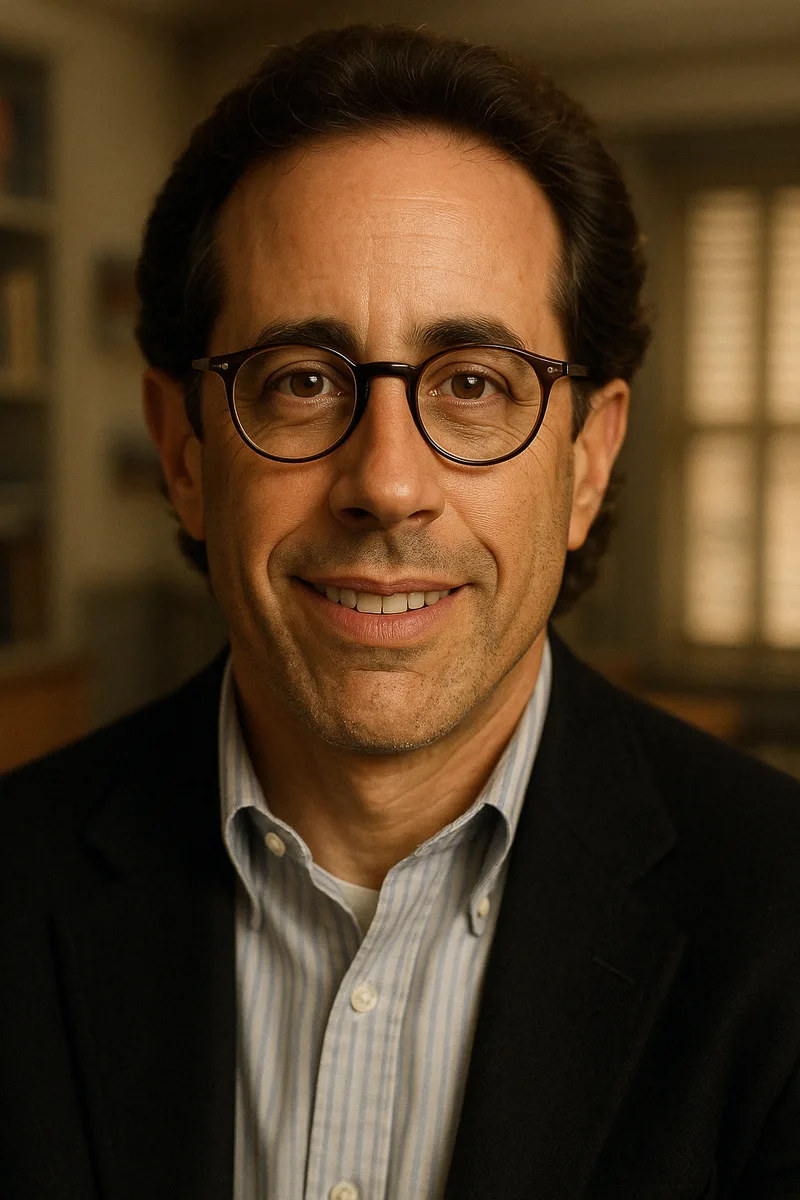
Jerry Seinfeld: The Perfectionist Who Made Nothing Into Everything
Jerry Seinfeld built one of the most successful careers in comedy history on a deceptively simple premise - paying relentless attention to the things everyone else ignores. His sitcom, famously described as 'a show about nothing,' ran for nine seasons and redefined television comedy. But Seinfeld's real achievement is his stand-up craft. For over four decades, he has refined observational comedy into an art form as precise and disciplined as watchmaking. Every word is weighed, every pause calculated, every joke polished until it gleams. His quotes capture the absurdity hidden in ordinary life - the silent negotiations of elevator rides, the unspoken rules of restaurant seating, the cosmic unfairness of the sock drawer. In Seinfeld's hands, the mundane becomes magnificent.
Context & Background
Jerome Allen Seinfeld was born on April 29, 1954, in Brooklyn, New York, and grew up in Massapequa, Long Island. His father Kalman was a sign maker with a gift for humor - 'My father's whole life was a setup for a joke,' Seinfeld has said. His mother Betty was the kind of straight-talking New York woman who would become a template for sitcom mothers everywhere.
Seinfeld discovered comedy early. As a child, he studied the techniques of his television heroes - Abbott and Costello, Bob Hope, and especially the stand-up comedians on The Ed Sullivan Show. He was not a class clown but an observer - quiet, watchful, cataloging the absurdities of suburban American life.
After studying communications and theater at Queens College, Seinfeld began performing at open mic nights in New York City in 1976. His early material was polished but unremarkable. What set him apart was discipline. While other comedians partied and improvised, Seinfeld wrote every day, treating comedy as a craft that could be mastered through systematic effort. He developed the 'Don't Break the Chain' method - marking a red X on a calendar for every day he wrote new material, building an unbroken streak that enforced consistency.
Seinfeld, co-created with Larry David in 1989, was rejected by every focus group NBC assembled. Network executives called it 'too New York, too Jewish.' The pilot nearly killed the project. But the show survived, slowly built an audience, and eventually became the most-watched comedy on television.
The genius of Seinfeld was its refusal to follow sitcom conventions. There were no heartwarming lessons, no character growth, no redemption arcs. The characters were selfish, petty, and magnificently unrepentant. The show's famous 'no hugging, no learning' rule stripped away the sentimentality that had defined American sitcoms and replaced it with something sharper - comedy as pure observation.
When Seinfeld ended in 1998, its final episode drew 76 million viewers. Seinfeld reportedly turned down $5 million per episode to continue for a tenth season. He chose to walk away at the peak - a decision that reflected the same discipline that governed his stand-up writing.
Seinfeld approaches joke-writing the way an engineer approaches bridge design. Every element must bear weight. A single unnecessary word is a structural flaw. He has described spending years on individual jokes, adjusting timing and word choice with the precision of a Swiss watchmaker.
His philosophy of comedy is built on two principles: specificity and surprise. The more specific the observation, the more universal the recognition. And the surprise must come not from shock or transgression but from revealing a truth the audience already knew but had never articulated. Seinfeld does not push boundaries - he illuminates what is already inside them.
His web series Comedians in Cars Getting Coffee, which ran from 2012 to 2019, showcased this philosophy in conversation form. The show was ostensibly about cars and coffee but actually about the mechanics of humor - how comedians think, what makes them laugh, and why the craft matters.
Seinfeld is an avid car collector with a particular passion for Porsches - his collection reportedly numbers over 150 vehicles. He practices Transcendental Meditation and credits it with sustaining his energy and focus over decades of performing. He is also a student of Scientology, though he has described himself as not a practicing member.
What makes Seinfeld unusual among comedians is his total commitment to the stand-up form. While most comedians of his stature have moved into films, podcasts, or other ventures, Seinfeld continues to perform live stand-up regularly, testing new material in small clubs alongside comedians a fraction of his age. He sees stand-up not as a stepping stone but as the highest form of comedy - the purest test of whether you can make a room full of strangers laugh using nothing but words and timing.