
Genghis Khan
Quotes & Wisdom
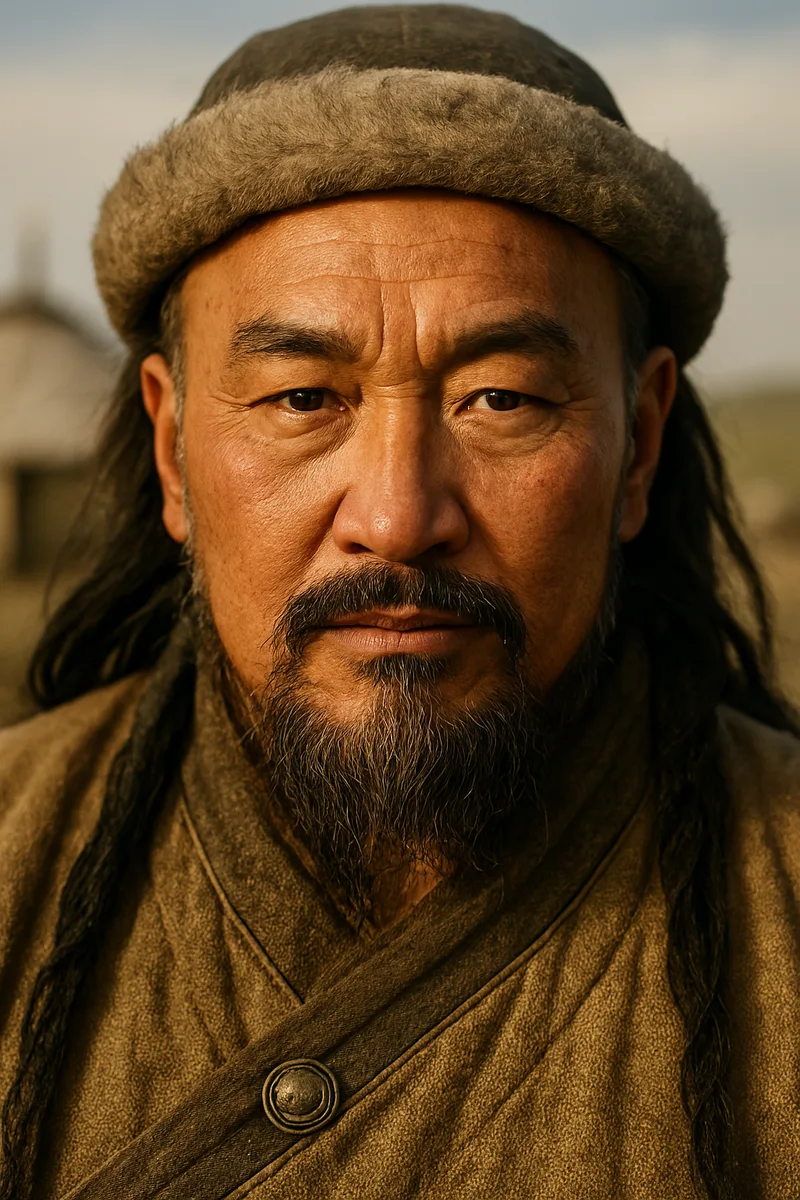
Genghis Khan: The Conqueror Who Forged the Largest Land Empire in History
Genghis Khan - born Temujin around 1162 on the Mongolian steppe - rose from orphaned outcast to the ruler of the largest contiguous empire the world has ever known. Unifying the warring Mongol tribes through a combination of military genius, political cunning, and ruthless discipline, he launched campaigns that conquered northern China, Central Asia, Persia, and Eastern Europe, reshaping the political map of the known world. His empire connected East and West, facilitated trade along the Silk Road, and established a legal code that promoted meritocracy and religious tolerance. His military innovations and administrative systems influenced civilizations for centuries, while the scale of destruction his conquests inflicted left scars that some regions took generations to recover from.
Context & Background
Temujin was born around 1162 into the Borjigin clan on the harsh steppe of northeastern Mongolia. His father, Yesugei, was a minor chieftain who was poisoned by a rival Tatar tribe when Temujin was nine, leaving his family destitute and outcast. The Mongolian steppe was an unforgiving world of nomadic herding, tribal warfare, and a rigid social hierarchy based on kinship and military prowess. Young Temujin and his family survived by foraging, hunting, and enduring a succession of betrayals, captures, and escapes that hardened him into one of history's most formidable leaders.
The world beyond the steppe was in many ways more advanced but politically fragmented. The Jin dynasty ruled northern China, the Western Xia controlled the northwest, the Khwarezmian Empire stretched across Central Asia and Persia, and the Abbasid Caliphate still held nominal authority in Baghdad. The Silk Road trade routes that connected these civilizations were dangerous and intermittent. No one imagined that the nomadic tribes of the steppe - considered barbarians by their settled neighbors - would soon conquer most of the known world.
Temujin's rise began with a series of alliances and victories against rival Mongol and Turkic tribes. By 1206, he had unified the steppe peoples under his rule and was proclaimed Genghis Khan ("Universal Ruler") at a great assembly on the banks of the Onon River. He reorganized Mongol society on decimal principles (units of ten, hundred, thousand, and ten thousand), breaking the power of tribal loyalties by mixing peoples from different clans into the same military units. Loyalty was to the Khan, not to the tribe.
Genghis Khan's military innovations transformed warfare across Eurasia. His armies were built around the mounted archer - a warrior who could shoot accurately while riding at full gallop, cover vast distances quickly, and survive on minimal supplies (dried meat, fermented mare's milk, and blood drawn from their horses). Mongol armies used sophisticated tactics: feigned retreats to draw enemies into ambushes, coordinated movements across hundreds of miles using a relay messaging system, and psychological warfare designed to terrify enemies into surrender before battle was joined.
The conquest of the Khwarezmian Empire (1219-1221) demonstrated these methods on a devastating scale. When the Khwarezmian Shah executed Mongol ambassadors - a grave insult - Genghis Khan unleashed a campaign that destroyed cities like Samarkand, Bukhara, and Merv, killing hundreds of thousands. The destruction was calculated: cities that surrendered were spared; cities that resisted were annihilated, pour encourager les autres.
Despite the terror of his conquests, Genghis Khan established a legal and administrative system - the Yasa - that brought unprecedented order to the territories under Mongol control. The Yasa codified laws on property, criminal justice, and trade, and it enforced religious tolerance. Christians, Muslims, Buddhists, and shamans all practiced freely under Mongol rule. Genghis Khan was personally shamanic but pragmatically interested in all religions.
The Pax Mongolica - the era of relative stability across the Mongol Empire - facilitated the greatest period of Silk Road trade in history. Merchants, missionaries, and diplomats traveled safely from Europe to China. Technologies, ideas, and goods flowed between civilizations that had previously had minimal contact. The Mongol postal system (yam) enabled rapid communication across the empire.
Genghis Khan was illiterate but recognized the importance of writing, adopting the Uyghur script for the Mongolian language and requiring his children and officials to learn it. He practiced a form of meritocracy unusual for his era, promoting officers based on ability rather than birth. A 2003 genetic study estimated that approximately 16 million men alive today are direct patrilineal descendants of Genghis Khan - a testament to the scale of his genetic legacy. He never allowed a portrait or statue of himself to be made during his lifetime. He died in 1227 during a campaign against the Western Xia, and his burial site remains unknown - tradition says that his funeral escort killed everyone they encountered to keep the location secret. The Secret History of the Mongols, written shortly after his death, is the primary source for his life and the only Mongolian literary work from his era.