
Christopher Columbus
Quotes & Wisdom
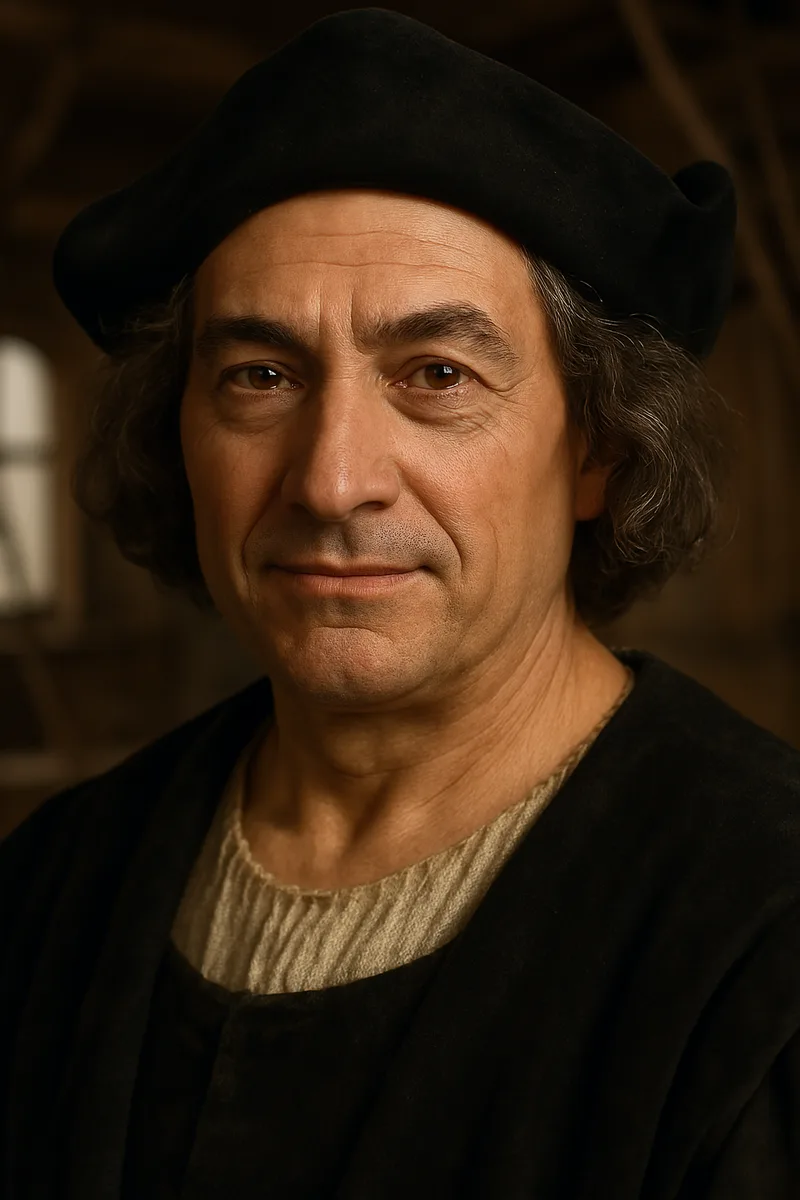
Christopher Columbus: The Navigator Who Changed the Map of the World
Christopher Columbus's 1492 voyage across the Atlantic Ocean initiated permanent contact between Europe and the Americas, setting in motion one of the most consequential transformations in human history. Born in Genoa around 1451, Columbus was a skilled navigator and a relentless self-promoter who convinced the Spanish monarchs Ferdinand and Isabella to fund an expedition westward to Asia. He never reached Asia, and he never understood that he had encountered continents unknown to Europeans, but his four voyages between 1492 and 1504 opened the door to European colonization, the Columbian Exchange of plants, animals, and diseases, and the reshaping of global civilization - for both extraordinary good and catastrophic harm.
Context & Background
Christopher Columbus was born Cristoforo Colombo around 1451 in the Republic of Genoa, a maritime trading power on the Italian coast. His father was a wool weaver and small-time trader, and young Christopher went to sea as a teenager, sailing the Mediterranean trade routes that connected Europe, North Africa, and the eastern Mediterranean. He survived a shipwreck off the coast of Portugal in 1476 and settled in Lisbon, then the center of European maritime exploration.
The late fifteenth century was a period of intense European maritime expansion driven by the desire for direct trade routes to Asia. The Ottoman Empire's control of eastern Mediterranean trade routes made overland commerce expensive and dangerous. Portugal, under Prince Henry the Navigator and his successors, had been systematically exploring the African coast, seeking a sea route around Africa to India. Columbus conceived a different plan: sailing west across the Atlantic to reach the Indies.
His plan was based on a significant geographical error. Columbus used calculations from the ancient geographer Ptolemy and the Florentine scholar Toscanelli that dramatically underestimated the circumference of the earth and the width of the Atlantic. Most educated Europeans understood the earth was round - that was not the debate - but they correctly estimated the distance to Asia as far too great for the ships of the day. Columbus was wrong about the distance; he was saved by the existence of continents that no European expected.
Columbus's first voyage departed from Palos de la Frontera, Spain, on August 3, 1492, with three ships - the Nina, the Pinta, and the Santa Maria. After a stop in the Canary Islands, they sailed west into the unknown. On October 12, 1492, they made landfall in the Bahamas - an island Columbus named San Salvador. He explored Cuba and Hispaniola, established a small settlement, and returned to Spain a hero.
His three subsequent voyages (1493-96, 1498-1500, 1502-04) took him to more Caribbean islands, the coast of Central and South America, and deeper into the complexities of colonial administration. Columbus proved a far better navigator than governor. His rule over Hispaniola was marked by brutal treatment of the indigenous Taino people and mismanagement that led the Spanish Crown to remove him from power and briefly imprison him.
Columbus went to his grave in 1506 still believing he had reached the outskirts of Asia. It was Amerigo Vespucci who recognized that the lands Columbus had encountered were a "New World" - continents unknown to European geography - and the continents were named after Vespucci, not Columbus.
The most profound consequence of Columbus's voyages was the Columbian Exchange - the transfer of plants, animals, diseases, and ideas between the Old World and the New. From the Americas came potatoes, tomatoes, corn, tobacco, and chocolate, which transformed European agriculture and diets. From Europe came wheat, horses, cattle, and sugarcane - along with smallpox, measles, and influenza, which devastated indigenous populations who had no immunity. Some historians estimate that up to 90% of the indigenous population of the Americas died from European diseases within a century of contact.
Columbus himself initiated the transatlantic slave trade, capturing and shipping Taino people to Spain. The colonial system he inaugurated led to centuries of exploitation, forced labor, and cultural destruction across the Americas.
Columbus was deeply religious, seeing his voyages as divinely ordained and himself as a chosen instrument of God. He wrote extensively about his desire to use the wealth from his discoveries to finance a crusade to reclaim Jerusalem. His navigational skills were genuinely exceptional - his dead reckoning across the Atlantic was remarkably accurate. He kept detailed journals, though the originals are lost and survive only through the abstracts of Bartolome de las Casas. He was arrested and returned to Spain in chains after his third voyage due to complaints about his governance. The location of his final burial remains disputed, with both Seville and Santo Domingo claiming his remains. His legacy is among the most contested in history - celebrated in some traditions, condemned in others for the suffering his voyages unleashed.