
Vincent van Gogh
Quotes & Wisdom
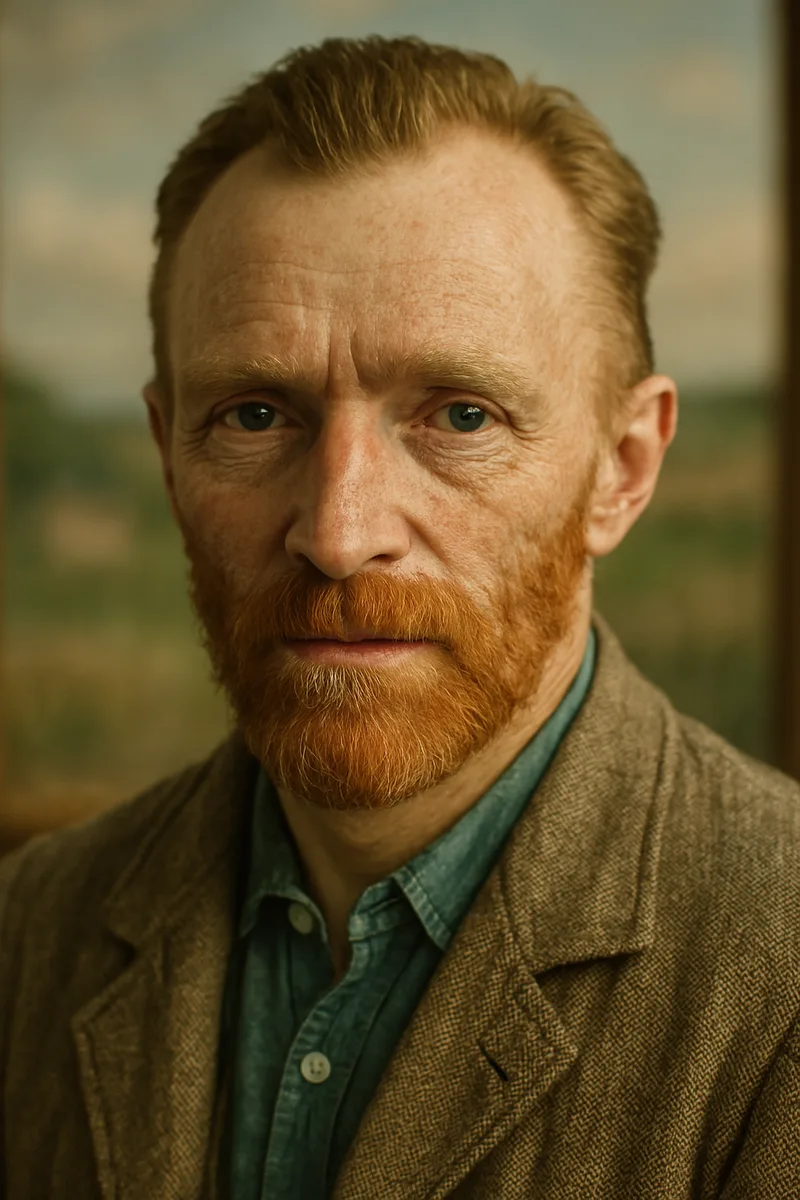
Vincent van Gogh: The Painter Who Saw the Fire in Everything
Vincent van Gogh is the most famous example of artistic genius unrecognized in its own time - a painter who sold only one canvas during his lifetime yet produced some of the most beloved and valuable works in the history of art. Born in the Netherlands in 1853, Van Gogh came to painting late, after failed careers in art dealing, teaching, and ministry. In a decade of feverish productivity, he created approximately 2,100 artworks, including The Starry Night, Sunflowers, Irises, and The Bedroom, transforming Post-Impressionism with his bold colors, emotional intensity, and swirling, expressive brushwork. His letters, primarily to his brother Theo, form one of the most extraordinary artistic correspondences ever written - revealing a mind of astonishing sensitivity, fierce intelligence, and deep compassion alongside the mental anguish that would ultimately claim his life at thirty-seven.
Context & Background
Vincent Willem van Gogh was born on March 30, 1853, in Groot-Zundert, a small village in the predominantly Catholic province of North Brabant in the Netherlands. His father, Theodorus van Gogh, was a Protestant minister; his mother, Anna Cornelia Carbentus, came from a prosperous family in The Hague. The household was devout, orderly, and emotionally restrained - qualities that would clash painfully with Vincent's passionate, ungovernable temperament.
The Netherlands of Van Gogh's youth was a stable, prosperous, but culturally conservative nation. The great Dutch artistic tradition of Rembrandt and Vermeer was two centuries in the past, and the art world's center of gravity had shifted decisively to Paris. Van Gogh's early life was marked by a series of false starts: he worked for the art dealer Goupil & Cie in The Hague, London, and Paris, but was dismissed for insubordination. He attempted to become a schoolteacher in England, then a Protestant minister, then a missionary to coal miners in the Borinage region of Belgium, where he lived in such extreme poverty and gave away so many of his possessions that the church authorities dismissed him for excessive zeal.
It was only in 1880, at the age of twenty-seven, that Van Gogh decided to become an artist. He was largely self-taught, studying from manuals, copying prints, and drawing the workers and peasants around him with an intensity that compensated for his lack of formal training. His early works - dark, earthy paintings of potato-eating peasants and weavers at their looms - show the influence of Millet and the Dutch masters, but already display the emotional directness that would define his mature style.
In 1886, Van Gogh moved to Paris, where he lived with his brother Theo, who worked for an art dealer. The city transformed his art. He encountered the Impressionists and Post-Impressionists - Monet, Renoir, Pissarro, Seurat, and above all Paul Gauguin and Emile Bernard - and his palette erupted. The dark, somber tones of his Dutch period gave way to the blazing colors and bold brushwork that would become his signature.
In February 1888, Van Gogh moved to Arles in the south of France, drawn by the intense light and vivid colors of Provence. The next fifteen months were the most productive of his life. Working at a furious pace - sometimes completing a painting in a single day - he produced many of his most celebrated works: The Yellow House, Sunflowers, The Night Cafe, Starry Night Over the Rhone, and the series of portraits that rank among the most psychologically penetrating in the history of art.
He dreamed of establishing a community of artists in Arles, and in October 1888, Gauguin arrived to join him. The collaboration lasted nine weeks and ended catastrophically. After a violent argument, Van Gogh - in a state of acute mental crisis - severed part of his own ear. Gauguin fled, and Van Gogh was hospitalized. This episode marked the beginning of the severe mental illness (now thought to have been bipolar disorder, possibly exacerbated by epilepsy and absinthe) that would shadow his remaining years.
Van Gogh spent the last two years of his life in a cycle of extraordinary productivity and devastating mental breakdowns. After Arles, he voluntarily entered the asylum at Saint-Remy-de-Provence, where he painted some of his greatest works, including The Starry Night (1889) - the swirling, luminous night sky that has become one of the most reproduced images in the world. Even at his most ill, his artistic powers did not diminish; if anything, the intensity of his emotional experience deepened the power of his art.
In May 1890, he moved to Auvers-sur-Oise, a village north of Paris, under the care of Dr. Paul Gachet, an amateur artist and friend of the Impressionists. He painted seventy canvases in seventy days, including the ominous Wheatfield with Crows, before shooting himself in the chest on July 27, 1890. He died two days later, with Theo at his side. He was thirty-seven years old.
His letters to Theo - over 650 of them survive - are among the most remarkable documents in the history of art. Written in Dutch, French, and English, they reveal a man of deep intelligence, wide reading, and profound compassion who thought constantly about the meaning of art, the nature of beauty, and the obligation of the artist to see and convey the truth of human experience.
Van Gogh was an avid reader who devoured Dickens, Zola, Shakespeare, and the Goncourt brothers. He was fluent in Dutch, French, English, and German. His letters frequently include detailed analyses of literature and demonstrate a critical intelligence that matches his visual gifts.
He sold exactly one painting during his lifetime - The Red Vineyard, purchased for 400 francs by the Belgian artist Anna Boch. Today, his works regularly sell for tens of millions of dollars, and Portrait of Dr. Gachet sold for $82.5 million in 1990.
Theo van Gogh, Vincent's devoted brother and sole financial supporter, died just six months after Vincent, probably of syphilis. The two brothers are buried side by side in the cemetery at Auvers-sur-Oise. Without Theo's unfailing financial and emotional support - he sent Vincent money every month for the last decade of his life - the paintings that now hang in museums around the world would almost certainly never have been created.