
John Maynard Keynes
Quotes & Wisdom
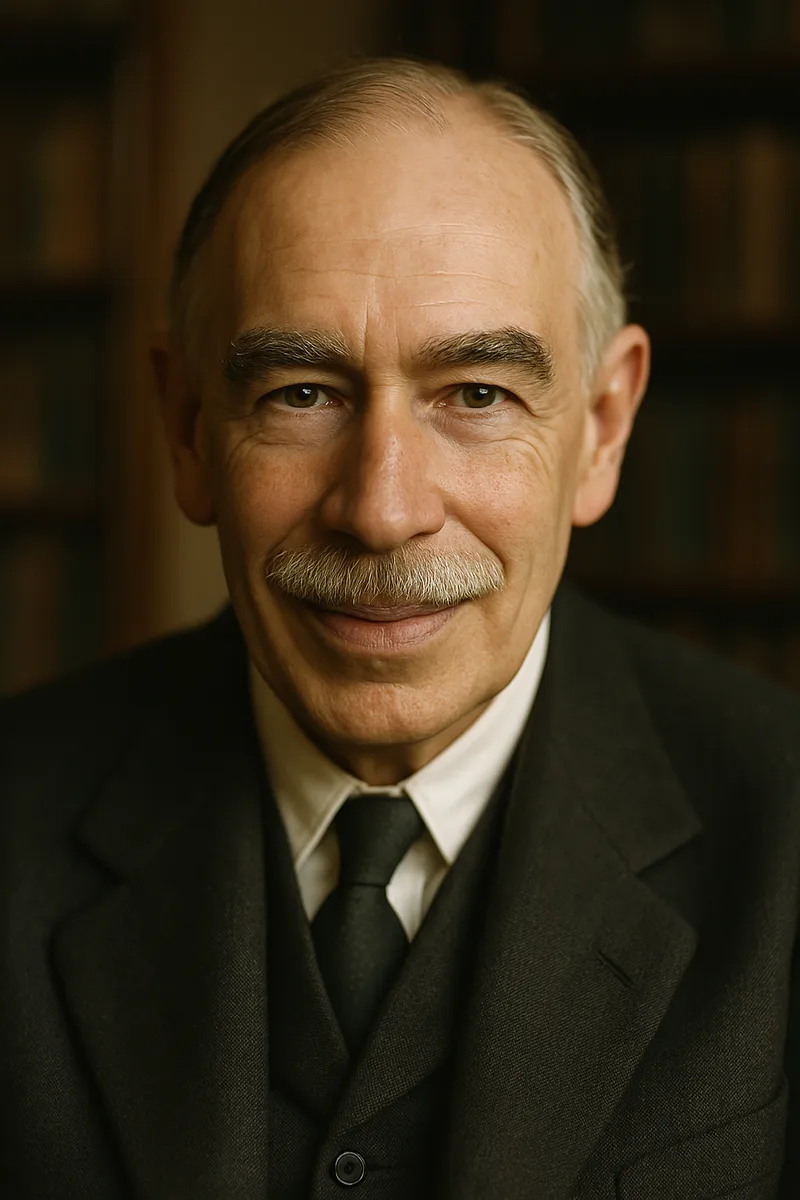
John Maynard Keynes: The Economist Who Rewrote the Rules
John Maynard Keynes did something that few economists ever achieve - he changed how governments actually behave. Before Keynes, the orthodox response to economic depression was to cut spending, balance budgets, and wait for markets to self-correct. Keynes argued that this was not just wrong but catastrophically wrong - that in a severe downturn, only government spending could restart the engine of demand. His General Theory of Employment, Interest and Money, published in 1936, revolutionized economics and provided the intellectual foundation for the postwar prosperity that transformed the Western world. Keynes was also a dazzling prose stylist, a successful speculator, a patron of the arts, and a member of the Bloomsbury Group. His quotes combine economic insight with literary elegance and a wicked talent for the devastating aside.
Context & Background
Born on June 5, 1883, in Cambridge, England, John Maynard Keynes grew up in the heart of British intellectual life. His father, John Neville Keynes, was an economist and logician at Cambridge University. His mother, Florence Ada Keynes, became one of the first female graduates of Cambridge and later served as the city's mayor. Maynard - as the family called him - was raised in an environment where rigorous thinking was as natural as breathing.
At Eton and then King's College, Cambridge, Keynes distinguished himself in mathematics and philosophy. He studied under Alfred Marshall, the dominant economist of the era, and joined the Apostles, a secret intellectual society whose members included some of the brightest minds in Britain. Through the Apostles, he became connected to the Bloomsbury Group - Virginia Woolf, E.M. Forster, Lytton Strachey, and others - whose emphasis on aesthetic experience, personal relationships, and intellectual honesty shaped his values for life.
His early career combined academia with public service. He worked at the India Office, taught economics at Cambridge, and during World War I managed British financial relations with allied nations. It was the aftermath of that war that would launch him to international prominence.
Keynes attended the Paris Peace Conference in 1919 as a Treasury representative and was appalled by the punitive reparations imposed on Germany. He resigned in protest and wrote The Economic Consequences of the Peace, a devastating critique that predicted the treaty would lead to economic collapse and political extremism in Germany. The book made Keynes famous and, tragically, proved prescient.
His analysis was not merely economic but psychological. Keynes understood that economies are driven not just by rational calculation but by what he called 'animal spirits' - confidence, fear, optimism, and panic. This insight - that human psychology is central to economic behavior - would become the foundation of his later theoretical revolution.
The Great Depression of the 1930s provided the crisis that Keynes's ideas were built to address. Classical economics held that markets would naturally return to full employment if wages and prices were allowed to adjust. Keynes demonstrated that this was a special case, not a general rule - that economies could settle into prolonged equilibrium at high unemployment, with no self-correcting mechanism to restore growth.
The solution was government intervention. During downturns, Keynes argued, governments should increase spending and reduce taxes to stimulate demand. During booms, they should save and pay down debt. This countercyclical approach - running deficits when the economy is weak and surpluses when it is strong - became the foundation of macroeconomic policy for decades.
The General Theory was dense and sometimes obscure, but its impact was immediate. It gave policymakers intellectual permission to act, and its framework - national income accounting, the multiplier effect, the paradox of thrift - became the standard toolkit of economic management.
Keynes's final great project was designing the international monetary system that would govern the postwar world. At the Bretton Woods conference in 1944, he represented Britain in negotiations with the United States over the structure of the International Monetary Fund and the World Bank. Keynes proposed a more ambitious system - an international clearing union that would automatically balance trade between nations - but the Americans, holding the stronger hand, imposed a dollar-based system.
The negotiations exhausted Keynes, who had suffered a heart attack in 1937 and was in declining health. He died on April 21, 1946, at age sixty-two. The system he helped create governed international finance until 1971 and laid the foundation for the global economic order.
Keynes was a spectacularly successful investor who built a personal fortune through currency and commodity speculation - ironic for a man whose theories emphasized the instability of markets. He managed King's College's endowment with similar success, growing it tenfold over two decades.
He married Lydia Lopokova, a Russian ballerina, in 1925 - a union that surprised his Bloomsbury friends, given his previous relationships with men. Keynes was a major patron of the arts who helped establish the Arts Council of Great Britain and built the Arts Theatre in Cambridge. His famous quip - 'In the long run we are all dead' - was not nihilism but a call to action, an insistence that economic policy must address present suffering rather than waiting for abstract forces to deliver eventual balance.